

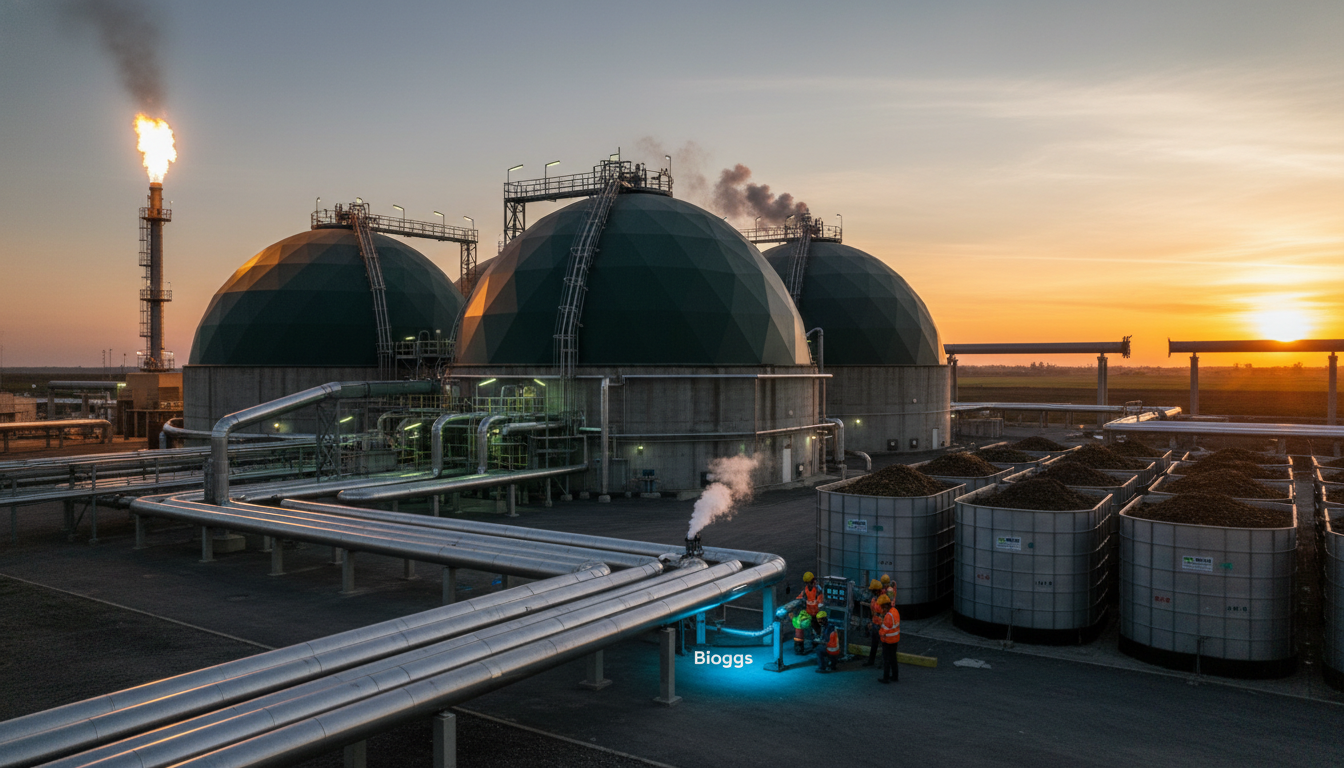
Vadodara Gas Charts Sustainable Path Amidst Volatile Global Energy Landscape
Vadodara Gas Ltd (VGL), a significant player in India’s city gas distribution sector, is strategically intensifying its integration of compressed biogas (CBG) into its supply network. This proactive pivot underscores a dual commitment: fortifying energy supply stability for its growing customer base and aggressively advancing national clean energy mandates. For investors tracking India’s evolving energy matrix, VGL’s move signals a robust strategy to mitigate reliance on imported fossil fuels while tapping into a burgeoning domestic renewable resource.
Currently, VGL injects approximately 5,000 kilograms of compressed biogas daily into its distribution infrastructure, primarily serving the Gajrawadi area. This vital clean fuel is procured from three independent suppliers operating under the Central government’s impactful CBG synchronisation scheme, with GAIL (Gas Authority of India Ltd) fulfilling its role as the designated nodal agency for the initiative. The operational model sees suppliers directly invoicing VGL, with these transactions subsequently processed through GAIL, ensuring streamlined financial flows. While daily volumes can exhibit minor fluctuations, the commitment to maintaining this consistent supply near the 5,000 kg threshold remains steadfast.
This strategic embrace of CBG offers multifaceted benefits for the Indian energy ecosystem. Primarily, it significantly contributes to diminishing the nation’s dependence on imported natural gas, thereby bolstering energy security and insulating against global price volatility. Concurrently, it propels India towards its ambitious cleaner energy objectives, reducing the carbon footprint of its urban gas distribution. Furthermore, companies engaged in CBG production receive substantial financial incentives from the central government, fostering economic viability. An additional advantage lies in the valuable by-products generated, such as organic manure derived from biomass, creating a circular economy model that supports agricultural sustainability.
The imperative for VGL to diversify its energy mix has gained critical momentum amidst persistent global supply chain disruptions and geopolitical tensions, particularly those emanating from West Asia. These international pressures consistently introduce uncertainty and volatility into natural gas procurement, posing significant operational and financial challenges for distributors. By integrating a locally sourced, renewable alternative like CBG, VGL effectively hedges against these external risks, promising greater price stability and reliability for its consumers and enhanced predictability for its financial performance.
Beyond the global geopolitical landscape, VGL faces burgeoning domestic demand. The rapidly expanding urban footprint of Vadodara translates directly into a rising number of residential, commercial, and industrial gas connections. This organic growth in customer base necessitates a corresponding scale-up in reliable supply. Moreover, regulatory adjustments concerning the distribution of liquefied petroleum gas (LPG) cylinders have further channeled consumer demand towards piped natural gas, intensifying the pressure on city gas distributors to secure diverse and ample energy sources.
In response to these escalating demands and strategic imperatives, VGL is actively planning a substantial increase in its CBG injection capacity. The company aims to boost daily CBG supply by an additional 1,000 to 1,500 kilograms. This expansion reflects a deliberate and forward-looking strategy to not only meet the current growth in demand but also to build resilience into its long-term operational framework, ensuring uninterrupted service delivery even in a dynamic energy market. This planned increment signifies VGL’s confidence in CBG as a viable, scalable component of its future energy portfolio.
For discerning investors, VGL’s commitment to CBG represents a sound financial play. By lessening its reliance on spot market natural gas purchases, the company can stabilize input costs, improve margin predictability, and reduce exposure to currency fluctuations. The move positions VGL favorably within India’s broader energy transition, aligning with national policy directives that actively promote indigenous renewable energy sources. This strategic foresight enhances VGL’s long-term sustainability profile and market attractiveness, offering a more resilient investment proposition in the city gas distribution segment.
The broader adoption of CBG, championed by entities like VGL, is pivotal for India’s energy security ambitions. It cultivates a distributed energy production model, reducing the reliance on large, centralized fossil fuel infrastructure. As GAIL continues its role as a nodal agency, facilitating the supply chain from producers to distributors, the ecosystem for CBG is strengthening. Investors should recognize the potential for synergistic growth in this segment, not just for gas distributors but also for companies involved in biomass aggregation, CBG plant development, and associated technology and infrastructure. India’s vast agricultural residue potential positions it uniquely to scale CBG production significantly.
In conclusion, Vadodara Gas Ltd is not merely adapting to market shifts; it is actively shaping its future through strategic diversification. By expanding its compressed biogas footprint, VGL is taking decisive steps to ensure a stable, cleaner, and more resilient energy supply for its consumers. This forward-thinking approach mitigates geopolitical risks, addresses domestic demand surges, and reinforces the company’s commitment to sustainable growth. For those investing in the dynamic Indian energy sector, VGL’s proactive embrace of CBG highlights a compelling trajectory towards enhanced energy security and environmental stewardship, making it a critical entity to observe in the nation’s decarbonization journey.
