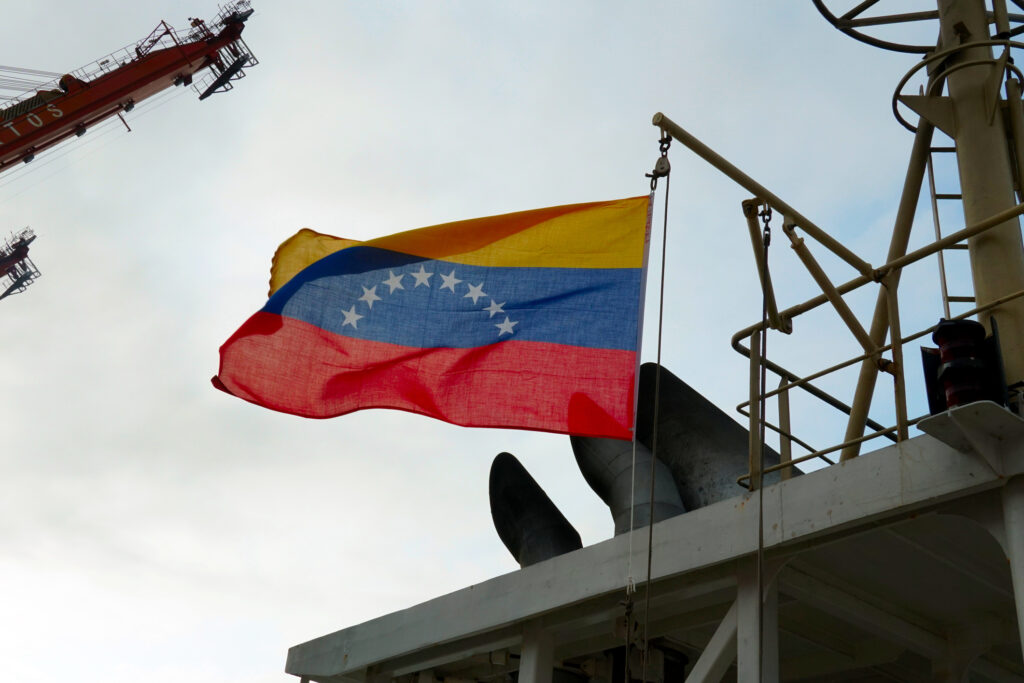
Venezuela’s oil export landscape continues to navigate complex geopolitical currents, demonstrating surprising stability in May despite the expiration of critical U.S. sanctions. Our proprietary data pipelines confirm a strategic pivot by PDVSA, successfully rerouting crude and refined products to alternative markets, primarily China, to offset a contraction in U.S.-authorized sales. This resilience in output, even as traditional partners like Chevron and Reliance faced wind-down deadlines, presents a nuanced picture for investors assessing global oil supply dynamics and the long-term implications of sanctions on sovereign energy producers.
Sanctions Expire, China Steadies the Ship
The U.S. Treasury and State departments’ decision in March to revoke authorizations for Venezuelan oil transactions, with a May 27 wind-down deadline, was widely anticipated to disrupt the nation’s export volumes significantly. Indeed, the immediate consequence was a reduction in deliveries to traditional customers in the U.S. and Europe, with PDVSA even canceling some cargoes to Chevron due to payment uncertainties. However, our analysis of vessel-tracking data and internal PDVSA documents reveals a strategic reorientation that largely mitigated the anticipated decline.
In May, Venezuelan waters saw 30 vessels depart, carrying an average of 779,000 barrels per day (bpd) of crude and refined products, alongside 291,000 metric tons of oil byproducts and petrochemicals. This figure is remarkably close to April’s 783,000 bpd and only slightly below the 850,000-900,000 bpd observed in preceding months before the sanctions tightening. The key to this stability lies in the significant increase in shipments to intermediaries bound for China. China emerged as the dominant destination, absorbing approximately 584,000 bpd in May, a notable increase from 521,000 bpd in April. In contrast, U.S. receipts, while slightly up from 130,000 bpd to 140,000 bpd month-over-month, remain a fraction of previous volumes. The completion of a large oil swap with Maurel & Prom and Vitol, marking the last U.S.-authorized deal, underscores the critical timing of these shifts. Furthermore, PDVSA’s initiative to independently export Boscan heavy crude to Asia, a grade previously destined for U.S. refiners, signals a determined effort to secure new market channels.
Navigating Volatile Markets and Investor Sentiment
Against the backdrop of Venezuela’s supply recalibration, the broader oil market is experiencing significant volatility. As of today, April 18, 2026, Brent crude currently trades around $90.38, reflecting a notable 9.07% decline within the day’s range of $86.08-$98.97. Similarly, WTI crude is priced at $82.59, down 9.41% within its $78.97-$90.34 range. This intraday movement follows a broader downward trend, with Brent having shed $20.91, or 18.5%, from $112.78 on March 30 to $91.87 on April 17.
Our reader intent data indicates that investors are keenly observing these price swings, with a prevalent question being, “What do you predict the price of oil per barrel will be by end of 2026?” The current Venezuelan supply stability, while important for its internal economy, is unlikely to be the primary driver of these macro price movements given the country’s relatively modest contribution to global supply. However, it adds complexity to the global supply picture. Another common query among our readers pertains to “OPEC+ current production quotas.” While Venezuela is an OPEC member, its production is largely outside the quota system due to sanctions, meaning its export stability does not directly impact the compliance dynamics of the OPEC+ alliance. Nevertheless, the ongoing geopolitical tensions that influence Venezuelan exports contribute to the overall uncertainty that OPEC+ considers when setting policy, making every barrel, regardless of its origin, a factor in the intricate supply-demand equation that ultimately determines future prices.
Forward Outlook: Geopolitics, Inventories, and OPEC+ Decisions
Looking ahead, the full impact of the U.S. sanctions license expirations post-May 27 will continue to shape Venezuela’s export strategy. While the pivot to China has absorbed much of the initial shock, the long-term efficiency and profitability of these new supply chains will be critical for PDVSA. Investors should monitor developments closely, particularly how this shift impacts the availability of specific heavy crude grades for global refiners, especially those in the U.S. that previously relied on Venezuelan imports.
The coming weeks are packed with events that will undoubtedly influence market sentiment and potentially shift oil prices. The OPEC+ Joint Ministerial Monitoring Committee (JMMC) meets today, April 18, followed by the Full Ministerial OPEC+ Meeting on April 19. While direct discussions on Venezuela are unlikely, these meetings will set the tone for global supply management, providing crucial context for the market. Additionally, the API Weekly Crude Inventory reports on April 21 and 28, and the EIA Weekly Petroleum Status Reports on April 22 and 29, will offer granular insights into U.S. inventory levels and demand trends. These reports are particularly relevant as Venezuela has increased its fuel imports to 159,000 bpd in May from 94,000 bpd in April, largely to replenish heavy naphtha stocks needed for diluting its extra-heavy crude. This internal demand for diluents could affect the net volume of crude available for export, adding another layer of complexity to the supply equation. The continued Baker Hughes Rig Count reports on April 24 and May 1 will also provide leading indicators for future North American production capacity.
Investment Implications in a Shifting Landscape
For energy investors, Venezuela’s managed transition highlights the ongoing risks and opportunities in markets subject to geopolitical pressures. Companies with historical ties or potential future interests in Venezuela, such as Chevron, which confirmed its license expiration but maintains a presence “in compliance with all applicable laws and regulations,” face a prolonged period of uncertainty. While direct investment in Venezuela remains highly restricted, the broader implications for global heavy crude supply and refining margins are significant. The sustained supply from Venezuela, albeit re-routed, prevents a sharper contraction in global availability that might otherwise have occurred, thereby exerting some downward pressure on specific heavy crude differentials. This environment necessitates a careful evaluation of supply chain resilience, geopolitical risk exposure, and the strategic importance of diverse sourcing for refiners and traders. Investors should consider how these dynamics influence the valuation of integrated oil majors, independent producers, and even midstream companies exposed to global trade flows, understanding that the game of musical chairs for heavy crude supply continues to play out on the global stage.