The global energy landscape continues its rapid evolution, marked by an accelerating drive towards decarbonization alongside an unwavering demand for energy security and grid reliability. While the promise of abundant solar and wind power is compelling, their inherent variability presents a critical challenge: how to ensure a stable, on-demand electricity supply when the sun isn’t shining or the wind isn’t blowing. Our latest proprietary data and analysis underscore a crucial insight for investors: far from being rendered obsolete, existing fossil fuel infrastructure, particularly for natural gas, is poised to play an indispensable, albeit transformed, role in this future. Innovative solutions like Reactive Carbon Dioxide Capture and Conversion (RCC), which enable the production of synthetic renewable natural gas (SRNG) from excess green energy, are not just theoretical concepts; they represent a pragmatic bridge to a resilient, low-carbon energy system, unlocking significant investment opportunities.
The Indispensable Bridge: Natural Gas Infrastructure in a Renewable Future
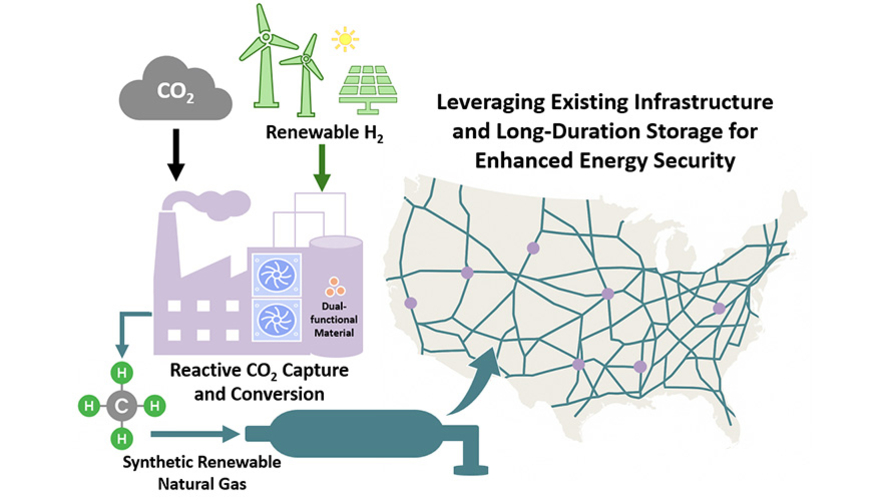
The intermittency of solar and wind generation remains a primary hurdle for widespread renewable adoption. Periods of oversupply, where more electricity is generated than the grid can immediately use, often lead to wasted energy, while demand peaks can leave grids vulnerable to shortfalls. Traditional long-term energy storage solutions have struggled to scale effectively and economically. This is where the strategic value of existing natural gas infrastructure becomes apparent. Technologies such as RCC offer a compelling pathway to convert surplus renewable electricity into a storable, transportable, and dispatchable energy form: synthetic renewable natural gas. By capturing carbon dioxide and reacting it with hydrogen produced from renewable-powered water splitting, methane, the primary component of natural gas, can be synthesized. Crucially, this synthetic gas can be seamlessly integrated into the vast, established network of natural gas pipelines, storage facilities, and power plants. This synergy not only addresses the intermittency problem but also extends the lifecycle and utility of multi-trillion-dollar natural gas assets, offering a tangible path to decarbonization without necessitating a complete overhaul of our energy backbone.
Navigating Volatility: Market Signals for Strategic Energy Investment
Current market dynamics highlight the persistent need for energy stability. As of today, Brent Crude trades at $95.19, reflecting a modest +0.42% increase within a daily range of $91 to $96.89, while WTI Crude stands at $91.74, up +0.5% with a range of $86.96 to $93.3. These daily movements, while significant for short-term traders, mask a broader trend: our proprietary data reveals Brent crude has declined by approximately 8.8% over the past 14 days, from $102.22 on March 25th to $93.22 on April 14th. This recent volatility underscores the inherent risks in a purely fossil-fuel dependent energy system and emphasizes the imperative for diversification and resilience. For investors, this environment reinforces the value proposition of technologies that can mitigate price swings and geopolitical risks by providing stable, dispatchable power. By leveraging existing infrastructure to store and distribute renewable energy in the form of SRNG, the energy sector can build a more robust, less volatile future, buffering against the very market fluctuations we observe today and offering a more predictable return profile for long-term capital.
Upcoming Catalysts: Shaping the Future of Energy Supply and Demand
The coming weeks are packed with events that will shape the near-term outlook for global energy markets, influencing investor strategies around both conventional and emerging energy solutions. Critical on the calendar are the OPEC+ Joint Ministerial Monitoring Committee (JMMC) meeting on April 18th and the full OPEC+ Ministerial Meeting on April 20th. Any decisions regarding production quotas from these gatherings will directly impact global crude supply and, consequently, price stability. Concurrently, the API Weekly Crude Inventory reports on April 21st and 28th, followed by the EIA Weekly Petroleum Status Reports on April 22nd and 29th, will provide crucial insights into immediate supply-demand balances in the United States. Furthermore, the Baker Hughes Rig Count reports on April 17th and 24th will offer leading indicators for future drilling activity and potential production capacity. While these events typically focus on traditional hydrocarbon markets, their outcomes will invariably influence the economic calculus for alternative energy solutions. A tighter oil market, for instance, could accelerate investment in technologies like RCC, making the production of synthetic renewable natural gas from excess green power even more economically attractive as a hedge against supply shocks and price inflation.
Addressing Investor Queries: The Long-Term Value Proposition of Green Hydrocarbons
Our real-time reader intent data consistently shows investors are keenly focused on long-term price forecasts for Brent, understanding the dynamics of regional demand drivers like Chinese tea-pot refineries, and analyzing Asian LNG spot prices. These questions highlight a clear investor appetite for clarity on energy market stability and future value. Technologies like RCC directly address these concerns by offering a compelling investment thesis in “green hydrocarbons.” By converting intermittent renewable energy into synthetic natural gas, RCC provides a scalable, economically feasible solution that de-risks renewable investments, offers grid stability, and significantly reduces the carbon intensity of a critical energy carrier. For investors seeking a base-case Brent price forecast for the next quarter, understanding the integration of such solutions into the energy mix is paramount. As SRNG production scales, it will contribute to a more diversified and resilient energy supply, potentially dampening extreme price volatility driven by geopolitical events or conventional supply fluctuations. Investing in companies pioneering or implementing these technologies allows exposure to the multi-decade transition, leveraging existing infrastructure while aligning with decarbonization goals, thereby offering a robust pathway to long-term value in a rapidly evolving energy landscape.