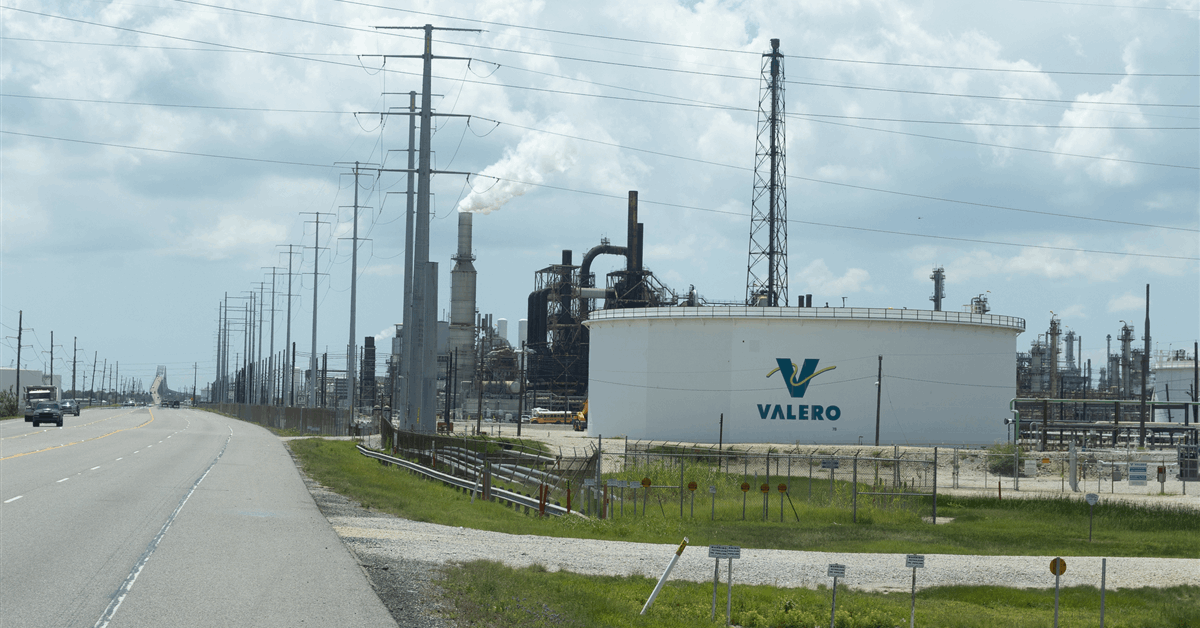
Valero Energy Corp’s recent move to price an $850 million public offering of senior notes due 2036 marks a significant strategic maneuver in its ongoing effort to optimize its balance sheet and enhance financial flexibility. This refinancing initiative, poised to close this Tuesday with an attractive 5.15 percent interest rate, aims to replace existing higher-coupon debt, including 7.65 percent debentures due 2026, 3.4 percent senior notes due 2026, and 4.375 percent senior notes issued by Valero Energy Partners LP. For investors, this action underscores management’s commitment to disciplined capital allocation, even as the broader energy market navigates a complex interplay of supply dynamics, demand shifts, and evolving macroeconomic indicators. Our analysis delves into the implications of this debt restructuring, juxtaposing it with Valero’s operational performance and the current market landscape, to provide a comprehensive outlook for discerning investors.
Strategic Debt Management Amidst Capital Discipline
Valero’s decision to issue new debt at 5.15 percent to refinance existing obligations, some with significantly higher interest rates, is a clear signal of proactive financial stewardship. By extending the maturity profile of its debt out to 2036 and locking in a competitive rate, the company not only reduces its near-term interest expense but also fortifies its balance sheet against potential future interest rate fluctuations. At year-end 2025, Valero reported total debt of $8.3 billion and finance lease obligations of $2.4 billion, alongside a robust $4.7 billion in cash and cash equivalents. This refinancing aligns directly with CEO Lane Riggs’ articulated capital allocation framework, which prioritizes “balance sheet strength, disciplined capital investments and shareholder returns.” The move demonstrates a prudent approach to managing liabilities, especially considering the current volatile interest rate environment, which can significantly impact a refiner’s cost of capital and overall financial health. Investors should view this as a positive indicator of management’s focus on long-term financial stability and efficiency.
Navigating Dynamic Refining Margins and Market Headwinds
Valero’s operational performance in 2025 showcased a mixed picture, recording its highest annual refining throughput at 2.99 million barrels per day (MMbpd) and peak ethanol production at 4.61 MMbpd. Despite these volume achievements, yearly revenue dipped to $122.69 billion from $129.88 billion in 2024, primarily due to rising operating expenses across segments and a drop in renewable diesel sales volume. However, the company successfully increased its adjusted net profit to $3.29 billion in 2025, up from $2.74 billion in the prior year, driven by improved refining and ethanol margins. The current market snapshot reveals a complex environment for refiners: as of today, Brent crude trades at $92.61, down 0.68% for the day, while WTI crude stands at $89.26, a 0.46% decline. Gasoline prices are also feeling pressure, trading at $3.1, down 0.96%. This comes after Brent experienced a notable 7% decline over the past two weeks, falling from $101.16 on April 1 to $94.09 on April 21. Such price shifts directly impact refining crack spreads and, consequently, profitability. While lower crude prices can sometimes widen margins if product prices hold firm, the broad decline across crude and products suggests underlying demand concerns that refiners like Valero must carefully navigate to sustain their improved margins.
Operational Evolution and Future-Proofing Investments
Beyond financial restructuring, Valero is actively investing in its operational future. The $230 million “optimization” project at its St. Charles refinery in Louisiana, aimed at increasing the production of “high-value products,” is on track to commence operations in the second half of 2026. This strategic investment highlights the company’s commitment to adapting its asset base to evolving market demands and maximizing profitability from its feedstock. In an industry increasingly focused on energy transition and efficiency, such projects are crucial for long-term competitiveness. While renewable diesel sales volume saw a decrease in 2025, leading to a dip in its margin, the ongoing focus on high-value products across its refining portfolio signals Valero’s intent to enhance revenue resilience and capture premium market segments. This disciplined capital allocation ensures that Valero’s operational capabilities remain cutting-edge, allowing it to extract maximum value from every barrel processed, regardless of broader market fluctuations affecting less optimized facilities.
Investor Outlook and Key Market Indicators
Valero’s commitment to shareholder returns remains robust, with $4.0 billion returned to stockholders in 2025, representing a 67% payout ratio, and a recent increase in its quarterly dividend to $1.2 per share. However, the overarching investor sentiment, as reflected in frequently asked questions such as “is WTI going up or down” and “what do you predict the price of oil per barrel will be by end of 2026?”, underscores the market’s intense focus on future crude oil prices. This macro uncertainty directly influences refiner valuations and future earnings projections. Investors will find critical guidance in upcoming energy events. We anticipate significant market reactions to the EIA Weekly Petroleum Status Reports scheduled for April 22, April 29, and May 6, which will provide fresh data on crude inventories, refinery utilization, and product demand. Furthermore, the EIA Short-Term Energy Outlook on May 2 will be particularly critical, offering updated projections on global supply and demand balances that could reshape long-term price expectations for both WTI and Brent. These forthcoming data points will be instrumental in gauging the potential tailwinds or headwinds for Valero’s operational environment and its ability to maintain its strong shareholder return policy.


