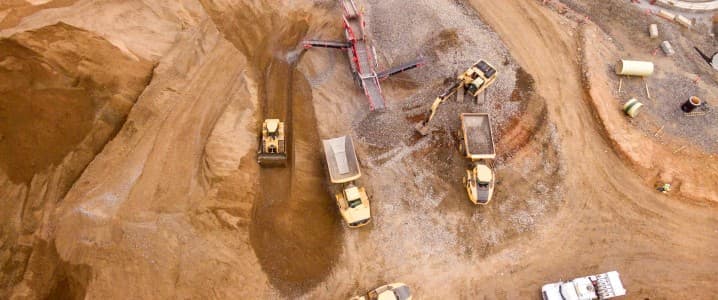
The shares of USA Rare Earth (NASDAQ: USAR) recently experienced a significant uplift, surging by 23% in late trading on Thursday and adding another 14% in pre-market activity on Friday. This notable appreciation followed reports from the company’s chief executive confirming active engagement with the White House. The move underscores a growing strategic push by the U.S. government to bolster domestic critical minerals supply chains, particularly rare earth elements, in a concerted effort to reduce reliance on foreign sources. For investors, this development signals a heightened level of government interest and potential support, making companies like USA Rare Earth increasingly compelling within the broader energy transition investment landscape.
The Geopolitical Imperative: De-risking Critical Supply Chains
The U.S. government’s intensified focus on securing a domestic supply of critical minerals is a direct response to global geopolitical dynamics and the accelerating energy transition. The Administration has made it clear it intends to play a direct role, exploring options for equity involvement in key projects. This strategy is not new; earlier this week, the Department of Energy acquired a 5% equity stake in Lithium Americas Corp, specifically targeting its Thacker Pass lithium project in Nevada. Furthermore, last July, MP Materials Corp, another U.S. rare earths miner, entered a public-private partnership with the Department of Defense to accelerate the establishment of an end-to-end domestic rare earth magnet supply chain. The CEO of USA Rare Earth, Barbara Humpton, emphasized that the build-out of this critical marketplace “will not be a zero-sum game,” acknowledging that “it’s going to take a lot of players” to achieve true supply chain resilience. This proactive government stance is a potent catalyst for companies operating in the critical minerals sector, offering a layer of de-risked growth potential that is highly attractive to institutional and retail investors alike.
USA Rare Earth’s Strategic Position and Operational Horizon
USA Rare Earth stands out with its substantial Round Top deposit in West Texas, a geological asset boasting 15 of the 17 rare earth elements, including a full suite of heavy rare earth elements. Beyond these, the deposit also contains other high-tech metals such as gallium, hafnium, zirconium, beryllium, and lithium. This diverse mineral endowment positions the company as a multifaceted player in the critical materials space. The long-term vision involves processing ore from Round Top at its planned magnet sintered neo magnet manufacturing facility in Stillwater, Oklahoma. Critically, this facility is slated to commence commercial operations in the first half of 2026, aligning perfectly with the U.S. government’s urgent timelines for domestic production. The company’s strategic intent to supply not only commercial industries but also the U.S. defense sector further solidifies its importance and potential for sustained growth, making it a key prospect for investors looking at strategic national assets.
Navigating Market Volatility: A Contrast to Crude Dynamics
While strategic mineral assets like USA Rare Earth gain traction through government backing, the broader energy market continues to exhibit significant volatility. As of today, Brent Crude trades at $90.38 per barrel, representing a substantial decline of 9.07% within the day, with prices fluctuating between $86.08 and $98.97. Similarly, WTI Crude has fallen to $82.59, down 9.41%, having traded between $78.97 and $90.34. This sharp downturn is part of a broader trend, with Brent having shed nearly 20% over the past two weeks, dropping from $112.78 on March 30th. This kind of unpredictable price action often prompts readers to ask about future oil price predictions, with questions like “what do you predict the price of oil per barrel will be by end of 2026?” frequently appearing in our proprietary reader intent data. In contrast to the turbulent crude market, investments in critical minerals, particularly those with direct government strategic interest, offer a different risk profile. While not immune to market forces, the underlying demand is driven by long-term geopolitical imperatives and the irreversible march towards electrification, providing a distinct investment thesis that can act as a hedge against short-term commodity swings and broader market uncertainty in traditional energy sectors.
Upcoming Catalysts and the Broader Energy Investment Landscape
The next two weeks are packed with significant events that could shape the trajectory of the wider energy market, influencing investor sentiment and capital allocation. The upcoming OPEC+ Ministerial Meeting on April 19th is a prime example, with market participants keenly awaiting decisions on production quotas. Our reader intent data highlights this anticipation, with many asking “What are OPEC+ current production quotas?” The outcome of this meeting could introduce further stability or volatility into crude prices, impacting the profitability outlook for many traditional oil and gas players. Following this, the API and EIA weekly inventory reports, along with the Baker Hughes Rig Count, will provide crucial insights into supply-demand dynamics and drilling activity. While these events primarily affect the hydrocarbon sector, their influence extends to the broader energy investment landscape. A clear direction from OPEC+ or a stable crude market could encourage investors to reallocate capital into complementary sectors crucial for the energy transition, such as rare earths. The long-term strategic support for companies like USA Rare Earth, coupled with their imminent operational milestones in the first half of 2026, positions them as attractive beneficiaries of a diversified energy portfolio, regardless of the short-term fluctuations driven by traditional commodity market catalysts. Investors seeking exposure to the foundational elements of future energy systems would do well to monitor these developments closely, understanding how critical minerals intersect with and diverge from the conventional energy narrative.


