The geopolitical landscape surrounding the Strait of Hormuz continues to be a focal point for global energy markets and investors. Recent developments indicate a significant shift in US strategy, with President Donald Trump announcing an initiative to facilitate the movement of neutral commercial vessels through the critical waterway, starting this Monday.
Labeled “Project Freedom,” this effort aims to alleviate the plight of numerous ships and their crews, who have been effectively stranded in the Persian Gulf. President Trump articulated via social media that this humanitarian endeavor is designed to assist “victims of circumstance” – companies, countries, and individuals who have committed no wrong but are suffering from the ongoing blockade. He sternly warned that any interference with this process would be met with a forceful response, underscoring the gravity of the situation.
US Bolsters Maritime Presence Amidst Hormuz Tensions
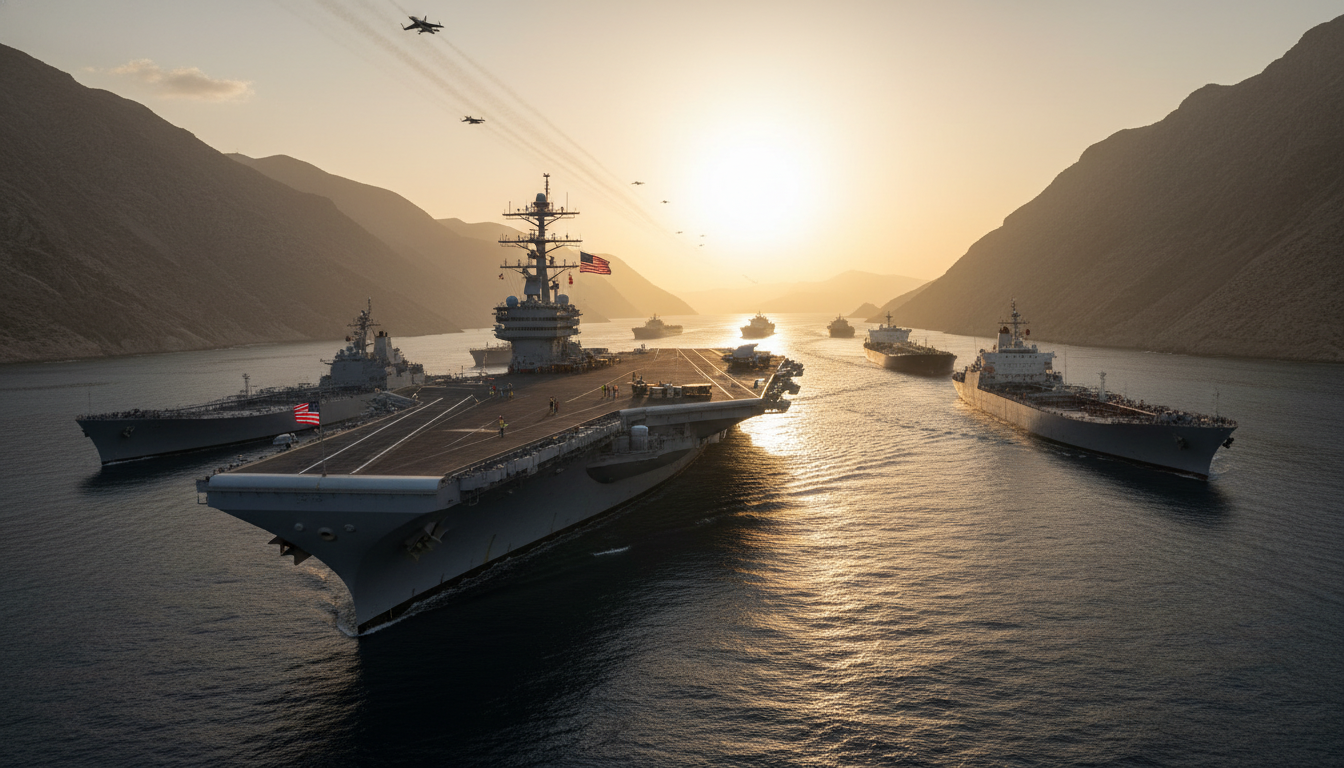
While President Trump’s initial announcement lacked specific operational details, US Central Command swiftly clarified its role. The command confirmed its commitment to providing robust military backing to re-establish commercial shipping through the Strait of Hormuz. This support includes deploying guided-missile destroyers, surveillance aircraft, and advanced drones to ensure maritime security. Crucially for investors tracking global supply chains, an unnamed US official, cited by a leading financial publication, indicated that this initiative focuses on a coordination process for nations, insurance providers, and shipping organizations, rather than direct naval escorts for individual commercial vessels.
Admiral Brad Cooper, who leads Central Command, emphasized the strategic importance of this defensive mission. He stated that US support is “essential to regional security and the global economy,” particularly as the naval blockade on Iran’s ports remains firmly in place. This dual objective highlights the delicate balance the US seeks to maintain: facilitating global trade while simultaneously exerting economic pressure on the Islamic Republic.
Iran Issues Firm Warning as Oil Prices Oscillate
Unsurprisingly, the US’s renewed posture in the Strait of Hormuz has drawn a sharp rebuke from Iran. Al Mayadeen reported that the head of the Iranian parliament’s National Security Commission issued a warning, declaring any US interference in the strait a direct violation of the existing ceasefire. Furthermore, Ebrahim Azizi, a prominent Iranian official, was quoted asserting that the management of this vital waterway and the broader Gulf region would not be dictated by President Trump’s pronouncements, signaling Iran’s unwavering stance on its perceived sovereign rights.
The immediate reaction in crude oil markets was one of caution and skepticism regarding the true effectiveness of the US plan. Brent crude, the international benchmark, saw little change, hovering near $108 a barrel, recovering from an earlier intraday dip of as much as 2.4 percent. West Texas Intermediate (WTI), the US benchmark, traded below $102. This market indifference underscores investor uncertainty about how quickly or effectively “Project Freedom” can truly de-escalate tensions and unblock shipping lanes.
Tanker Incident Fuels Market Apprehension
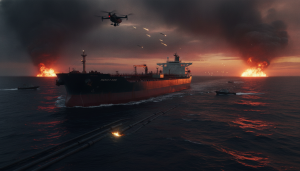
Adding another layer of volatility and concern for energy investors, a tanker reportedly sustained projectile hits 78 nautical miles north of Fujairah, United Arab Emirates. The UK Maritime Trade Operations confirmed the incident, although the vessel’s identity was not disclosed. Fortunately, all crew members were reported safe. Such incidents serve as stark reminders of the inherent risks associated with operating in a region fraught with geopolitical instability, further stressing the importance of maritime security for global energy supply chains.
Diplomatic Efforts and Economic Pressures
Beyond the immediate military maneuvers, diplomatic channels remain cautiously open, albeit with limited visible progress. President Trump mentioned “very positive discussions” ongoing with Iran, hinting at potential breakthroughs that could benefit all parties. However, he also expressed reservations about Iran’s latest peace proposal, indicating that it might not fully satisfy US requirements for a comprehensive resolution to the conflict. Iranian state television, citing a foreign ministry spokesperson, confirmed that Tehran is currently reviewing the US response to its own 14-point peace plan.
The humanitarian aspect of the crisis is central to the US’s justification for “Project Freedom.” President Trump highlighted that several countries have appealed to the US for assistance in freeing their vessels, many of which carry large crews facing dwindling food and essential supplies. These ships, numbering in the hundreds – including oil tankers, bulk carriers, and general cargo ships – remain idle in the Gulf, with their operators unwilling to risk passage until the area is deemed unequivocally safe for navigation.
Broader Implications for Global Energy and Elections
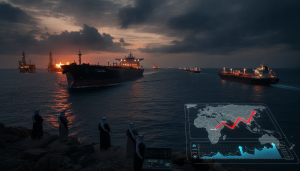
The sustained blockage of the Strait of Hormuz has had profound ramifications for global energy markets. This narrow chokepoint, south of Iran, is the conduit for approximately one-fifth of the world’s crude oil and liquefied natural gas (LNG) supplies. Its effective closure has already triggered a significant spike in energy prices, leading to a ripple effect across the global economy. Regional nations, unable to move their petroleum output, have been compelled to halt substantial oil production due to a severe lack of storage capacity.
For the White House, the surging gasoline prices domestically present a tangible political risk. High energy costs directly impact American consumers, generating concerns that the Republican party could face considerable setbacks in the upcoming November Midterm elections. The ongoing stalemate in the Strait remains central to this dilemma. Following Iran’s effective closure of the waterway, the US responded with a naval blockade on Iranian ports, a move designed to cripple its economy and choke off its crucial oil export revenues. Investors must continue to monitor developments in this critical region, as the interplay of military action, diplomatic overtures, and market reactions will dictate the trajectory of global energy prices and supply stability for the foreseeable future.