The Nuance of Exchange: Deconstructing the US SPR 172 Million Barrel Action
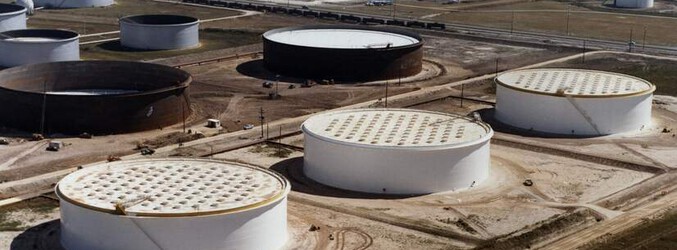
The energy market recently grappled with the U.S. Energy Department’s announcement regarding a 172 million barrel release from the Strategic Petroleum Reserve (SPR). Initial market confusion, fueled by some references to a “release,” quickly gave way to clarification: this is not an outright sale, but an exchange. For discerning oil and gas investors, this distinction is paramount, fundamentally altering the long-term supply implications and necessitating a re-evaluation of market strategies. This proprietary analysis delves into the critical differences, market reverberations, logistical challenges, and forward-looking indicators that will shape crude oil prices and investor sentiment in the coming months.
“Exchange” vs. “Sale”: A Critical Delineation for Investors
The U.S. Energy Department has underscored that the planned 172 million barrel SPR action is structured as an exchange, not a sale. This means the oil, starting with an initial 86 million barrels expected to hit the market this week, is essentially a loan to companies. These companies are contractually obligated to return the borrowed crude to the reserve, typically with interest, at a later date. This stands in stark contrast to an outright sale, which would represent a permanent drawdown of national strategic reserves without a replenishment commitment.
Energy Secretary Chris Wright’s earlier remarks about refilling the reserve with approximately 200 million barrels within the next year—roughly 20% more than the initial release—at no cost to taxpayers, strongly hinted at an exchange mechanism all along. This commitment to future replenishment significantly tempers the long-term bearish implications often associated with large-scale SPR drawdowns. While the immediate influx of 86 million barrels adds to global supply, the market must now factor in the eventual demand for refilling. This action is part of a broader international effort, with the International Energy Agency (IEA) having agreed last week to discharge 400 million barrels from emergency reserves, the largest such release in its history, amidst geopolitical tensions impacting key shipping lanes like the Strait of Hormuz.
Current Market Dynamics and Investor Queries Amidst SPR Action
The clarification around the SPR release comes at a volatile time for crude markets. As of today, Brent Crude trades at $92.9 per barrel, down 0.36% within a day range of $92.57 to $94.21. WTI Crude follows a similar trajectory, priced at $89.24 per barrel, reflecting a 0.48% decline, oscillating between $88.76 and $90.71. Gasoline prices also show a slight dip, standing at $3.11, down 0.64%.
This daily movement, however, is dwarfed by the broader trend over the past two weeks, where Brent has seen a significant decline from $101.16 on April 1st to $94.09 on April 21st, marking a 7% drop. Investors are keenly focused on whether this SPR action will push WTI prices up or down in the immediate term, and what it signals for the price of oil per barrel by the end of 2026. While the initial 86 million barrels released as part of the exchange will contribute to near-term supply, potentially capping upward price movements, the underlying commitment to return 200 million barrels creates a future demand signal that could underpin prices in the medium to long term. This intricate dynamic means the market’s reaction is not simply about supply addition, but also about the balance of current supply against future demand obligation, all within a context of persistent geopolitical risks.
Logistical Hurdles and Their Impact on Market Participation
While an exchange mitigates the long-term supply deficit compared to an outright sale, it introduces a layer of operational complexity that cannot be overlooked by investors. As Karim Fawaz, an analyst at S&P Global Energy, highlighted, the method can significantly “bog down SPR logistics for more than a year to accommodate refills.” This logistical burden extends beyond the government, potentially deterring some buyers who may be unwilling to commit to the intricate process of large-scale returns. The mechanics of receiving crude and then sourcing, shipping, and returning an equivalent, or even greater, volume at a future date adds considerable overhead and risk for companies.
History offers some perspective; President Joe Biden’s administration previously orchestrated a 32 million barrel exchange as part of a larger 50 million barrel release. While successful, scaling this to a 172 million barrel exchange with a 200 million barrel return commitment presents a much larger operational challenge. For investors, this implies that the immediate market impact of the “release” might be constrained if fewer companies bid for the crude due to these logistical complexities. Furthermore, the sheer volume and timeline for replenishment could affect the SPR’s readiness for future emergency deployments, a critical factor for long-term energy security.
Forward Outlook: Key Events Shaping Future Oil Prices
For investors navigating the complexities of the SPR exchange and volatile crude markets, monitoring upcoming energy events is crucial. The market’s ability to absorb the initial 86 million barrel influx and the subsequent capacity for replenishment will be illuminated by key data releases over the next few weeks. On April 22nd and again on April 29th, the EIA Weekly Petroleum Status Reports will provide critical insights into U.S. crude oil inventories, refinery utilization, and product supplied, giving investors a real-time pulse on supply/demand balances. Any unexpected builds or draws will be highly scrutinized for their implications on price trajectories.
Complementing these reports, the Baker Hughes Rig Count, scheduled for April 24th and May 1st, will offer a forward-looking indicator of domestic production trends. An increase in active rigs could signal future supply growth, potentially offsetting some of the future demand created by the SPR refill obligation. Furthermore, the EIA’s Short-Term Energy Outlook (STEO) on May 2nd will deliver official forecasts for crude oil and product prices, production, and consumption, providing a vital benchmark for investors trying to predict the price of oil per barrel by the end of 2026. These events, combined with API Weekly Crude Inventory reports on April 28th and May 5th, will collectively form the analytical bedrock for informed investment decisions in the wake of the SPR exchange.