

U.S. Shale Gears Up: High Oil Prices Spark Production Surge Amid Geopolitical Turmoil
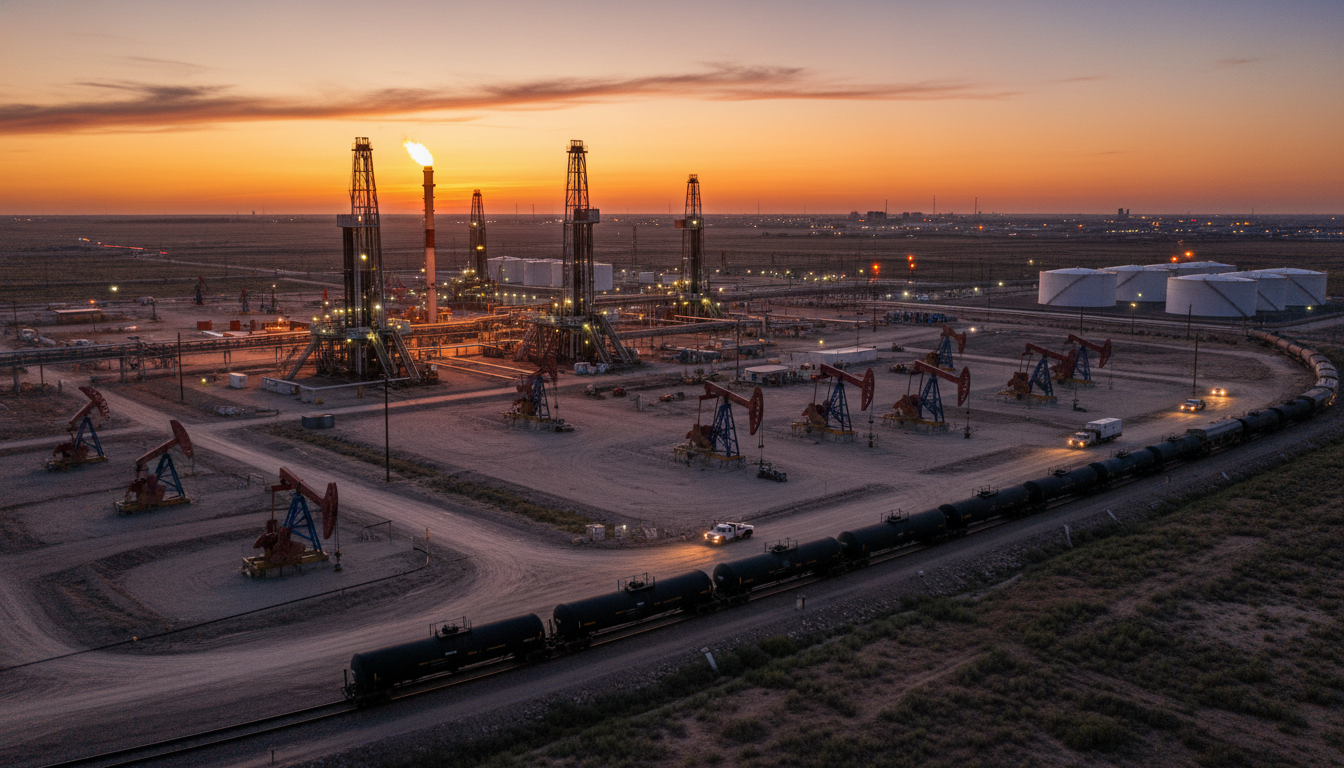
The American shale industry is poised for a significant uplift in crude oil production, a direct response to a dramatic spike in global energy prices. While political administrations have often implored domestic producers to increase output, the current environment presents an undeniable financial incentive that transcends mere rhetoric, compelling oil executives to actively expand operations.
Over the past five weeks, crude oil prices have surged by an astonishing 68%, following escalating geopolitical tensions in the Middle East and subsequent attacks on Iran. This unprecedented market disruption has pushed the U.S. benchmark, West Texas Intermediate (WTI) crude, to approximately $113 a barrel as of midday April 6. This figure stands in stark contrast to the $62 to $70 per barrel range that the Federal Reserve Bank of Dallas identifies as necessary for new shale wells to achieve profitability. For investors, this creates a substantial margin for returns, making new drilling highly attractive.
The Irresistible Pull of Profitability
Industry observers, including financial institutions like Citigroup Inc., market intelligence firms such as Enverus Inc., and government analysts from the Energy Information Administration, uniformly predict a robust response from American drillers. Mike Sommers, the chief executive of the American Petroleum Institute (API), underscored this sentiment, stating in a recent interview that elevated prices will “certainly going to increase production in the United States,” with effects expected to materialize over the coming months.
The commitment to increased output is already evident. Veteran industry leader Harold Hamm, Chairman of Continental Resources Inc., was among the first prominent shale executives to publicly declare an acceleration of production. His company recently revised its capital budget upwards and boosted its output targets, signaling a proactive stance. Beyond direct production increases, many operators are aggressively utilizing hedging strategies, locking in the current elevated prices for barrels they anticipate extracting in the near future, thus securing profitability against potential market fluctuations.
Navigating Operational Lag and Futures Markets
Investors must recognize that a production surge from shale plays, particularly in prolific regions like the Permian Basin across West Texas and New Mexico, will not be instantaneous. The inherent lead times involved in drilling, hydraulic fracturing, and bringing new wells online mean that an observable uptick in volumes typically takes several months. Forecasts from industry experts at Enverus and Rystad Energy highlight this operational reality.
Initially, the most immediate boost to supply is expected to come from drilled-but-uncompleted wells, commonly known as DUCs. These are wells that have been drilled but await the completion of fracking to commence production. Alex Ljubojevic, head of US supply at Enverus, noted that operators with DUC inventories will “definitely see operators that can, bring forward those DUCs just to get those volumes online,” providing a quicker path to market for existing infrastructure.
However, the planning horizon for new shale wells can stretch up to nine months. Consequently, producers heavily weigh the futures curve rather than just spot prices when making capital allocation decisions. Since the conflict began, WTI crude futures for October delivery have averaged close to $76, even topping the $84 mark two weeks ago, indicating a sustained optimistic outlook for future prices that justifies long-term investment in new drilling programs.
Shale’s Contribution: A Broader Market Perspective
While the anticipated increase in U.S. shale output is significant for domestic energy security and company financials, it’s crucial for investors to contextualize its scale against the immense global supply disruption currently underway. The closure of critical vessel traffic through the Strait of Hormuz, triggered on February 28, has led to an estimated loss of 13 million barrels per day this month, according to JPMorgan Chase & Co. In this light, an injection of a few hundred thousand barrels daily from U.S. shale, while helpful, would represent a comparatively modest contribution to counter such a monumental shortfall.
Moreover, the industry’s response in the current crisis may differ from prior periods of high prices, such as the market reaction following Russia’s invasion of Ukraine in 2022. The landscape of U.S. shale has evolved, marked by significant consolidation. Many smaller, agile independent producers, historically quick to react to price signals, have been acquired by larger corporations. Ljubojevic observed that the absence of these numerous independent players means a different, potentially more measured, response mechanism compared to earlier cycles.
The Role of Supermajors and Sustained Signals
In this consolidated environment, the strategic decisions of supermajors become even more critical. ExxonMobil Corp. and Chevron Corp., two of the largest drillers in the Permian Basin, are deemed to have a “higher probability” of increasing their shale output compared to many peers, according to TD Cowen analyst Jason Gabelman. ExxonMobil, for instance, already had aggressive growth plans extending through 2030, while Chevron had previously indicated a production plateau after years of rapid expansion. Their substantial capital access and long-term investment horizons position them uniquely to capitalize on sustained high prices.
Initially, many operators sought a clear signal that the high price environment would be sustained before committing new capital to drilling. However, a month into the conflict, Rystad Energy’s Matthew Bernstein, Vice President for North America oil and gas, confirmed that “we’re starting to see that signal emerge.” This growing confidence in sustained elevated prices is a pivotal factor driving the industry’s renewed commitment to growth.
For investors monitoring the energy sector, the current period represents a crucial intersection of geopolitical risk, robust commodity prices, and an evolving industry structure. Understanding the interplay between immediate operational capacities, long-term strategic planning by major players, and the overarching geopolitical landscape will be key to identifying lucrative investment opportunities in the dynamic oil and gas market.
