

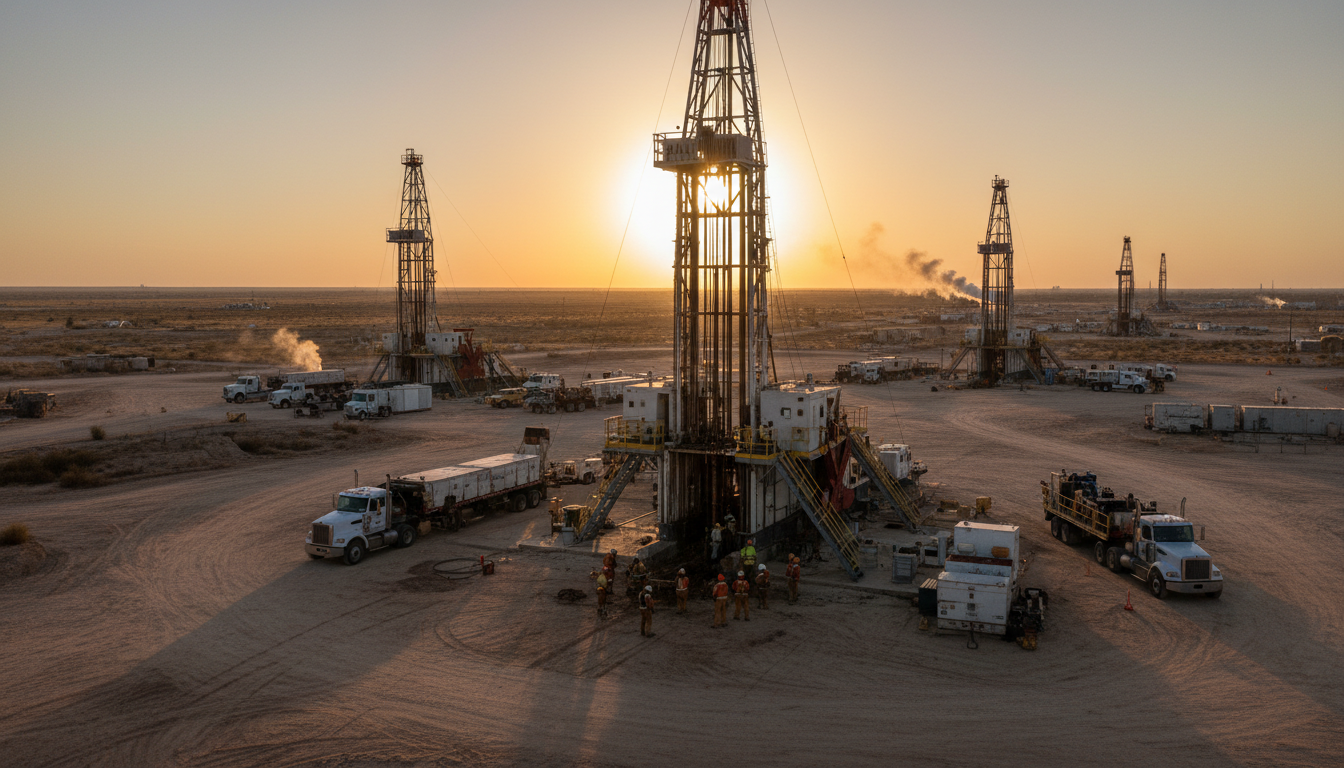
U.S. Drilling Activity Gains Momentum as Geopolitical Tensions Ignite Crude Oil Markets
The latest industry metrics reveal a nuanced picture for the United States energy sector, with a slight uptick in drilling operations coinciding with a dramatic surge in global crude oil benchmarks. Investors are keenly observing these domestic supply-side shifts against a backdrop of intensifying geopolitical risks that are currently dictating price action on the international stage.
According to the recent data published on Thursday, the total number of active drilling rigs for oil and natural gas across the United States experienced an increase this week. This brings the aggregate U.S. rig count to 548. While this figure marks a modest recovery over the prior period, it still sits 42 rigs below the operational levels recorded at this precise time last year, underscoring the broader contraction in drilling activity over the past twelve months.
Oil and Gas Rig Counts Detail Sector-Specific Trends
Delving into the specifics, the active oil rig count recorded a gain of 2 units, pushing the total to 411. This increase provides a glimmer of stability, yet the current oil rig total remains significantly lower, down 70 rigs compared to the same period a year ago. This persistent year-over-year deficit in oil-focused drilling could have long-term implications for future crude supply growth, a critical factor for investors tracking the energy market’s supply-demand equilibrium.
Conversely, the natural gas sector showcased more robust growth, with gas rigs climbing by 3 to reach a total of 130. This expansion places the current gas rig count 26 units higher than its standing last year, suggesting a strategic pivot or increased confidence in natural gas demand. The miscellaneous rig count maintained its steady position at 7, indicating no significant changes in specialized drilling operations.
U.S. Crude Production Holds Steady, Completion Activity Slows
Complementing the drilling activity data, the most recent information from the U.S. Energy Information Administration (EIA) for the week ending March 27 indicates a plateau in domestic crude oil production. American crude output averaged 13.657 million barrels per day (bpd) during this reporting interval, holding consistent with the prior week’s levels. This substantial production volume positions the United States as a formidable global supplier, with current output just 205,000 bpd shy of the nation’s all-time high.
Despite the stable production figures and rising rig counts, a potential headwind emerges from the well completion segment. Primary Vision’s Frac Spread Count, a key indicator for the number of crews engaged in bringing newly drilled wells online, experienced a decline for the week ending March 27. The count fell by 5 crews, following an even steeper reduction of 8 crews in the preceding week. A sustained decrease in frac spread activity could eventually translate into slower production growth, even if drilling activity remains elevated, as newly drilled wells would take longer to commence flow.
Key Basins Show Mixed Signals in Drilling Activity
Regional drilling activity, a vital metric for understanding future supply potential from America’s most prolific shale plays, also presented a mixed bag. The Permian Basin, a powerhouse of U.S. oil production, saw its active rig count tick up by 1, reaching 242. While this marginal increase is positive, the Permian still lags significantly, operating with 52 fewer rigs than it did one year ago. This year-over-year decline suggests ongoing capital discipline or a cautious approach to expansion within the basin, despite its rich resource base.
The Eagle Ford Shale also demonstrated a notable increase, with its rig count rising by 3 to 45. This expansion indicates renewed interest or more favorable economics for operators in this South Texas play. However, like the Permian, the Eagle Ford’s current rig count is still slightly below its year-ago level, down by 3 rigs. These regional trends highlight the localized dynamics influencing investment and operational decisions across different U.S. shale formations.
Geopolitical Tensions Drive Crude Prices Sharply Higher
While domestic operational data offers insights into future supply, global crude oil prices are currently experiencing an acute spike, predominantly driven by escalating geopolitical tensions in the Middle East. On Thursday, both Brent and West Texas Intermediate (WTI) benchmarks saw substantial gains, reflecting heightened market anxiety.
The ongoing conflict in the Middle East remains the primary catalyst for this upward price trajectory. Concerns over the critical Strait of Hormuz, a narrow passage through which a significant portion of the world’s seaborne oil supply transits, are particularly elevated. Reports indicate tanker traffic through this vital chokepoint is effectively stalled, creating supply chain uncertainties and fueling fears of potential disruptions.
Further exacerbating market jitters, Iran has issued stern warnings, threatening “crushing and broader” attacks, a rhetoric that has clearly resonated with crude traders. In response to these developments, Brent crude surged to $108.60 per barrel, marking an impressive 7.33% increase. Notably, West Texas Intermediate (WTI), the U.S. benchmark, topped Brent pricing, holding above $111 per barrel. This unusual inversion, where WTI trades at a premium to Brent, often signals acute regional supply concerns or strong domestic demand dynamics, in addition to global supply risks.
Investor Outlook: Navigating Volatility in Energy Markets
For investors, the current energy landscape presents both opportunities and significant risks. The rebound in U.S. drilling activity, particularly in natural gas, suggests underlying resilience in domestic production capabilities. However, the persistent year-over-year deficits in oil rigs and declining frac spread counts warrant close monitoring, as they could temper future crude output growth.
The overriding factor influencing short-term market direction, however, remains the volatile geopolitical situation in the Middle East. The direct threats to crucial shipping lanes and the broader regional instability inject substantial risk premiums into crude prices. This environment typically favors energy companies with strong balance sheets, diversified asset portfolios, and robust hedging strategies that can weather periods of extreme price volatility. Investors should prepare for continued market swings as global events and domestic supply fundamentals jockey for influence in the coming weeks and months.
