While the daily gyrations of Brent crude prices capture the immediate attention of many in the energy market, a significant, longer-term strategic shift is underway that demands astute investor focus. The U.S. Interior Department recently announced aggressive steps to bolster domestic critical mineral recovery, specifically targeting vast reservoirs of mine waste, coal refuse, tailings, and abandoned sites. This initiative, designed to secure supply chains for everything from electric vehicles to advanced defense technologies, represents a powerful new vector for capital deployment in the resource sector, turning what were once environmental liabilities into future economic assets and reshaping the landscape of energy and technology independence.
The Strategic Imperative: Fortifying Supply Chains Beyond the Barrel
The global energy investment narrative is increasingly defined by two parallel forces: the persistent demand for traditional hydrocarbons and the accelerating push towards new energy paradigms. As of this morning, Brent crude trades at $95.2, reflecting a modest intraday gain, while WTI hovers at $91.65. Gasoline prices stand at $3 per gallon. However, looking at the broader trend, Brent has seen a notable decline of 12.4% over the past two weeks, dropping from $108.01 to $94.58. This volatility underscores the inherent unpredictability of traditional energy markets, prompting a strategic re-evaluation of long-term resource security. Against this backdrop, the U.S. government’s renewed focus on critical minerals is not merely an environmental policy but a direct response to geopolitical vulnerabilities and the burgeoning demand for materials essential to the energy transition and high-tech manufacturing. Secretary Doug Burgum’s directive to streamline federal regulations on mineral recovery from waste is a clear signal: the nation is committed to achieving mineral independence, particularly from dominant foreign producers like China, and views these efforts as crucial for powering future advanced technologies. This initiative aims to attract substantial private investment, a key catalyst for transforming policy into tangible market opportunities.
Unlocking Latent Value: Technology Meets Economic Opportunity in Waste Streams
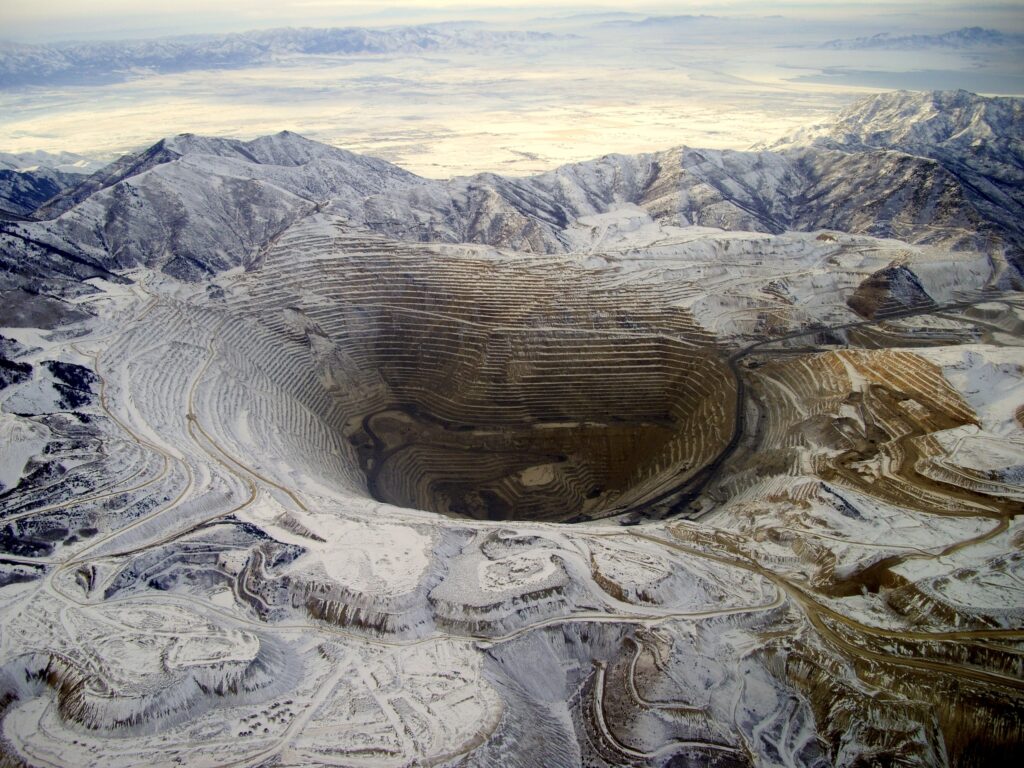
The concept of extracting valuable resources from what was previously considered waste is gaining significant traction, propelled by technological advancements and strategic necessity. The Interior Department’s directive specifically targets coal refuse, tailings, and abandoned uranium mines, recognizing these sites as rich, untapped reservoirs of critical minerals such as rare earths, lithium, cobalt, zinc, germanium, and tellurium. Research by the U.S. Geological Survey (USGS) and state geological surveys has already identified significant concentrations. For instance, the long-abandoned Tar Creek lead and zinc mines in Oklahoma are known to contain high levels of zinc and germanium, minerals the U.S. currently imports. Similarly, the Bingham Canyon mine in Utah holds tellurium in its copper tailings, a vital component for defense technologies. This isn’t theoretical; companies are already making strides. Freeport-McMoRan, for example, projects an annual production of 362,900 metric tons of copper from waste leaching by 2027, demonstrating the commercial viability of such operations. While challenges remain, particularly concerning the development of new, environmentally sound processing methods and navigating complex property rights, the economic incentives are substantial, positioning firms with innovative reclamation and extraction technologies for significant growth.
Policy Tailwinds and Upcoming Catalysts for Investment
The U.S. government is actively cultivating an environment conducive to private investment in critical mineral recovery. The Interior Department’s order includes mandates to update guidance for federal funding eligibility for mine waste recovery projects and to accelerate reviews of plans for uranium and other mineral extraction from abandoned sites. Furthermore, the USGS is tasked with mapping and inventorying federal mine waste sites, providing crucial data for prospective investors. This builds on earlier executive actions, such as invoking the Defense Production Act to boost critical mineral processing, signaling a comprehensive national strategy. While many oil and gas investors will be closely watching the upcoming OPEC+ JMMC and Full Ministerial meetings on April 18th and 20th, respectively, to gauge near-term crude supply dynamics, or analyzing the weekly API and EIA inventory reports on April 21st/22nd and 28th/29th, the policy developments in critical minerals represent a different kind of long-term catalyst. These regulatory shifts are laying the foundation for sustained capital deployment into a new segment of the resource sector. The periodic Baker Hughes Rig Count updates, scheduled for April 17th and 24th, traditionally reflect drilling activity for hydrocarbons, but the ongoing USGS mapping efforts for mine waste could be seen as a parallel “exploration” for future extraction sites, signaling where the next wave of resource investment opportunities will emerge.
Investor Perspective: Diversification and Long-Term Value Creation
Our proprietary reader intent data reveals that many investors are keenly focused on traditional energy metrics, frequently asking for a base-case Brent price forecast for the next quarter or the consensus 2026 Brent outlook. This highlights a natural inclination towards immediate market movements in the hydrocarbon space. However, smart capital allocation demands a broader vision. The U.S. initiative on critical mineral recovery offers a compelling diversification strategy for energy investors. It represents a long-term play on the energy transition, supply chain resilience, and technological innovation. Investors should consider companies with proven expertise in environmental reclamation, advanced processing technologies, or existing portfolios that include significant mine waste streams. The early stages of this market will involve higher risk, given the need for new processing methods and the complexities of property rights, but the potential for significant upside for first movers is considerable. This isn’t just about securing raw materials; it’s about fostering an entirely new domestic industry that aligns with environmental stewardship and national security objectives. As the regulatory framework matures and mapping efforts reveal more opportunities, the investment landscape for critical minerals from waste is poised to become a significant driver of long-term value in the broader energy and resource sector.