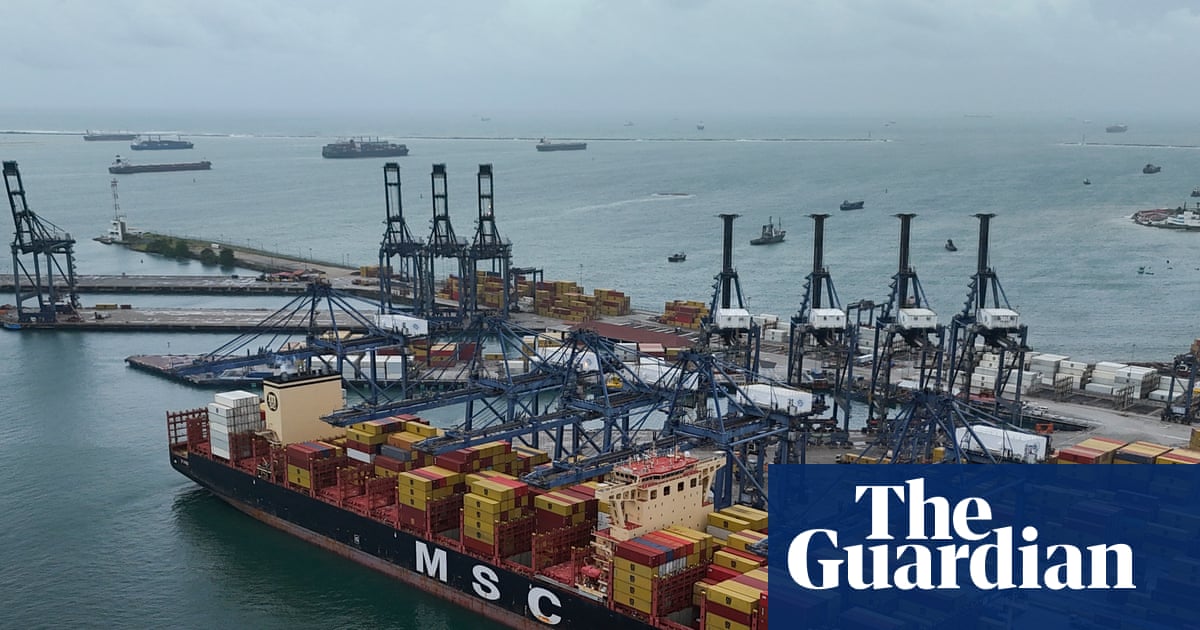
The global shipping industry, a vital artery for the world’s economy and a significant consumer of fossil fuels, stands at a critical juncture. Proposed international regulations aimed at curbing its substantial carbon footprint are facing significant headwinds, with the United States exerting considerable pressure on key maritime nations to reverse support for a landmark carbon levy. This development carries profound implications for energy investors, influencing everything from the long-term demand for traditional bunker fuels to the viability of nascent green shipping technologies. As an analyst for OilMarketCap.com, we see this not merely as a policy debate, but as a direct indicator of future investment opportunities and risks across the oil and gas value chain.
Geopolitical Shifts Undermine Maritime Decarbonization Efforts
What initially appeared to be a consensus for the shipping industry’s first-ever carbon charge, agreed upon last April by the International Maritime Organization (IMO), has now fractured. Panama, a pivotal maritime state whose canal facilitates approximately 5% of global shipping annually, has notably withdrawn its support. This reversal, reportedly influenced by intense US pressure, highlights the vulnerability of smaller nations to geopolitical leverage. Other key flags, including Liberia, which boasts one of the world’s largest shipping registries, and Cyprus, have also shifted their stances. Even Greece, a major shipping power, appears to be aligning with Saudi Arabia in opposition, signaling a complex interplay of energy and economic interests. This concerted pushback threatens to derail commitments made by the IMO in 2023 to cut greenhouse gas emissions from a sector responsible for about 3% of global carbon output – a percentage projected to increase without significant technological shifts.
Market Dynamics and Investor Sentiment Amidst Regulatory Uncertainty
The ongoing struggle over a shipping carbon tax introduces another layer of uncertainty into an already volatile energy market. As of today, Brent crude trades at $93.52, experiencing a modest +0.3% uptick for the day, while WTI sits at $90.25, up +0.65%. This relative stability contrasts sharply with the significant price correction observed over the past two weeks, during which Brent plummeted by nearly 20% from $118.35 on March 31st to $94.86 just yesterday. Such fluctuations naturally lead investors to question the market’s trajectory, with many asking “what do you predict the price of oil per barrel will be by end of 2026?” The delay or cancellation of a global shipping carbon levy could alleviate some cost pressures on shipping companies, potentially sustaining demand for conventional marine fuels longer than anticipated. This scenario would impact refining margins and crude oil demand forecasts, pushing back the timeline for widespread adoption of alternative fuels and the associated infrastructure investments.
Investor Questions: Fueling Future Decisions
Our proprietary reader intent data reveals a keen interest among investors in understanding the fundamental drivers of oil prices and the performance of specific energy assets. The potential shelving of a shipping carbon tax directly impacts these considerations. For companies like Repsol, which have significant refining and bunkering operations, or those investing in LNG or other alternative marine fuels, a delayed carbon levy means a longer runway for traditional products. Conversely, it could decelerate the necessary capital allocation towards decarbonization solutions, affecting players positioned to benefit from the energy transition. Without a clear price signal on carbon emissions, the economic calculus for investing in new, greener vessels or port infrastructure for methanol, ammonia, or hydrogen shifts significantly. Investors must now recalibrate their models, weighing the reduced immediate financial burden on shippers against the long-term imperative for sustainable practices and the eventual, inevitable transition away from high-carbon fuels.
Key Dates and Forward-Looking Analysis for Q2 Energy Markets
While the formal decision on the shipping carbon levy isn’t expected until October, crucial IMO meetings scheduled for April are set to feature “heated discussions” that could signal the proposal’s ultimate fate. Investors should monitor these closely. Any further postponement or weakening of the levy will send a clear message about the immediate future of marine fuel demand. Beyond the IMO, the broader energy calendar for Q2 2026 presents several key events that will shape the market backdrop. The OPEC+ JMMC Meeting today, April 21st, alongside the regular EIA Weekly Petroleum Status Reports on April 22nd and April 29th, and the Baker Hughes Rig Count updates on April 24th and May 1st, will provide crucial insights into supply-demand dynamics. The EIA’s Short-Term Energy Outlook on May 2nd will offer updated projections for crude oil, natural gas, and refined products, against which the shipping industry’s regulatory trajectory must be evaluated. The confluence of these events will paint a clearer picture for energy investors navigating an increasingly complex global landscape, where geopolitical pressures can swiftly alter the path of environmental regulations and, consequently, the economics of energy consumption.


