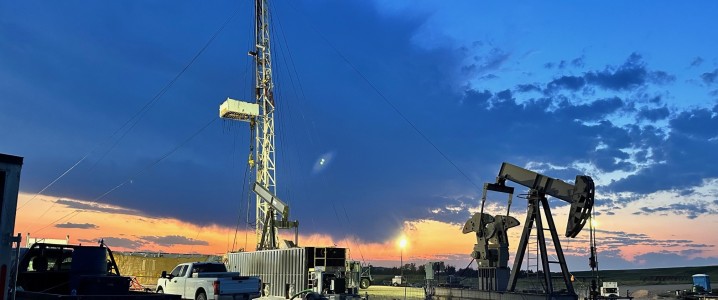
US Oil Drilling Activity Plunges, Reshaping Future Supply Expectations
The landscape of American oil and gas production is undergoing a notable transformation, driven by a persistent decline in drilling activity. New data released on Friday, June 6, 2025, reveals a further contraction in the total number of active drilling rigs across the United States. This latest reduction marks the third consecutive week of decreases, signaling a significant shift in the nation’s upstream investment trajectory and prompting investors to re-evaluate future supply outlooks.
For the week, the overall U.S. rig count decreased by 4 units, settling at 559 active rigs. This figure now stands 35 rigs below the count recorded at the same time last year, highlighting a sustained trend of reduced capital deployment in exploration and production. The implications for long-term crude and natural gas output are becoming increasingly apparent as fewer wells enter the production pipeline.
Oil Rig Count Signals Future Production Headwinds
The most impactful movement came from the oil sector, which experienced a substantial nine-rig reduction in active operations, bringing the total to 442. This follows a four-rig decline in the preceding week and places the current oil rig count a stark 50 units lower than levels observed at this exact point in 2024. This consistent erosion in oil drilling capacity is a critical indicator for investors, suggesting potential headwinds for future crude oil supply growth.
In contrast, natural gas drilling activity showed a modest uptick, with the number of active gas rigs increasing by 5 to reach 114. This rise pushes the gas rig count 16 units above its year-ago level, indicating a strategic reallocation of resources or a more favorable economic environment for gas extraction in specific regions. The miscellaneous rig count remained stable at 3, rounding out the national picture.
Production Figures Offer Mixed Signals Amidst Drilling Downturn
Despite the pronounced slowdown in drilling, recent weekly data from the U.S. Energy Information Administration (EIA) presented a nuanced picture for crude oil production. U.S. crude oil output saw a slight increase this week, moving from 13.401 million barrels per day (bpd) to 13.408 million bpd. While a rise, this figure remains 223,000 bpd below the all-time high recorded during the week of December 6, 2024. This apparent paradox – rising production amidst falling drilling – can be attributed to several factors, including the completion of previously drilled but uncompleted (DUC) wells and efficiency gains from existing operations. However, the sustained decline in new drilling activity will inevitably impact future production rates once the backlog of DUCs is exhausted.
Further insights into well completion activity come from Primary Vision’s Frac Spread Count, an essential metric tracking the number of crews engaged in bringing wells online. During the week of May 30, the Frac Spread Count rose to 190, up from 186 in the prior week. While this indicates active completion work, the current count remains 25 spreads below the level observed on March 21. This suggests a variable pace in bringing new wells to market, which could influence the immediate supply trajectory.
Key Basins Experience Significant Downturns
The impact of reduced drilling is particularly pronounced in America’s most prolific oil-producing regions. The Permian Basin, the nation’s energy powerhouse, saw its active rig count fall by 3, settling at 275. This represents a substantial decrease of 35 rigs compared to the same period last year, underscoring a significant pull-back in one of the world’s most critical oil plays. Investors closely monitor Permian activity as it often dictates the broader U.S. supply trend.
Similarly, the Eagle Ford shale play experienced a reduction of 3 active rigs, bringing its total to 40. This figure is now 11 rigs lower than its count from a year ago. These regional declines collectively contribute to the national trend of diminishing drilling capacity, suggesting a tightening supply environment unless market conditions shift dramatically.
Crude Benchmarks Respond to Market Dynamics and Geopolitical Factors
Amidst the backdrop of declining drilling, crude oil benchmarks showed positive movement on Friday. At 11:55 p.m. ET, West Texas Intermediate (WTI) crude oil traded up $1.18 per barrel, marking a 1.86% gain to reach $64.55. This price represents an increase of more than $4 per barrel since the previous Friday, signaling renewed market confidence. However, it remains below the breakeven point cited by many Permian operators, suggesting that current prices may not yet incentivize a significant return to aggressive drilling.
Brent crude, the international benchmark, also saw an increase, trading up $1.10 per barrel (+1.68%) at $66.44. Brent has gained nearly $3 per barrel since the last Friday. Market sentiment received a boost from progress in U.S.-China trade talks, which could imply stronger global demand, and concerns surrounding Canadian wildfires near critical oil installations, which raised fears of potential supply disruptions. These external factors are currently overshadowing the domestic drilling slowdown, but the long-term implications of reduced investment in U.S. fields remain a key consideration for investors.
Investor Outlook: Navigating a Shifting Supply Landscape
The persistent decline in U.S. oil drilling activity presents a complex scenario for energy investors. While crude oil prices have shown recent strength, buoyed by geopolitical developments and demand optimism, the underlying trend of reduced capital expenditure in the upstream sector points to a tightening domestic supply outlook. The divergence between rising spot production and falling rig counts highlights the industry’s focus on efficiency and well completions, but this strategy has inherent limits.
Investors should closely monitor future rig count data and crude oil prices. A sustained period where WTI remains below producer breakeven levels will likely perpetuate the drilling slowdown, potentially leading to more significant production declines in the coming months and years. This dynamic could create upward pressure on crude oil prices, benefiting producers who can maintain profitability at current or slightly higher price points, while potentially challenging those with higher operating costs. The shift in US oil drilling is not merely a statistical anomaly; it is a strategic repositioning with profound implications for global energy markets and investor portfolios.