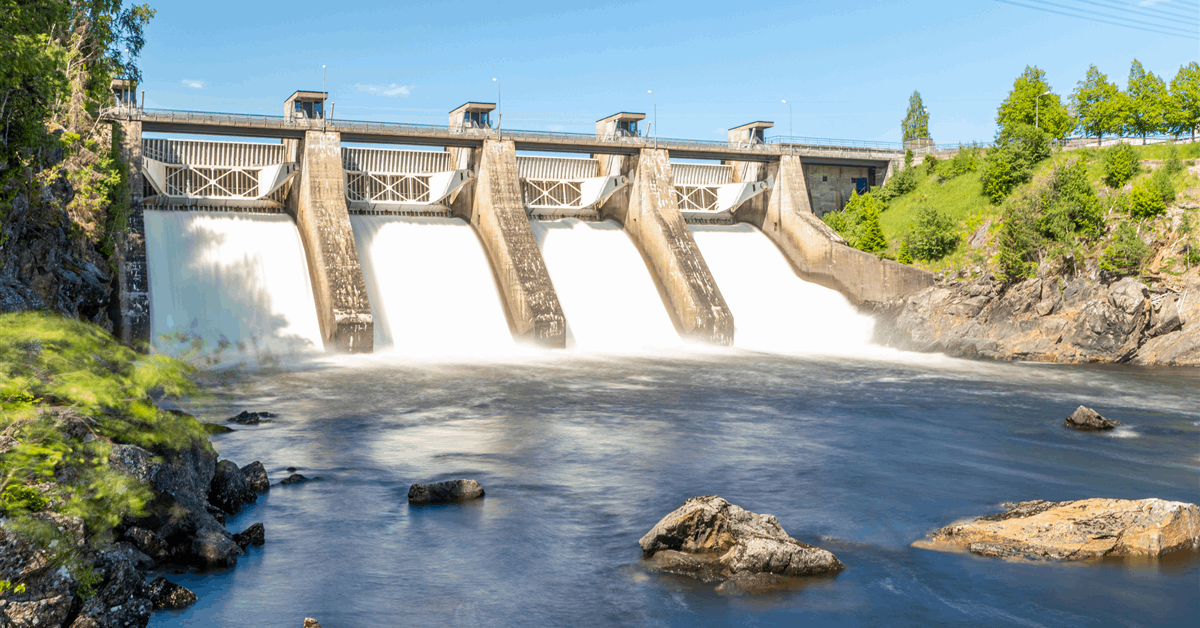
The energy transition is not a monolithic shift, but a complex tapestry woven from diverse technologies and strategic international collaborations. A recent extension of the U.S. Department of Energy’s partnership with Norway’s Royal Ministry of Energy on water power research and development serves as a prime example, signaling an accelerated focus on hydropower and marine energy. This expanded collaboration, building on a prior five-year memorandum, aims to reduce energy costs, bolster grid reliability, and enhance national security through diversified power generation. For investors navigating today’s volatile energy markets, understanding the implications of such partnerships is crucial, as they lay groundwork for future energy infrastructure and long-term investment opportunities.
Strategic Diversification Amidst Oil Market Volatility
The renewed commitment between the U.S. and Norway to advance water power technologies arrives at a critical juncture for global energy markets. As of today, Brent crude trades at $90.38, marking a significant 9.07% decline within the day’s range of $86.08 to $98.97. Similarly, WTI crude has fallen to $82.59, down 9.41%. This sharp daily drop, following a substantial 18.5% decline in Brent from $112.78 on March 30th to $91.87 on April 17th, underscores the persistent volatility in traditional fossil fuel markets. Such price swings highlight the inherent risks and the strategic imperative for nations to diversify their energy portfolios, moving towards more stable and predictable domestic sources.
The U.S.-Norway pact directly addresses this need by focusing on technologies that promise grid reliability and energy cost reduction. Hydropower, a proven source of baseload power, offers stability, while marine energy presents significant potential for locally sourced power in densely populated coastal regions. For investors, this collaboration signals a growing governmental commitment to de-risk national energy infrastructure from geopolitical shocks and commodity price fluctuations, making renewable energy sectors, particularly those with grid-stabilizing capabilities, increasingly attractive. The drive to reduce energy costs also translates into improved economic competitiveness and operational stability for industries reliant on a consistent, affordable power supply.
Expanding the Horizon: From Hydropower to Marine Energy
Initially focused on hydropower research, the expanded memorandum now broadens the scope to include marine energy, a sector with immense untapped potential. This strategic pivot reflects a sophisticated understanding of renewable energy’s diverse applications and the specific advantages marine energy offers. Unlike intermittent solar or wind power, certain marine energy technologies, such as tidal and wave power, can offer more predictable and consistent generation profiles, potentially providing critical baseload capacity. The collaboration aims to share key information, tools, and technologies, effectively lowering barriers to development, testing, and advancement in both hydropower and marine solutions.
This technical collaboration is not merely academic; it is designed to accelerate commercial viability. By combining American innovation with Norway’s deep expertise in water power resources and advanced marine energy technologies, the partnership seeks to fast-track the deployment of these solutions. Investors should recognize this as a signal of maturation in these renewable sectors. As technological hurdles are overcome and deployment costs decline through shared expertise, new avenues for capital deployment will emerge, from infrastructure development to specialized technology providers. The long-term vision is clear: expand generation capacity, upgrade existing facilities, and cultivate the technical expertise required to fully harness these abundant, clean energy resources.
Addressing Investor Concerns: Long-Term Outlook Beyond Crude
Our proprietary reader intent data reveals a consistent focus among investors on the future trajectory of traditional energy markets, with questions like “What do you predict the price of oil per barrel will be by end of 2026?” dominating conversations. While the US-Norway hydropower pact doesn’t directly influence short-term crude prices or OPEC+ production quotas, it undeniably contributes to the broader narrative of long-term demand shifts and energy diversification. Every megawatt generated from hydropower or marine energy is a megawatt less that needs to be supplied by fossil fuels in the long run.
This pact, therefore, offers a critical lens through which to evaluate long-term portfolio strategy. Investors currently heavily weighted towards oil and gas may consider the accelerated development of robust renewable energy sources as a hedge against future demand erosion. The focus on strengthening grid reliability also speaks to the foundational infrastructure necessary for an electrified future, presenting opportunities in grid modernization, energy storage, and smart grid technologies. While oil and gas will remain vital for decades, strategic collaborations like this underscore a clear, sustained global effort to transition, creating new growth sectors and challenging the dominance of traditional energy sources over the investment horizon.
Upcoming Catalysts and the Evolving Energy Landscape
The immediate attention of many oil and gas investors will undoubtedly be fixed on upcoming calendar events. This weekend brings the crucial OPEC+ Joint Ministerial Monitoring Committee (JMMC) and the Full Ministerial meetings, where decisions on production quotas could send ripples through the market. Next week, the API and EIA Weekly Crude Inventory reports on April 21st and 22nd, respectively, will provide fresh insights into U.S. supply-demand dynamics, followed by the Baker Hughes Rig Count on April 24th, indicating future production trends. These events are critical for short-term trading and tactical positioning within the fossil fuel sector.
However, sophisticated investors recognize that these short-term market movers operate within a larger, evolving energy landscape. The US-Norway hydropower pact, while not generating headlines with the same immediacy as an OPEC+ decision, represents a foundational shift. It’s a long-term strategic investment in alternative energy infrastructure that, over time, will influence global energy balances. The success of such renewable initiatives will gradually contribute to reducing reliance on volatile fossil fuels, ultimately impacting the long-term price predictions that many of our readers are keen to understand. For a comprehensive investment strategy, acknowledging and actively tracking these parallel developments in both traditional and renewable energy sectors is paramount.


