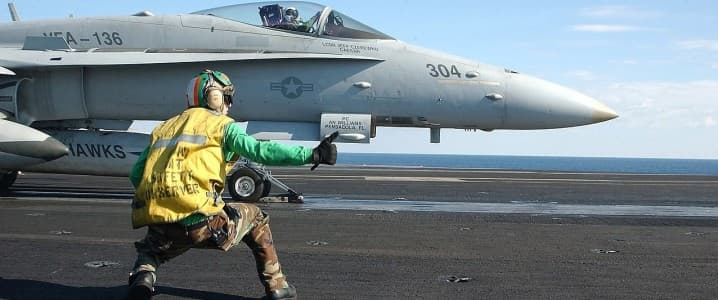
The global oil market is once again confronting the intricate dance between energy security and geopolitical stability, with Guyana emerging as a critical flashpoint. The recent deployment of U.S. fighter jets to this rapidly burgeoning South American oil province signals a significant escalation in regional tensions, drawing Washington deeper into a long-standing territorial dispute between Guyana and its larger, oil-producing neighbor, Venezuela. This move has immediate implications for investors, as it injects a new layer of uncertainty into a region that has become central to the Atlantic Basin’s light sweet crude supply. For those tracking the world’s fastest-growing offshore oil frontier, understanding the dynamics at play in Guyana is no longer optional; it is paramount to assessing future market volatility and investment risk.
Guyana’s Explosive Growth and the Stabroek Prize
Guyana’s transformation into a global oil powerhouse has been nothing short of spectacular. Spearheaded by ExxonMobil and its partners, Hess and CNOOC, production from the prolific Stabroek block already exceeds 650,000 barrels per day. Projections indicate this figure could reach an astounding 1.3 million barrels per day by 2027, effectively positioning Guyana to rival established OPEC members despite its modest population of under one million. This remarkable trajectory has made Guyanese light sweet crude a highly sought-after commodity, often commanding strong premiums in Atlantic Basin markets. The economic stakes are immense, with the Guyanese government, under President Irfaan Ali, leveraging these petroleum revenues for significant infrastructure and social programs, a strategy recently reaffirmed by his electoral victory. However, this newfound wealth has simultaneously amplified historical grievances, particularly Venezuela’s revived claims over the Essequibo region, which constitutes two-thirds of Guyana’s territory and abuts these lucrative offshore fields. Any disruption to this vital supply source would send ripples across the global energy landscape.
U.S. Posture, Venezuelan Threats, and Forward-Looking Supply Risks
The U.S. military presence, while officially framed as part of broader counter-narcotics missions in the Caribbean, strategically overlaps with Guyana’s offshore sector, where over 30 discoveries have been made since 2015. This deployment is widely interpreted as a clear signal of Washington’s commitment to Guyana’s sovereignty and, by extension, the stability of its burgeoning oil industry. Venezuelan President Nicolás Maduro’s recent warning of an “armed struggle” in response to perceived U.S. aggression underscores the gravity of the situation. For investors, the immediate concern shifts from theoretical geopolitical risk to tangible supply chain vulnerability. As the OPEC+ Joint Ministerial Monitoring Committee (JMMC) convenes on April 18th, followed by the full Ministerial meeting on April 20th, the stability of global supply, particularly from rapidly growing non-OPEC sources like Guyana, will undoubtedly factor into their deliberations. Any perceived threat to Guyana’s offshore production could inject additional caution into output decisions, potentially tightening a market already sensitive to supply-demand balances reported in upcoming EIA and API inventory data, such as the API Weekly Crude Inventory due on April 21st and the EIA Weekly Petroleum Status Report on April 22nd. These events, coupled with the Baker Hughes Rig Count reports on April 17th and 24th, will provide crucial context for how the market assesses ongoing and potential supply disruptions.
Market Response and Investor Sentiment under Pressure
The market’s immediate reaction to geopolitical developments is often nuanced, but the long-term implications for investor sentiment and operational costs can be significant. As of today, Brent crude trades at $98.38, reflecting a 1.02% dip, while WTI is at $89.99, down 1.29%. This recent decline from $112.57 just two weeks ago to $98.57 yesterday highlights a market grappling with various pressures, from demand concerns to strategic reserve releases. However, the escalating tensions in Guyana introduce a unique, potentially rapid-onset risk that could quickly reverse price trends, particularly for Atlantic Basin light sweet crude. Energy executives are privately noting that insurance costs for operations in the region are already under scrutiny, and any further deterioration of the security situation could prompt a reassessment of investment profiles for companies like ExxonMobil, Hess, and CNOOC. The potential for supply disruptions from such a critical, high-growth region means that current market prices might be underestimating the specific geopolitical risk premium attached to Guyanese oil. Investors must consider not just the cost of extraction, but also the escalating cost of securing operations in an increasingly contested environment.
Navigating Uncertainty: What Investors Are Asking
Our proprietary reader intent data reveals a consistent demand among investors for clarity on OPEC+’s current production quotas and real-time Brent crude pricing. This indicates a market hungry for robust, up-to-the-minute information on supply fundamentals and immediate price signals. The unfolding situation in Guyana directly impacts this quest for clarity, introducing a new, potent variable into the global supply equation. Investors are actively seeking to understand how geopolitical flashpoints, even those geographically distant, can rapidly influence global energy flows and, consequently, their portfolios. For those invested in the upstream sector, particularly in exploration and production companies with significant exposure to Guyana, the focus extends to evaluating the long-term viability and security of these assets. The continuity of government policy in Guyana, reinforced by recent elections, offers a degree of stability from a domestic perspective, but the external threat from Venezuela, now complicated by a direct U.S. military presence, introduces an unquantifiable element of risk. Prudent investors will be closely monitoring not only the price of crude but also diplomatic developments and military posturing, understanding that the delicate balance in the South Caribbean could shift rapidly, impacting global energy markets far beyond regional borders.


