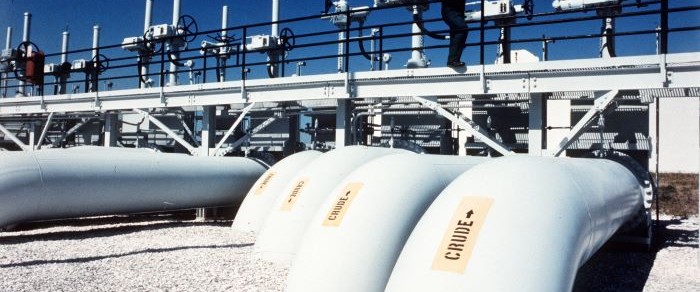
The recent announcement by the U.S. government to purchase a mere one million barrels of crude oil for the Strategic Petroleum Reserve (SPR), with deliveries scheduled for December and January, presents a fascinating case study for energy investors. While the move is undeniably symbolic, signaling a renewed intent to replenish the nation’s emergency oil stockpile, its immediate market impact is negligible. For savvy investors, however, this small step opens a window into broader strategic considerations, long-term market dynamics, and the delicate balance Washington must strike between ensuring energy security and influencing volatile crude prices. This analysis leverages proprietary market data and investor sentiment to dissect the implications beyond the headlines.
The Market’s Current Pulse: A Volatile Landscape
Understanding the context of this SPR purchase requires a keen eye on the prevailing market conditions. As of today, Brent Crude trades at $90.38, reflecting a sharp 9.07% decline within the day, with its range oscillating between $86.08 and $98.97. Similarly, WTI Crude stands at $82.59, down 9.41% for the day, having traded between $78.97 and $90.34. This immediate volatility follows a significant downturn over the past two weeks; Brent alone has plunged from $112.78 on March 30 to its current $90.38, representing a substantial $22.4 or 19.9% decrease. This contrasts sharply with the source article’s reference to WTI at around $58 per barrel when the Trump administration initially timed its purchases, highlighting the extreme fluctuations in the global energy market since then. The current price levels, while still elevated compared to historical averages, reflect a market grappling with robust U.S. production, which recently hit a record 13.6 million barrels per day, and a persistent global supply glut. For investors, this environment of pronounced price swings underscores the importance of strategic positioning and timely entry points, especially as the government signals its own intent to buy.
Navigating Forward: Upcoming Catalysts and SPR Strategy
The decision to fund this initial SPR refill with $171 million from a new tax and spending law, targeting delivery to the Bayou Choctaw site, is more than just a transaction; it’s a forward-looking signal. Bids for this modest one-million-barrel purchase are due by October 28, with contracts tied to spot market prices. This timing is critical, as future SPR purchases will inevitably be influenced by a series of upcoming market-moving events. Investors should closely monitor the OPEC+ JMMC and Ministerial Meetings scheduled for April 19th and 20th. Any decisions regarding production quotas from these meetings will directly impact global supply expectations and, consequently, crude prices. Following closely, the API Weekly Crude Inventory reports on April 21st and 28th, alongside the EIA Weekly Petroleum Status Reports on April 22nd and 29th, will provide crucial insights into U.S. inventory levels – a key determinant of short-term price movements. Furthermore, the Baker Hughes Rig Count on April 24th and May 1st will offer an indication of future production trends. Washington faces a delicate balancing act: purchasing crude at “opportunistic” prices to rebuild the SPR, which currently sits at a four-decade low of around 395 million barrels after 180 million were released, while avoiding actions that could inadvertently fuel another price rally. With significant maintenance delays pushing other scheduled deliveries into late 2025, future, larger-scale SPR replenishment efforts will be under intense scrutiny, making these upcoming calendar events even more pivotal for market direction.
Investor Insights: Addressing Key Concerns and Price Trajectories
Our proprietary reader intent data reveals that investors are actively seeking clarity on the trajectory of crude prices and the strategic moves of major players like OPEC+. Specifically, investors are asking about the predicted price of oil per barrel by the end of 2026 and OPEC+’s current production quotas. This aligns perfectly with the current SPR narrative. The government’s symbolic purchase, while small, indicates a long-term demand vector. Rebuilding the SPR from its depleted state, which once held 700 million barrels, is a monumental task that Energy Secretary Chris Wright estimates could take years and cost as much as $20 billion. While Congress has allocated $1.3 billion for refills and maintenance, and importantly, repealed mandatory drawdowns that plagued the reserve in prior years, the immediate impact of a one-million-barrel buy on the global market is minimal. However, sustained, larger-scale purchases, if implemented, would represent a consistent demand driver. For investors forecasting oil prices into late 2026, the long-term commitment to SPR replenishment, coupled with OPEC+’s ongoing supply management and global economic growth, forms a complex but critical puzzle. The repeal of mandatory drawdowns suggests a more stable, predictable SPR management policy going forward, reducing the risk of politically motivated supply releases that can depress prices. While specific company performance like Repsol’s April 2026 outlook depends on a multitude of factors, the overarching sentiment in the oil market, heavily influenced by supply-demand fundamentals and geopolitical stability, remains a primary driver for all integrated energy companies.
The Symbolic Gesture vs. Strategic Imperative
The one-million-barrel SPR purchase is, in essence, a political gesture designed to demonstrate intent rather than a significant energy strategy capable of moving market prices. Compared to the 180 million barrels released during the Biden years to combat rising gasoline prices, or the SPR’s maximum capacity of 700 million barrels, this initial buy is indeed a “rounding error.” Yet, its symbolism should not be entirely dismissed. It marks a shift from a policy of strategic drawdowns to one of strategic replenishment. The government’s willingness to use $171 million from a broader legislative package underscores a recognition of the SPR’s critical role as America’s emergency oil cushion. While rebuilding the reserve will be neither cheap nor quick, requiring sustained effort and substantial funding, this initial step establishes a precedent. Future market conditions will dictate the pace and scale of these refills, but the fundamental decision to embark on this path is a long-term bullish signal for crude demand from a reliable, non-commercial buyer. Investors should view this not as an immediate market catalyst, but as an indicator of a structural, long-term demand component that will gradually contribute to the overall balance of the energy market, adding another layer of complexity to future price forecasts.


