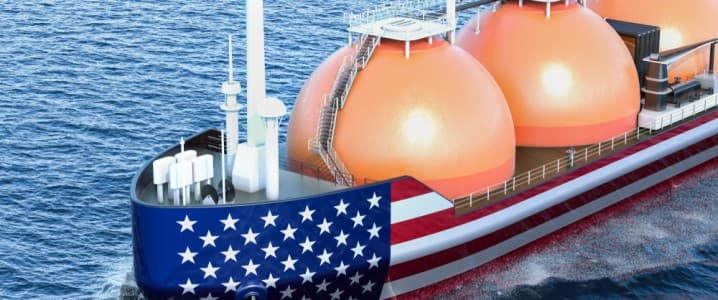
The recent agreements signed between Ukraine and Greece for the supply of U.S. liquefied natural gas (LNG) represent a pivotal development in Europe’s ongoing energy security narrative. With Ukrainian President Volodymyr Zelenskyy present in Athens, national oil and gas firm Naftogaz Group sealed both operational and long-term deals with Greece’s DEPA, targeting gas deliveries for the crucial 2025-2026 winter period. Prompt supplies are set to commence as early as January 2025. This strategic pivot, facilitated by U.S. LNG cargoes arriving at the Greek port of Alexandroupolis and then pipelined to Ukraine via a multi-country route, underscores Ukraine’s urgent need to secure energy supplies amidst relentless attacks on its domestic infrastructure. For investors, this move signals a hardening of long-term demand for non-Russian gas, with implications for global LNG markets, infrastructure development, and geopolitical energy plays.
The Strategic Imperative: Ukraine’s Energy Resilience
Ukraine’s energy infrastructure has been a primary target of intensified military actions, necessitating a robust and diversified supply strategy. President Zelenskyy highlighted that most power plants, gas production facilities, and thermal power plants have come under attack, underscoring the critical need for external support. The new agreements with Greece are an integral part of Ukraine’s comprehensive energy package designed to ensure gas availability through the upcoming winters. The chosen route, from Alexandroupolis to the Ukrainian port of Odessa, leverages existing and planned pipeline infrastructure across five European nations, demonstrating a coordinated regional effort. DEPA Commercial’s 40% stake in ATLANTIC–SEE, the entity facilitating U.S. LNG supply, reinforces Greece’s commitment to becoming a key energy hub for Southeast Europe. Furthermore, the European Investment Bank (EIB) is providing crucial financial backing through loans and grants, enabling Ukraine to fund these vital gas imports. This concerted action not only aims to provide immediate relief but also lays down a long-term framework for Ukraine’s energy independence and resilience.
LNG Demand Dynamics Amidst Shifting Market Sentiment
The solidification of long-term LNG demand from Ukraine comes at a fascinating juncture for global energy markets. As of today, Brent crude trades at $89.11 per barrel, marking a significant daily decline of 10.34%, with WTI crude similarly down 10.35% to $81.73 per barrel. Gasoline prices have also retreated, falling 5.82% to $2.91. This sharp intra-day correction follows a broader trend where Brent has shed 12.4% over the past two weeks, dropping from $112.57 to $98.57, before today’s further plunge. While crude and refined product prices are reacting to a complex interplay of supply, demand, and macroeconomic signals, the firming of gas demand in Europe, specifically for LNG, offers a counter-narrative for gas-focused investors. The Ukrainian commitment, extending to the 2025-2026 winter, provides a layer of fundamental stability for LNG suppliers and infrastructure operators. It suggests that even if broader energy markets experience volatility, the structural shift towards energy security and diversification in Europe will continue to underpin robust demand for non-Russian gas sources, particularly from the U.S.
Forward Outlook: Geopolitics, Supply, and Upcoming Catalysts
Looking ahead, the commitment to US LNG for Ukraine is set to influence investment decisions in gas infrastructure and supply chains. Investors are keenly watching how global supply dynamics will evolve, especially with key events on the horizon. This Friday, April 17th, the OPEC+ Joint Ministerial Monitoring Committee (JMMC) convenes, followed by the full OPEC+ Ministerial Meeting on Saturday. Their decisions on production quotas will significantly impact crude prices and indirectly, the relative competitiveness of natural gas. Subsequent weekly data releases, such as the API Weekly Crude Inventory on April 21st and 28th, and the EIA Weekly Petroleum Status Report on April 22nd and 29th, will provide crucial insights into U.S. supply and demand balances. The Baker Hughes Rig Count on April 24th and May 1st will further illuminate drilling activity. For LNG, these supply-side indicators for crude are important proxies for broader energy market sentiment and the availability of associated gas. The long-term nature of the Ukraine-Greece deal indicates a sustained demand floor for U.S. LNG, driving continued investment in liquefaction capacity, export terminals, and shipping logistics through 2025 and 2026, regardless of short-term crude price fluctuations.
Investor Focus: Navigating Price Volatility and Long-Term Commitments
One of the most pressing questions from investors this week revolves around the future trajectory of oil prices, with many asking for predictions on the price per barrel by the end of 2026. Another common inquiry centers on OPEC+ current production quotas, highlighting the market’s sensitivity to supply management. While today’s sharp downturn in crude prices might trigger caution, the long-term commitments for US LNG to Ukraine offer a compelling case for fundamental demand growth in the gas sector. For investors, this underscores the importance of distinguishing between short-term market volatility, driven by sentiment and inventory reports, and the structural, long-term shifts in energy geopolitics and security. Investing in companies with exposure to LNG production, transportation (shipping), and regasification infrastructure, particularly those serving the European market, appears strategically sound. These long-term contracts provide revenue visibility and reduce exposure to spot market whims. As European nations continue to de-risk their energy portfolios from geopolitical dependencies, the sustained demand for diverse gas supplies, exemplified by the Ukraine-Greece agreements, will likely maintain a premium on reliable LNG sources, offering a buffer against broader commodity price swings and providing a clear pathway for growth well into 2026 and beyond.


