

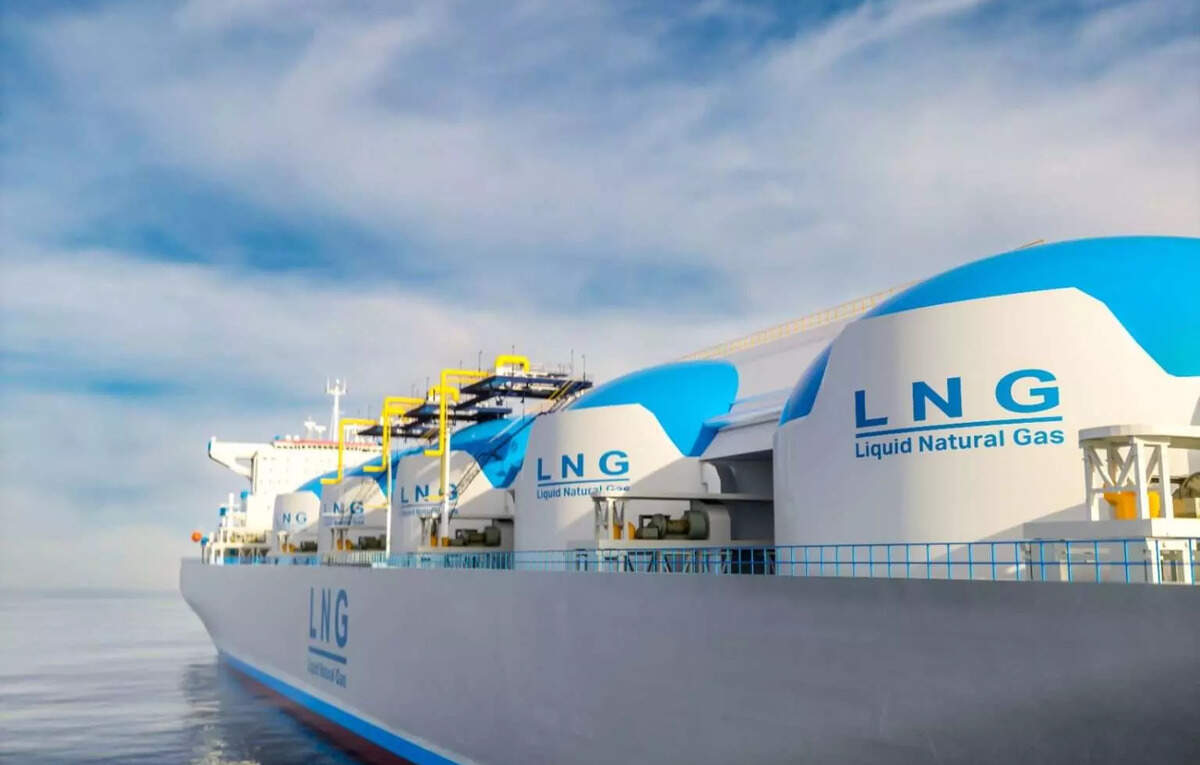
The global natural gas market, a critical arena for energy investors, recently received definitive guidance on the future trajectory of American liquefied natural gas (LNG) exports to Europe. On April 28, 2025, from Warsaw, US Energy Secretary Chris Wright confirmed a sustained, significant increase in US LNG shipments to the European continent. This declaration reinforces the United States’ position as the world’s preeminent LNG exporter, signaling robust forward momentum for companies engaged across the entire LNG value chain.
This commitment arrives at a pivotal moment for European energy independence and global energy trade dynamics. Since Russia’s full-scale invasion of Ukraine in 2022 dramatically curtailed pipeline gas deliveries from Moscow, American LNG cargoes have proven indispensable, swiftly moving to fill the void. This strategic pivot has not only stabilized Europe’s energy matrix but has also fundamentally reshaped international energy trade routes, diminishing the continent’s historical reliance on Russian hydrocarbons.
Secretary Wright’s remarks underscore the enduring and indeed growing demand for US LNG, even as the broader geopolitical landscape continues to evolve. He explicitly stated, “The U.S. supply will continue to grow in a meaningful way. There’s a lot of dialogue about contracts.” Furthermore, his projection that “I think we will absolutely see more off-take agreements for LNG from the U.S. in Europe” offers a compelling bullish signal. For investors, this emphasis on long-term contractual commitments and increasing off-take agreements translates into enhanced revenue visibility and project certainty for firms involved in LNG liquefaction, specialized shipping, and European regasification infrastructure. This bodes well for capital expenditure plans and potential equity upside within the sector.
Navigating Evolving Geopolitics and European Energy Strategy
While the US commitment to bolstering LNG exports remains steadfast, the geopolitical environment presents a complex backdrop. Recent rhetoric and the potential for new tariff policies emanating from US President Donald Trump have introduced a layer of concern among some European energy executives. The apprehension stems from the possibility that an excessive dependence on American energy could inadvertently create a new vulnerability, transforming a crucial energy solution into a potential point of leverage in future transatlantic trade negotiations. Savvy investors are closely monitoring these developments, understanding that trade policy shifts can directly impact the economics of energy supply agreements.
This emerging sentiment has even led certain European energy leaders to cautiously explore the hypothetical reintroduction of Russian gas, including volumes from state-controlled Gazprom, into their energy mix should trade tensions with the US escalate significantly. When questioned about the prospect of a greater return of Russian energy to Europe, Secretary Wright adopted a pragmatic and diplomatic stance. He asserted, “I think the energy situation in Europe is probably largely going to be determined by Europeans.” This statement highlights the sovereign decision-making power of European nations in crafting their long-term energy portfolios, even as US suppliers stand ready and able to meet robust demand.
Investment Implications in a Dynamic Landscape
For astute investors, this evolving dynamic necessitates a dual focus: close observation of transatlantic trade relations and a deep understanding of European domestic energy policy. The delicate balance between ensuring energy security, achieving genuine diversification of supply sources, and maintaining robust geopolitical alliances will profoundly influence future investment opportunities and mitigate risks within the European natural gas market. Companies with flexible supply chains, strong contractual agreements, and diversified market access are likely to be best positioned.
The imperative for Europe to secure stable, reliable energy supplies without undue geopolitical encumbrance remains paramount. US LNG, with its abundance and transparent market pricing, offers a compelling solution. However, the political calculus, particularly concerning potential trade disputes, adds a layer of complexity to future contract negotiations and final investment decisions (FIDs) for new liquefaction capacity. Investors should scrutinize the terms of new off-take agreements, looking for clauses that address potential tariff impacts or supply disruptions.
Furthermore, the long-term outlook for natural gas as a transition fuel continues to underpin demand projections. While renewable energy sources are expanding rapidly, natural gas provides essential baseload power and industrial feedstock, making LNG a crucial component of global energy security for decades to come. Investment in upstream gas production, midstream pipeline infrastructure feeding liquefaction plants, and the expansion of import terminals in Europe all represent significant avenues for capital deployment. Identifying companies with strong balance sheets, strategic asset footprints, and proven operational excellence in these segments will be key to capitalizing on the confirmed growth trajectory of US LNG to Europe, even amidst the intricate dance of international politics and trade.
The bullish outlook for US LNG exports to Europe is not merely a forecast; it is a strategic imperative confirmed at the highest levels. While geopolitical complexities introduce elements of risk, the fundamental drivers of European energy security and diversification continue to solidify the market position of American natural gas. Investors with a clear understanding of these intertwined energy and political currents stand to benefit from the sustained expansion of this critical global energy trade.
