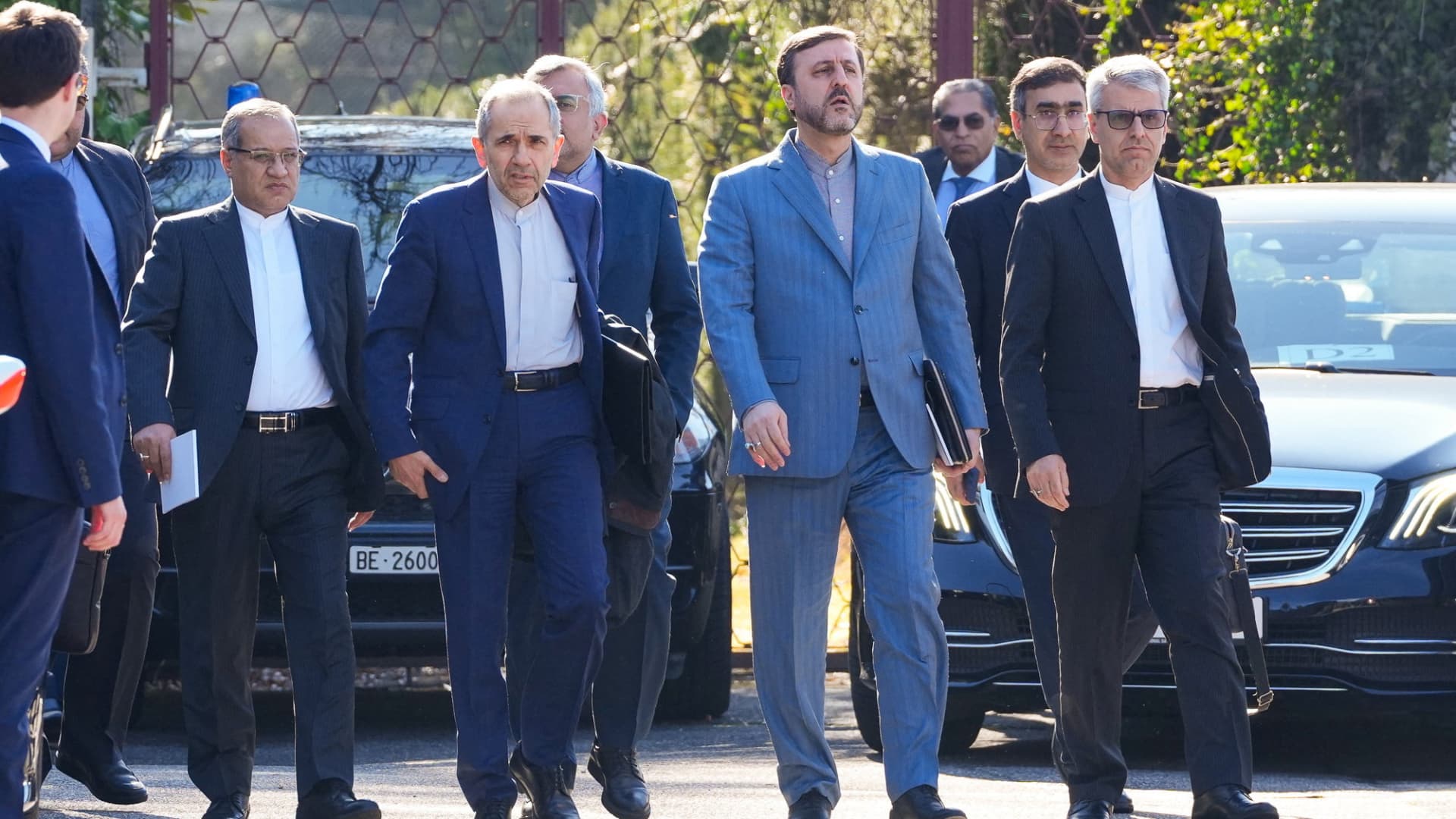
The latest round of high-stakes negotiations between the United States and Iran has concluded without a breakthrough, leaving the market to grapple with continued uncertainty regarding Iranian oil sanctions. While both sides, including Iranian Foreign Minister Seyed Abbas Araghchi and the U.S. delegation led by Steve Witkoff and Jared Kushner, described the discussions in Geneva, Switzerland, as the “most intense so far” and reported “significant progress,” a firm agreement to lift sanctions remains elusive. The parties have agreed to extend talks, with further technical discussions slated for Vienna next week. For oil and gas investors, this outcome underscores the persistent geopolitical risk in the Middle East, even as immediate market reactions suggest other factors are currently driving crude prices.
The Stalemate: Demands, Divisions, and Diplomatic Impasse
The core sticking points that have plagued US-Iran relations for years continue to prevent a comprehensive agreement. The U.S. administration, under President Donald Trump, has maintained a firm stance, demanding that Tehran unequivocally commit to not developing nuclear weapons. Specific demands reportedly included the destruction of key nuclear sites at Fordow, Natanz, and Isfahan, the delivery of all remaining enriched uranium to the U.S., and a “forever” deal devoid of sunset clauses. Furthermore, Washington has pressured Iran to curb its ballistic missile development program, cease support for regional armed groups, and address the repression of domestic protestors.
On the Iranian side, Foreign Minister Araghchi affirmed that “further progress” was made, particularly on critical issues like sanctions termination and nuclear-related steps. However, Tehran continues to insist on its sovereign right to enrich uranium for energy production and has objected to the U.S. demands regarding its nuclear infrastructure and ballistic missiles. This fundamental disagreement creates a significant hurdle. While Oman’s foreign minister Badr Albusaidi, a key mediator, noted agreement to meet next week for technical details, the lack of a definitive commitment on the most contentious issues means that the prospect of Iranian oil returning to global markets remains a distant, rather than imminent, possibility.
Market Dynamics: Geopolitical Tensions vs. Broader Trends
Despite the high-stakes nature of the US-Iran talks and the persistent geopolitical tensions, the immediate market reaction has been rather subdued. As of today, Brent Crude trades at $93.72 per barrel, marking a modest +0.51% increase, while WTI Crude stands at $90.21, up +0.6%. Gasoline prices remain stable at $3.13. This slight upward movement is largely within typical daily fluctuations and does not signal a market panic or a significant geopolitical risk premium being priced in due to the inconclusive talks.
In fact, a broader look at the market reveals a more significant trend: over the past 14 days, Brent crude has seen a substantial decline, falling from $118.35 on March 31 to $94.86 on April 20 – a drop of nearly 20%. This pronounced downtrend suggests that macro-economic concerns, global demand outlooks, and potentially shifting supply expectations from other regions have been more dominant drivers of oil prices than the ongoing, albeit intense, US-Iran diplomatic efforts. Investors appear to be reserving judgment on potential Iranian supply until a concrete deal is signed, focusing instead on more immediate supply-demand fundamentals.
Navigating the Near-Term: Upcoming Catalysts for Oil Investors
With the Iran situation still a slow-burn diplomatic effort, oil investors should turn their attention to a series of imminent market events that are likely to exert more immediate influence on crude prices. Later today, April 21, the OPEC+ Joint Ministerial Monitoring Committee (JMMC) will convene. This meeting is a critical barometer for the group’s production policy, especially in light of recent price volatility and fluctuating global demand signals. Any indication of a shift in output quotas, or even a reaffirmation of current policy, could prompt a swift market reaction.
Beyond OPEC+, the next two weeks are packed with key data releases. The EIA Weekly Petroleum Status Report, due April 22 and again on April 29, will provide crucial insights into U.S. crude oil and product inventories, refining activity, and demand indicators. Similarly, the API Weekly Crude Inventory reports on April 28 and May 5 will offer an early look at these vital figures. The Baker Hughes Rig Count on April 24 and May 1 will shed light on U.S. upstream activity and potential future production trends. Finally, the EIA Short-Term Energy Outlook on May 2 will offer a comprehensive forecast for the coming months, providing a macro perspective that could shape investor sentiment more profoundly than the ongoing geopolitical chatter.
Investor Outlook: Pricing Geopolitical Risk and Future Supply
As investors grapple with questions about the future direction of WTI and broader oil prices by the end of 2026, the inconclusive US-Iran talks serve as a powerful reminder of unquantified geopolitical risk. While the immediate market has not reacted dramatically, the potential for Iranian oil to re-enter the global market—estimated at 1.0 to 1.5 million barrels per day—remains a significant overhang. Should sanctions eventually be lifted, such a supply injection would undoubtedly reshape the global oil balance, potentially putting downward pressure on prices.
Conversely, the failure to reach a deal carries its own set of risks. President Trump’s warnings of “bad things” happening if Iran does not agree to terms, coupled with the U.S. military build-up in the Middle East, highlight the ever-present threat of military confrontation. While a low-probability event, any escalation could rapidly trigger a substantial geopolitical risk premium in crude prices, echoing past market spikes during regional instability. Investors must therefore carefully consider this dual-pronged risk: potential increased supply if a deal is struck, versus a possible supply disruption if tensions escalate. For now, the market seems to be betting on continued diplomatic stalemate rather than either extreme, but vigilance remains paramount as negotiations continue in Vienna and beyond.


