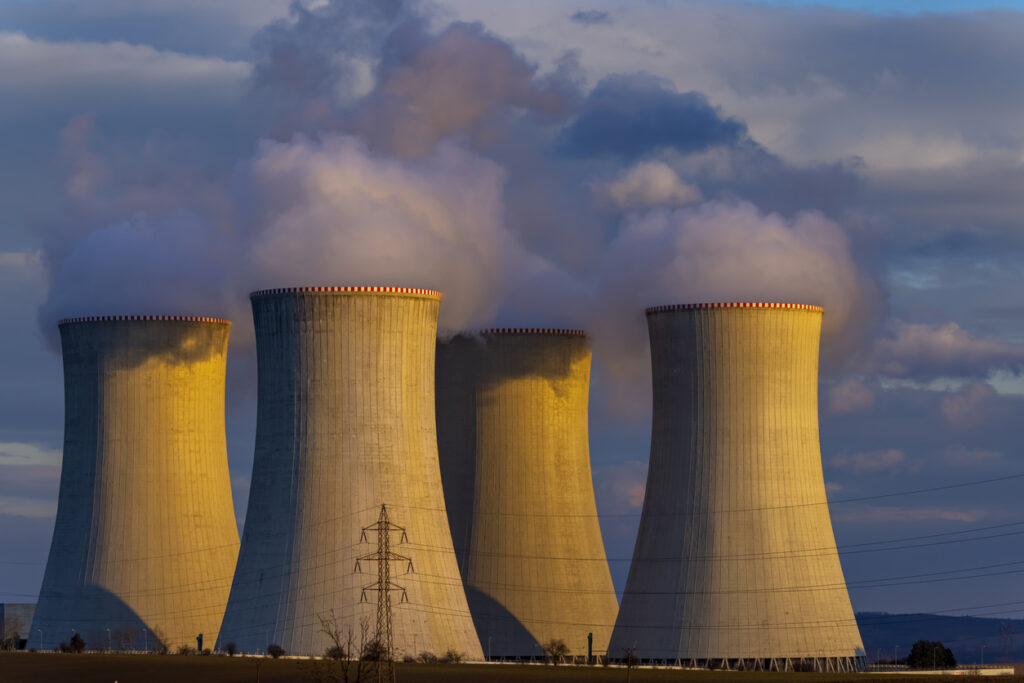
India’s recent legislative stride, marked by the endorsement of the Sustainable Harnessing and Advancement of Nuclear Energy for Transforming India (SHANTI) Bill, signals a monumental shift in the nation’s energy landscape. This landmark legislation, which repeals the restrictive Atomic Energy Act of 1962 and the Civil Liability for Nuclear Damage Act of 2010, effectively dismantles over six decades of state monopoly, flinging open the doors of India’s civil nuclear industry to private investment and foreign participation. For global investors eyeing the burgeoning energy transition, this development, underscored by the United States’ expressed willingness to cooperate on joint innovation and R&D, presents a compelling long-term opportunity, particularly as traditional fossil fuel markets navigate persistent volatility.
India’s Nuclear Ambition: A $214 Billion Blueprint
The SHANTI Bill is not merely a regulatory update; it is the cornerstone of India’s ambitious “Nuclear Energy Mission,” which targets a staggering 100 gigawatts (GW) of nuclear power capacity by 2047. This represents an almost twelve-fold increase from the current 8.8 GW, presently operated exclusively by the state-owned Nuclear Power Corporation of India Limited (NPCIL). Achieving this formidable goal will necessitate immense capital injection. Experts and a panel convened by India’s power ministry project cumulative capital requirements reaching as much as 19.28 trillion Indian rupees, equivalent to approximately $214 billion at current exchange rates. This substantial investment is expected to flow from both indigenous and foreign private firms, harnessing their capital, efficiency in construction, and aptitude for innovation to deploy existing and emerging advanced nuclear technologies. The scale of this financial commitment underscores the profound shift India is undertaking, positioning nuclear power as a critical pillar for its future energy security and decarbonization efforts.
Navigating Energy Transition Amidst Market Volatility
This strategic pivot towards nuclear power in India unfolds against a backdrop of fluctuating global energy markets, particularly in the oil sector. As of today, Brent Crude trades at $90.18, reflecting a modest -0.28% change, within a day range of $93.87-$95.69. Similarly, WTI Crude stands at $86.65, down -0.88%, with its daily range between $85.50 and $87.47. These figures illustrate an ongoing ebb and flow in crude prices, a trend that saw Brent crude experience a significant -19.8% decline, shedding $23.49 from $118.35 on March 31st to $94.86 on April 20th. Such volatility in conventional energy sources naturally enhances the appeal of long-term, stable, and clean energy investments. India’s commitment to nuclear power offers a robust counter-narrative to the short-term price swings dominating the oil market, presenting investors with an opportunity to diversify into an asset class characterized by predictable, long-duration returns and strong alignment with global sustainability mandates. The massive capital required for India’s nuclear build-out positions it as a compelling alternative for funds seeking stability away from the inherent unpredictability of fossil fuel cycles.
Addressing Investor Focus: Long-Term Vision vs. Short-Term Swings
Our proprietary reader intent data reveals a prevalent investor focus on immediate market dynamics, with questions frequently centering on “is WTI going up or down” or predictions for “the price of oil per barrel by end of 2026.” While these immediate concerns are valid for short-term trading strategies, India’s nuclear energy initiative calls for a much longer investment horizon. The $214 billion opportunity in India’s nuclear sector directly addresses a critical investment need for diversification and de-risking against the very price volatility that preoccupies many short-term traders. For institutional investors, private equity, and sovereign wealth funds, the “joint innovation and R&D” aspect with the US, as highlighted by the U.S. Embassy in India, adds an additional layer of technological partnership and risk mitigation. This collaborative framework could accelerate deployment and enhance the efficiency of India’s nuclear projects, providing a stable, high-growth avenue for capital deployment that aligns with broader ESG (Environmental, Social, and Governance) investment criteria, offering a strategic counterpoint to the fluctuating fortunes of the traditional oil and gas sector.
Upcoming Market Catalysts and Strategic Outlook
While India’s nuclear expansion is a long-term play, the broader energy market context continues to evolve rapidly, shaped by a series of upcoming events that will influence investor sentiment and capital allocation. The OPEC+ Joint Ministerial Monitoring Committee (JMMC) Meeting on April 21st, followed by the EIA Weekly Petroleum Status Reports on April 22nd and April 29th, and the Baker Hughes Rig Count on April 24th and May 1st, will provide crucial insights into global oil supply and demand dynamics. The API Weekly Crude Inventory reports on April 28th and May 5th will further refine this picture. Crucially, the EIA Short-Term Energy Outlook on May 2nd will offer a macro perspective that could significantly influence long-term investment strategies across the energy spectrum. A clearer understanding of the oil market’s trajectory, whether towards stability or continued volatility, derived from these regular updates, will inevitably impact the perceived urgency and attractiveness of diversifying into alternative energy sources like nuclear. For investors, monitoring these traditional energy indicators provides essential context for evaluating the strategic imperative and financial viability of committing capital to India’s burgeoning nuclear sector, highlighting the interdependencies within the global energy transition narrative.