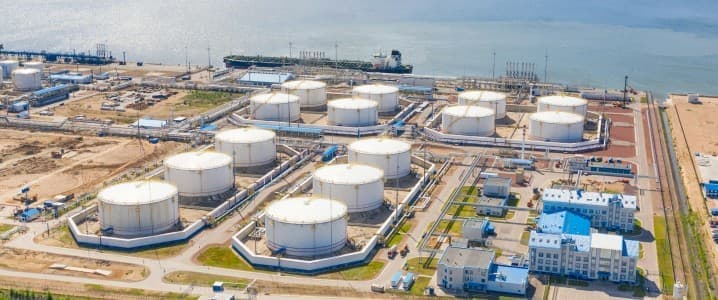
The United States has signaled it will not immediately tap its Strategic Petroleum Reserve (SPR) to counter the recent surge in crude oil prices, a move that provides both clarity and new questions for energy investors. While geopolitical tensions in the Middle East have historically prompted rapid government interventions to stabilize markets, the current administration, through Secretary of State Marco Rubio, indicates a more strategic, phased approach. This decision, coming after a period of intense SPR rebuilding following significant drawdowns in 2022, suggests a shift in how Washington plans to navigate global energy security challenges, placing a premium on reserve levels while exploring alternative mitigation strategies.
SPR Strategy: A Calculated Hold Amidst Market Volatility
The U.S. government’s decision to hold off on an immediate SPR release is a pivotal development for crude oil markets. Currently, the SPR stands at approximately 415 million barrels, which, while significantly higher than its depleted state in 2022, still represents less than 60% of its 714 million barrel capacity. This rebuilding effort was a priority for the Trump Administration, which had criticized the previous government for allowing reserve levels to fall so low. The reluctance to deploy these reserves now suggests a strategic imperative to maintain a robust emergency buffer, perhaps for a more severe or prolonged supply disruption.
As of today, Brent Crude trades at $94.09, up 0.91% within a day range of $93.52 to $94.21, while WTI Crude registers at $90.59, climbing 1.03% with a day range of $89.71 to $90.70. These figures reflect a market grappling with geopolitical risk premiums. Interestingly, the past two weeks saw Brent crude retreat significantly, falling from $118.35 on March 31st to $94.86 by April 20th, a substantial decline of nearly 20%. This prior easing might have contributed to the administration’s decision to hold the SPR, implying that the market, to some extent, had already priced in and perhaps even overreacted to initial fears. However, the daily uptick we are observing today underscores the underlying tension and the immediate impact of the “no SPR release” news. Investors must recognize that while the SPR remains an option with a formidable drawdown capacity of up to 4.4 million barrels per day for 90 days, its current preservation signals a belief that other market mechanisms or policy tools can address the immediate price concerns.
Unpacking Secretary Rubio’s “Phased Plan” and Future Supply Signals
Secretary Rubio’s announcement of a “phased plan,” set to begin rolling out as early as tomorrow, April 22nd, involving Energy Secretary Chris Wright and Treasury Secretary Scott Bessent, is a critical piece of the puzzle for investors. Without an immediate SPR injection, the market’s focus now shifts entirely to what these “phases” will entail. Potential measures could range from intensified diplomatic efforts to de-escalate regional tensions, stricter enforcement of existing sanctions on oil-producing adversaries, or even coordinated efforts with global allies to increase non-OPEC+ supply.
For investors, monitoring upcoming energy events will be paramount to deciphering the efficacy of this new strategy. The EIA Weekly Petroleum Status Report, due tomorrow, April 22nd, and again on April 29th and May 6th, will provide crucial data on U.S. crude oil inventories, production levels, and demand. Should U.S. domestic production show signs of increasing efficiency or output, it could alleviate some price pressures. Similarly, the Baker Hughes Rig Count reports on April 24th and May 1st will offer insights into future production trajectories. Furthermore, the EIA Short-Term Energy Outlook on May 2nd will provide a comprehensive forecast that will undoubtedly incorporate the implications of the current geopolitical landscape and the U.S. government’s non-SPR strategy. These data points will be instrumental in assessing whether the administration’s alternative approach can genuinely mitigate price spikes without resorting to emergency reserves.
Investor Outlook: Navigating Price Trajectories and Long-Term Stability
The immediate lack of an SPR release has significant implications for investor sentiment, particularly concerning the trajectory of WTI and broader oil prices. Many investors are keenly asking: “Is WTI going up or down?” and “What do you predict the price of oil per barrel will be by end of 2026?” The current situation presents a complex outlook. On one hand, the absence of a large supply injection from the SPR removes a significant bearish catalyst, potentially supporting higher prices in the short term, especially if geopolitical risks continue to simmer. Energy stocks and related ETFs could see upward momentum if crude prices maintain their recent gains.
However, the effectiveness of Secretary Rubio’s “phased plan” will ultimately dictate the longer-term market response. If these alternative measures prove successful in stabilizing prices or increasing non-SPR supply through diplomatic or domestic production channels, they could cap further upside. For the remainder of 2026, the market will be a delicate balance of global demand growth, OPEC+ production policies, and the sustained impact of Middle Eastern geopolitics. The knowledge that the SPR can still release oil at a rate of 1 million barrels per day for nearly a year and a half, if absolutely necessary, acts as a latent ceiling on extreme price spikes. Investors should anticipate continued volatility, with a close watch on the upcoming EIA and API inventory data, Baker Hughes rig counts, and most importantly, concrete details and outcomes of the U.S. administration’s unfolding mitigation strategy to inform their positions in the energy sector.


