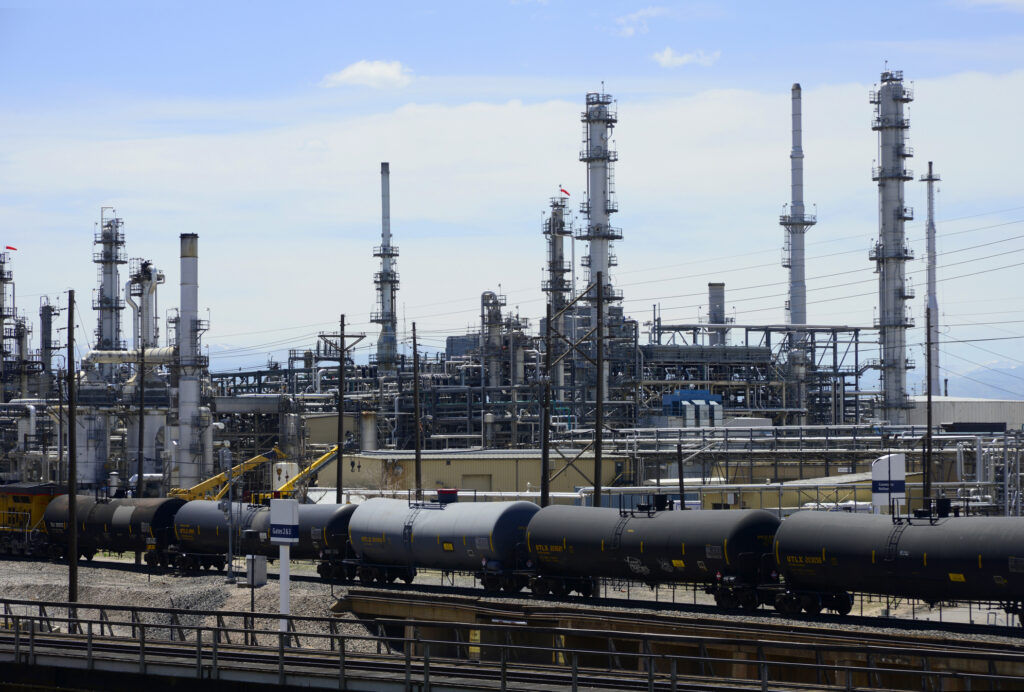
US Gulf Coast refiners are navigating a complex and volatile crude market, compelled to dramatically recalibrate their supply chains. Faced with the persistent absence of Venezuelan barrels due to sanctions and a significant drop in Mexican crude availability, these critical processing hubs are pivoting towards alternative sources in the Middle East and South America. This strategic shift, while mitigating immediate supply shortages, introduces operational challenges and impacts margins, creating a dynamic landscape investors must closely monitor for opportunities and risks.
The Gulf Coast’s Crude Conundrum and the Cost of Adaptation
The refining sector along the US Gulf Coast is specifically engineered to process heavier, higher-sulfur crude grades. Historically, Venezuela and Mexico have been cornerstone suppliers of these ideal feedstocks. However, recent policy decisions and production woes have severely disrupted this equilibrium. Venezuelan crude imports, which averaged approximately 175,000 barrels per day (bpd) earlier this year and constituted about 16% of Gulf Coast oil imports, have largely evaporated following the revocation of key US Treasury licenses. Concurrently, imports of Mexico’s popular heavy grade Maya have plummeted to a record low of 172,000 bpd in July, a consequence of declining output and quality inconsistencies.
This dual supply shock has left refiners scrambling. Our proprietary reader intent data indicates a strong investor focus on understanding the resilience and adaptability of refining operations in such challenging environments. The shift to alternative crude grades, often with vastly different characteristics, is not without consequence. It necessitates operational adjustments, can limit overall production output, and critically, compresses refining margins. For investors evaluating downstream assets, understanding these underlying operational pressures is paramount, as they directly influence profitability and valuation in a tight market.
New Trade Routes Emerge: A Global Diversification Strategy
In response to the supply deficit, Gulf Coast refiners have aggressively diversified their sourcing, forging new trade routes and boosting imports from a wider array of international producers. This month, we’ve observed a significant uptick in heavy, high-sulfur crude shipments from Colombia, with grades like Castilla and Vasconia more than doubling to 225,000 bpd – marking the highest monthly level in three years. Complementing this, medium, lower-sulfur crudes from Guyana, including Unity Gold and Payara Gold, have reached approximately 95,000 bpd. Brazilian heavy, high-sulfur oil, particularly Peregrino, has also seen a substantial 58% increase, hitting 57,000 bpd. Collectively, imports from these South American producers have reached their highest point in over five years.
Beyond the Americas, the Middle East has re-emerged as a vital supplier. Gulf Coast imports of oil from the region, primarily Iraqi Qaiyarah, Kuwait’s Eocene, and Saudi Arabia’s medium sour Arab Light, have surged to 212,000 bpd this month, the highest since January. This global pivot highlights the interconnectedness of energy markets and the strategic agility required from refiners. For investors, this shift points to increased tanker demand on these routes and potentially enhanced revenue streams for specific E&P companies in these burgeoning supply regions.
Market Volatility and the Geopolitical Undercurrents
The current environment for refiners is further complicated by significant volatility in global crude prices. As of today, Brent crude trades at $90.38 per barrel, marking a notable 9.07% decline within the day, with its range spanning $86.08 to $98.97. Similarly, WTI crude has fallen to $82.59, down 9.41% today. This downward pressure is part of a broader trend, with Brent having shed $20.91, or 18.5%, since March 30th. While lower crude prices might seem beneficial, the operational costs associated with processing non-optimal crudes can erode these gains, particularly for refiners already facing margin compression.
Adding another layer of uncertainty is the ongoing geopolitical flux surrounding Venezuelan sanctions. There are strong indications that the US administration is exploring new authorizations for key partners of PDVSA, potentially allowing for limited oil swaps. Our proprietary intent data shows investors are keenly interested in OPEC+ production quotas and how these geopolitical shifts might influence global supply and price predictions for the end of 2026. A return of sanctioned Venezuelan heavy crude, even if limited, could provide a more cost-effective and operationally ideal feedstock for Gulf Coast refiners, potentially restoring some lost margins and altering current trade flow patterns once again. This potential policy shift creates a significant swing factor for investment decisions in the refining sector and crude tanker markets.
Navigating the Horizon: Upcoming Events and Investor Outlook
The coming weeks are packed with key events that will shape the global oil market and, by extension, the strategic decisions of Gulf Coast refiners. Investors should closely monitor the upcoming OPEC+ Joint Ministerial Monitoring Committee (JMMC) meeting tomorrow, April 18th, followed by the full Ministerial Meeting on April 19th. Decisions regarding production quotas will directly influence global crude supply and price stability, impacting the financial calculus for refiners already grappling with feedstock challenges. Any further cuts or increases will ripple through the market, affecting the attractiveness and availability of various crude grades.
Furthermore, weekly data releases such as the API Crude Inventory on April 21st and 28th, and the EIA Weekly Petroleum Status Report on April 22nd and 29th, will provide crucial insights into US supply and demand dynamics. The Baker Hughes Rig Count on April 24th and May 1st will offer a snapshot of future domestic production potential. For investors, these events are not just data points; they are indicators of market direction. The interplay between geopolitical decisions regarding Venezuelan crude, OPEC+ production policy, and ongoing supply-demand fundamentals will dictate whether Gulf Coast refiners can sustain current margins, or if further strategic pivots will be required. Proactive monitoring of these developments will be essential for identifying compelling investment opportunities and managing risks in the evolving energy landscape.