The geopolitical chessboard of global energy supply witnessed a significant move this week, offering a crucial dose of stability to Europe’s downstream sector. The United States has granted an indefinite exemption from sanctions to the German entities previously owned by Russian oil major Rosneft PJSC. This strategic decision, confirming the complete operational separation of Rosneft Deutschland and RN Refining & Marketing from their Russian parent, removes a substantial cloud of uncertainty that had lingered over vital European refining infrastructure. For investors tracking the intricate balance of supply security and market volatility, this development is more than just a regulatory update; it’s a foundational shift in European energy risk assessment, allowing for a clearer focus on broader market fundamentals and emerging geopolitical pressures.
Securing Germany’s Energy Lifeline: An Indefinite Exemption
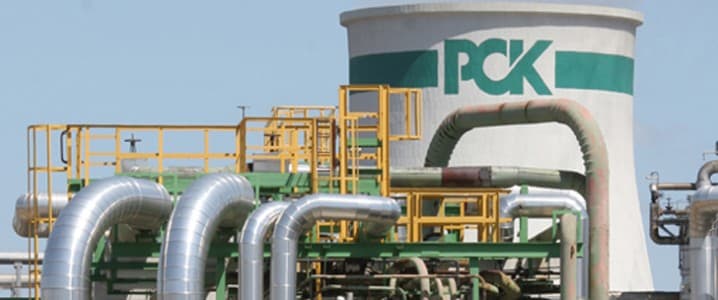
The indefinite waiver issued by the U.S. government, replacing a temporary exemption set to expire on April 29, 2026, solidifies the operational future of key German refining assets. At the heart of this relief lies the PCK Schwedt refinery, a critical facility responsible for approximately 90% of the fuel supply to Berlin and the Brandenburg region, and roughly 12% of Germany’s overall fuel consumption. With a robust crude oil processing capacity of 11.5 to 12 million tonnes per annum, equating to some 230,000 to 236,000 barrels per day, Schwedt’s uninterrupted operation is paramount for regional stability. This exemption also extends to stakes in the MiRo and Bayernoil plants, further fortifying Germany’s fuel infrastructure.
Since 2022, these German units have been under the fiduciary management of the German Federal Network Agency (Bundesnetzagentur), effectively decoupling their day-to-day operations and strategic direction from their former Russian owner. The “Letter of Comfort” issued by the U.S. formally acknowledges this separation, a vital step that alleviates the concerns of international banks and insurers. Without this U.S. assurance, these financial and service providers would face the prohibitive risk of falling under U.S. sanctions for facilitating business with a Russian-owned entity, potentially crippling the refineries through a lack of access to essential payments, insurance, and maintenance services. The indefinite nature of this exemption provides long-term clarity, allowing the German-run trusteeship to operate these plants without the looming threat of future U.S. enforcement actions.
Market Dynamics Amidst Persistent Geopolitical Tensions
While the German refinery exemption offers a localized calming effect, the broader energy market remains highly sensitive to global geopolitical developments. As of today, Brent crude trades at $93.57 per barrel, posting a modest gain of 0.35%, with WTI crude following suit at $90.12 per barrel, up 0.5%. Gasoline prices, however, have seen a slight dip, currently at $3.12, down 0.32%. This relatively stable intraday movement belies the significant volatility observed over the past two weeks. OilMarketCap.com’s proprietary data shows Brent crude experienced a notable decline of over 7% from $101.16 on April 1st to $94.09 on April 21st, indicating that broader supply and demand concerns, alongside previous geopolitical premiums, have been undergoing re-evaluation.
The Middle East conflict, in particular, continues to cast a long shadow over global energy supply. Earlier in the week, European natural gas futures surged by nearly 60% to a one-year high of €53.80 per megawatt-hour following reports of Iran’s actions concerning the Strait of Hormuz and drone attacks on critical Qatari LNG facilities. With a major LNG plant remaining offline and the Strait of Hormuz facing disruption, the risk of a significant supply shock, especially for heavily reliant nations like Italy, Belgium, and Poland, remains palpable. The German refinery news, while positive for European refined product supply, does not insulate the continent from these upstream and natural gas supply disruptions, highlighting the complex interplay of regional and global energy security challenges.
Investor Sentiment: Seeking Clarity and Long-Term Outlooks
Our internal analytics, derived from investor inquiries this week, underscore a pervasive desire for clarity on market direction and long-term price predictions. Questions such as “is WTI going up or down?” and “what do you predict the price of oil per barrel will be by end of 2026?” reflect a market eager to understand where prices are headed amidst conflicting signals. The indefinite exemption for German refineries directly addresses a key source of downstream supply uncertainty in Europe, a factor critical for investors evaluating the performance of European energy players.
For those keenly observing companies with significant European exposure, like investors inquiring about the outlook for Repsol in April 2026, this development offers a degree of operational certainty. The removal of a potential sanctions-induced halt for a significant portion of Germany’s refining capacity provides a more stable operating environment for downstream participants across the continent. While the overarching trajectory of crude prices for the remainder of 2026 will be influenced by a multitude of factors – including global demand growth, OPEC+ policies, and geopolitical events – the mitigation of this specific European supply risk is a tangible positive for the sector, allowing investors to base their assessments on a more predictable regional supply chain.
Navigating the Near-Term Horizon with Key Data Insights
With the critical uncertainty surrounding Germany’s Rosneft-linked refineries now resolved indefinitely, investors can sharpen their focus on upcoming market-moving data points. The removal of this specific regulatory deadline means that attention can shift more completely to the fundamental supply and demand indicators that will define the market’s near-term trajectory. OilMarketCap.com’s calendar of upcoming energy events highlights several crucial releases in the next two weeks.
Key among these are the EIA Weekly Petroleum Status Reports on April 22nd, April 29th, and May 6th, which will provide fresh insights into U.S. crude oil, gasoline, and distillate inventories, as well as refinery utilization rates. These will be complemented by the Baker Hughes Rig Counts on April 24th and May 1st, offering a pulse check on North American drilling activity, and the API Weekly Crude Inventory reports on April 28th and May 5th. Perhaps most significantly, the EIA Short-Term Energy Outlook (STEO) on May 2nd will be a pivotal release, offering updated forecasts for global supply, demand, and prices that will undoubtedly incorporate the latest geopolitical developments and the ongoing stability in European downstream operations. For sophisticated investors, these scheduled reports will be instrumental in calibrating positions and refining strategies in a market where fundamental data now takes center stage without the immediate overhang of German refinery sanctions.


