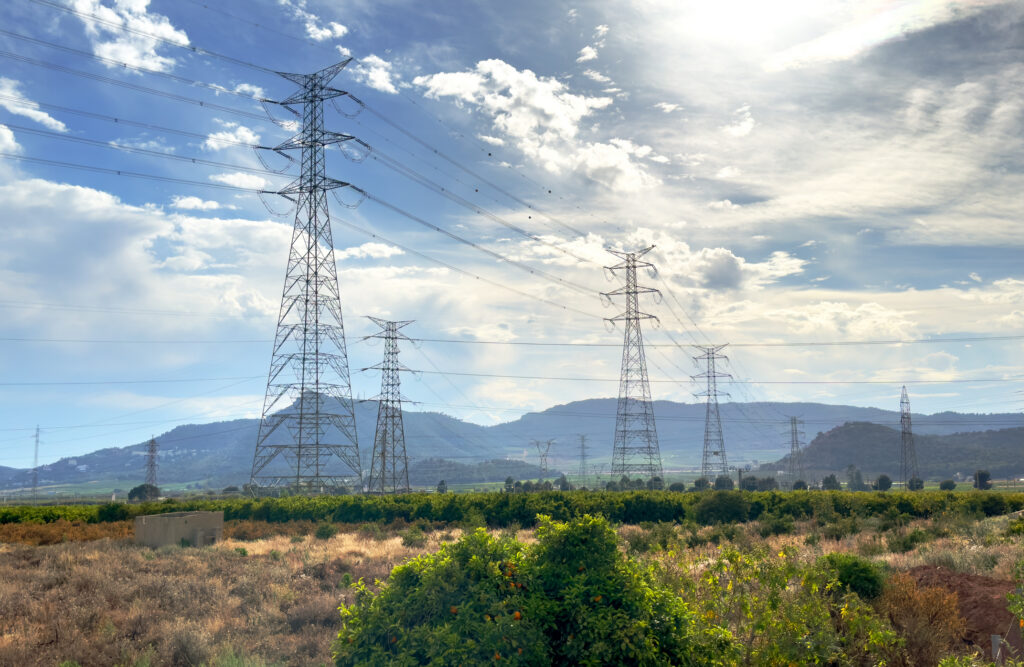
A landmark $26.54 billion loan commitment from the U.S. Energy Department to Southern Company subsidiaries Georgia Power and Alabama Power marks a significant inflection point for American energy infrastructure and holds profound implications for oil and gas investors. This monumental financing, the largest ever extended by the department’s loan office, underscores a concerted effort to fortify grid reliability, enhance energy security, and drive modernization across key regions. For investors navigating a complex energy landscape, this development signals sustained demand for crucial energy commodities, particularly natural gas, and highlights strategic opportunities within the utility and infrastructure sectors.
The Multi-Billion-Dollar Blueprint for Energy Security
The sheer scale of the $26.54 billion loan to Georgia Power and Alabama Power is unprecedented, setting a new benchmark for government-backed energy financing. Structured as two roughly 30-year loans, this capital injection is earmarked for a comprehensive suite of projects designed to upgrade and expand over 16 gigawatts of power generation capacity. Crucially for our readers, this includes a substantial 5 gigawatts of new natural gas generation. Beyond natural gas, the funds will also support the enlargement of existing nuclear plants, modernization of hydropower facilities, development of advanced battery energy storage systems, and the construction of over 1,300 miles of new transmission lines and grid enhancements. This diversified investment strategy, with draws expected through September 15, 2033, points to a long-term commitment to a resilient and multi-faceted energy mix where natural gas plays an undeniable foundational role for grid stability.
Market Volatility Meets Long-Term Commitment: Investor Questions Answered
In a market environment characterized by sharp price fluctuations, investors are constantly seeking clarity on future price trajectories and fundamental drivers. Our proprietary data indicates that investors are keenly focused on the near-term trajectory of crude benchmarks like WTI, alongside broader questions about end-of-year oil price predictions. This week, we see Brent Crude trading at $93.52, reflecting a modest +0.3% gain today, while WTI Crude stands at $90.25, up +0.65%. However, a glance at the 14-day trend reveals Brent has shed nearly 20% of its value, dropping from $118.35 on March 31st to $94.86 just yesterday. This volatility underscores the importance of fundamental, long-term demand signals. The Southern Company loan provides precisely that: a robust, government-backed commitment to energy infrastructure that will sustain demand for natural gas over decades, regardless of short-term crude price swings. It offers a counter-narrative to purely bearish sentiment, suggesting that while crude markets might be choppy, the foundational demand for reliable power generation, heavily reliant on natural gas, remains strong and de-risked by federal backing. This multi-billion-dollar initiative directly addresses the underlying investor need for stability and long-term visibility amidst daily market noise.
Upcoming Catalysts and the Natural Gas Outlook
The significant natural gas component of the Southern Company loan — 5 GW of new generation capacity — has direct implications for the natural gas market and related investments. As investors look ahead, several upcoming calendar events will provide crucial insights into how supply and demand dynamics are evolving to meet such long-term commitments. The EIA Weekly Petroleum Status Reports, scheduled for April 22nd and April 29th, will offer detailed data on natural gas storage levels, production trends, and consumption, providing a critical pulse check on the market. Similarly, the Baker Hughes Rig Count reports on April 24th and May 1st will indicate drilling activity, including for natural gas, signaling potential supply responses to sustained demand. Furthermore, the EIA Short-Term Energy Outlook on May 2nd will present updated forecasts that could incorporate the implications of major infrastructure projects like Southern Company’s, shaping investor expectations for natural gas pricing and producer profitability. While the OPEC+ JMMC Meeting on April 21st primarily focuses on crude output, its broader impact on global energy policy and investor confidence can indirectly influence the entire energy complex. These events, viewed through the lens of this massive grid investment, provide essential data points for investors positioning themselves in the natural gas value chain.
Strategic Implications for Oil & Gas Investors
This record-breaking loan is more than just a financial transaction; it’s a strategic declaration of intent for the U.S. energy future, with profound implications for investors. For natural gas producers, the commitment to 5 GW of new gas-fired generation represents a clear, long-term demand signal, potentially de-risking future investments in exploration and production. This sustained demand provides a significant tailwind for companies with strong natural gas portfolios, offering a degree of predictability in an otherwise volatile commodity market. Midstream companies, particularly those involved in natural gas transportation and storage in the Southeast, also stand to benefit from increased utilization and potential expansion opportunities driven by the need to fuel these new power plants. Furthermore, the extensive grid modernization and transmission projects embedded in the loan create opportunities for infrastructure development firms and manufacturers of related equipment. The inclusion of battery energy storage and nuclear plant upgrades also points to a diversified energy future, where natural gas plays a crucial and complementary role in ensuring grid stability alongside renewables. Ultimately, this $26.54 billion investment reinforces the indispensable role of traditional energy sources in the ongoing energy transition, providing a compelling case for strategic allocation to companies positioned to capitalize on both fossil fuel demand for reliability and evolving infrastructure needs.