

Geopolitical Tensions Cripple Half of Russia’s Western Oil Export Capacity, Sending Shockwaves Through Global Markets
The global oil market is grappling with an unprecedented supply shock as nearly half of Russia’s western crude export capacity has ground to a halt. Recent Ukrainian drone attacks, combined with a disputed pipeline incident and the seizure of critical tanker assets, have taken an estimated 2 million barrels per day (bpd) offline. This represents a staggering 40% reduction in Russia’s crude oil export capabilities, marking the most severe disruption in its modern history as the world’s second-largest oil exporter. This significant reduction in global supply arrives at a precarious time, with crude prices already climbing past the $100 per barrel threshold amidst escalating geopolitical tensions in the Middle East, intensifying the upward pressure on energy benchmarks.
For investors monitoring the energy sector, the implications are profound. Russia’s vast oil and gas revenues form the bedrock of its $2.6 trillion economy, directly funding its national budget. A sustained cut to these vital export volumes poses a substantial threat to Moscow’s fiscal stability and its ability to finance ongoing military operations, making this a pivotal development for geopolitical and economic analysis.
Ukraine Intensifies Pressure on Russia’s Energy Lifeline
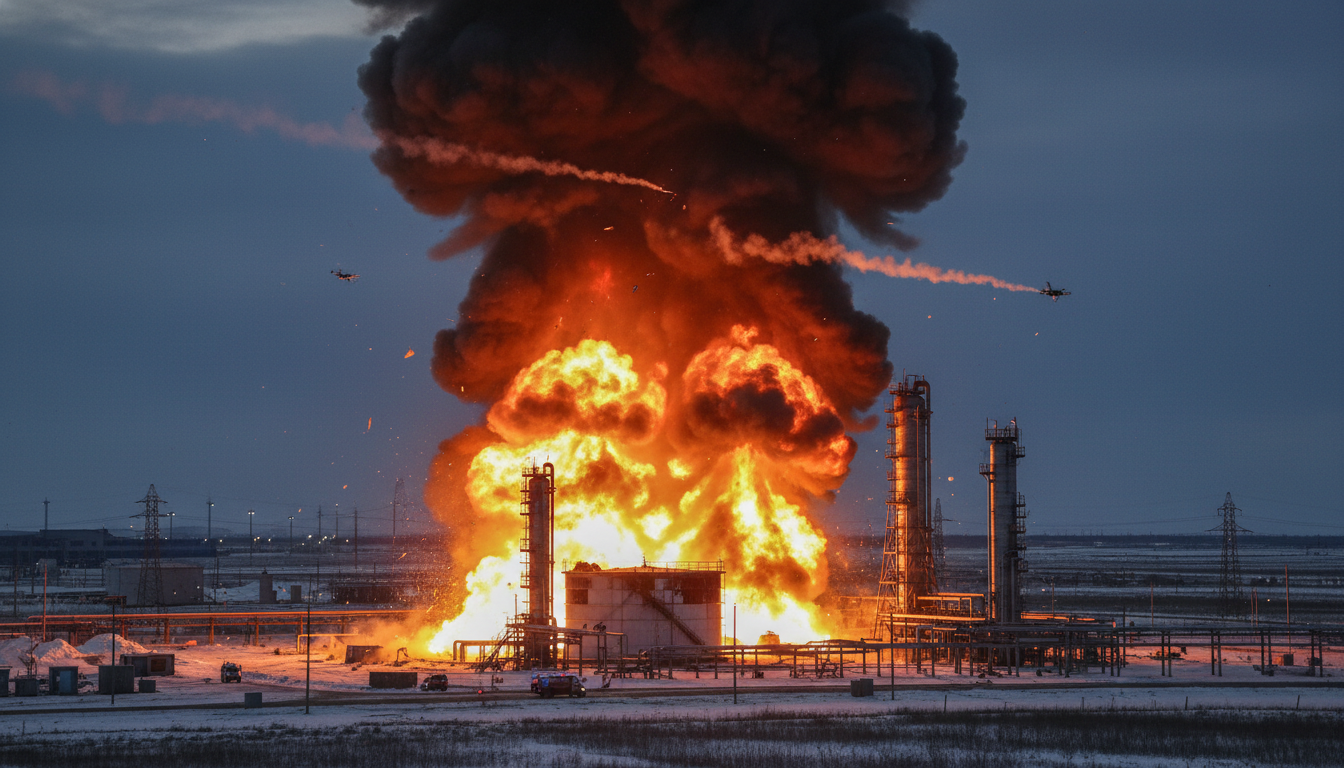
This month has witnessed a dramatic escalation in Ukrainian drone assaults targeting Russia’s critical oil and fuel export infrastructure. The strategic objective is clear: to diminish Moscow’s capacity to generate revenue from its hydrocarbon resources, which contribute approximately a quarter of the nation’s state budget. These precise strikes aim to weaken Russia’s military might by eroding its financial foundation.
Key among the targets have been Russia’s three major western oil export ports. Novorossiysk on the Black Sea, along with Primorsk and Ust-Luga on the Baltic Sea, have all experienced direct hits. These facilities are integral to Russia’s energy export strategy, funneling vast quantities of crude to international buyers. The sustained nature of these attacks underscores a determined effort by Kyiv to exert maximum economic pressure.
Critical Infrastructure Under Siege: Ports, Pipelines, and Maritime Routes
The impact on Russia’s export network is multifaceted and widespread. As of recent assessments, the comprehensive shutdown encompasses crucial facilities including Primorsk and Ust-Luga on the Baltic, alongside the strategically vital Druzhba pipeline, which typically transports crude through Ukraine to downstream markets in Hungary and Slovakia. Beyond major ports, Kyiv has also systematically targeted oil pumping stations and refineries, further complicating Russia’s ability to process and export its crude effectively.
Specific examples highlight the extent of the damage and disruption:
- Novorossiysk Terminal: This Black Sea hub, capable of handling up to 700,000 bpd, has been operating significantly below its planned loading schedule. A heavy Ukrainian drone attack earlier this month inflicted damage, severely hindering its operational efficiency and cargo throughput.
- Druzhba Pipeline: Reports from Ukraine indicate that sections of the Druzhba pipeline sustained damage from Russian strikes in late January. This incident immediately triggered urgent demands from European importers like Slovakia and Hungary for an immediate restart of crude supplies, underscoring the pipeline’s critical role in regional energy security.
- Arctic Oil Exports & Tanker Seizures: An additional layer of disruption stems from frequent seizures of Russia-related tankers across European jurisdictions. These actions have effectively choked off approximately 300,000 bpd of Arctic oil exports originating from the port of Murmansk. Traders report significant logistical hurdles and heightened operational risks associated with these maritime shipments, further tightening Russia’s export options.
Russia’s Forced Pivot: Shifting Oil Flows to Asian Markets
With its traditional western export arteries significantly compromised, Moscow is increasingly compelled to pivot its crude flows towards Asian markets. However, this redirection presents its own set of challenges, primarily constrained by existing infrastructure capacity and longer shipping distances. The logistical complexities and increased transit times inherent in such a pivot introduce additional costs and potential bottlenecks for Russian oil exports.
Despite these challenges, Russia maintains several key routes for uninterrupted supplies to Asian partners:
- Pipeline Exports to China: Essential overland routes to China, including the Skovorodino-Mohe and Atasu-Alashankou pipelines, remain operational.
- Seaborne ESPO Blend: Exports of ESPO Blend crude by sea via the port of Kozmino continue to service Asian demand.
Collectively, these three primary routes facilitate the export of approximately 1.9 million bpd of Russian crude to its eastern clientele, providing a crucial, albeit constrained, alternative to its besieged western terminals.
Furthermore, Russia continues to manage oil loadings from its two far eastern Sakhalin projects, accounting for roughly 250,000 bpd shipped from the island. Additionally, an estimated 300,000 bpd of crude oil is consistently supplied to refineries in neighboring Belarus, sustaining regional energy requirements.
Investor Outlook: Heightened Supply Risk and Price Volatility
This unprecedented disruption to Russia’s oil export capabilities injects significant volatility and a heightened geopolitical premium into global crude prices. Investors should anticipate continued market sensitivity to developments in the conflict zone, potential retaliatory actions, and the efficacy of Russia’s efforts to reroute its crude. The long-term implications extend beyond immediate price fluctuations, potentially reshaping global energy trade patterns and intensifying the focus on energy security for importing nations. The active targeting of energy infrastructure underscores the evolving nature of geopolitical conflict and its direct impact on commodity markets, demanding vigilant monitoring from energy sector participants and broader macroeconomic observers.
