

Geopolitical Tensions Escalate: Ukraine Strikes Key Russian Oil Refinery, Threatening Global Energy Supply Stability
March 26, 2026, 4:04 PM GMT Update:
Energy investors are closely scrutinizing an intensified wave of attacks on Russian oil infrastructure, following Ukraine’s assertion of a successful drone strike on a critical export-oriented refinery located in Russia’s Leningrad region overnight. This latest development signals a significant escalation in Kyiv’s strategy to disrupt Russia’s energy complex, injecting further volatility into an already precarious global oil market. The implications for supply, pricing, and geopolitical risk premiums are substantial, demanding immediate attention from market participants.
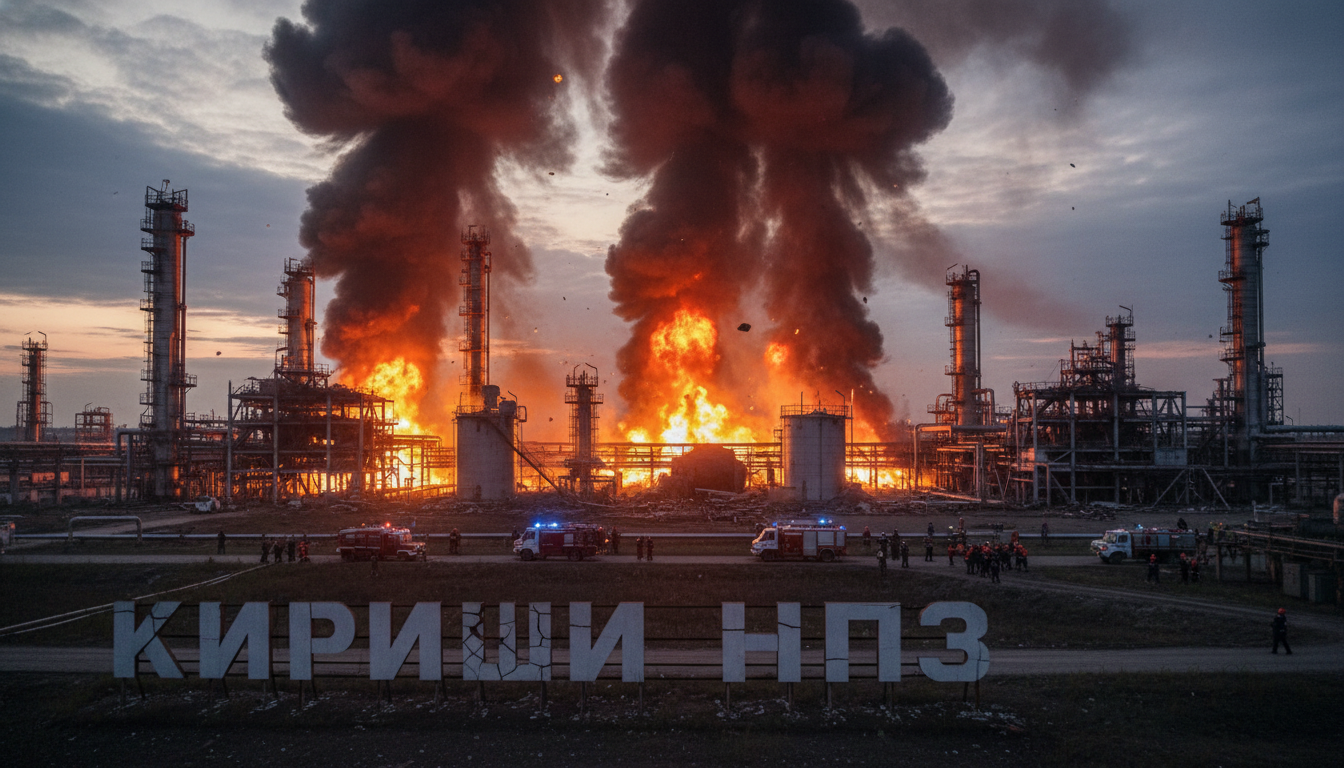
The targeted Kirishi oil refinery stands as a pivotal asset within Russia’s refined product export capabilities. Ukraine’s Unmanned Systems Forces, operating in concert with the nation’s armed forces, took responsibility for the strike. According to a Telegram statement from USF Chief Robert Brovdi, the operation successfully ignited primary crude processing units and two vital storage tanks within the complex. Ukraine’s General Staff further corroborated these claims, confirming fires at the site, which have significant operational repercussions.
While independent verification of the full extent of the damage remains challenging, with Surgutneftegas PJSC, the major oil producer and owner of the refinery, yet to issue a public comment, Leningrad regional authorities did acknowledge a fire in Kirishi’s industrial zone. They reported the blaze was localized but not yet fully extinguished, providing partial confirmation of a disruptive event. The Kirishi refinery boasts an impressive design capacity exceeding 400,000 barrels per day (b/d), positioning it as one of Russia’s largest. Its operational focus on producing high-value light products, including diesel, gasoline, and fuel oil, with a substantial portion explicitly designated for international markets, underscores the potential for significant market ripples should operations be curtailed for an extended period. Investors must recognize that disruptions to such a high-capacity, export-focused facility directly impact the global supply of critical refined products, which could translate into sustained upward pressure on prices worldwide.
Baltic Energy Infrastructure Under Fire: A Strategic Pattern of Disruption
This assault on Kirishi is not an isolated incident; rather, it represents the latest in a series of targeted strikes against Russia’s Baltic energy infrastructure this week. Just days prior, Ukrainian drones reportedly struck two other pivotal Russian oil ports on the Baltic Sea: Primorsk and Ust-Luga. These earlier operations resulted in fires and, critically, a halt to oil loadings at these major Baltic terminals. The cumulative effect of these coordinated attacks strongly suggests a deliberate and intensifying strategy to impede Russia’s ability to export crude and refined products, directly impacting its revenue streams and global energy supply dynamics.
For the investment community, the repeated targeting of these strategic energy assets introduces a new and elevated layer of geopolitical risk premium into oil pricing models. Any sustained disruption to Russia’s export capacity, particularly from its key Baltic gateways, carries profound implications for global supply balance. Given Russia’s stature as a major global energy exporter, even temporary outages or perceived threats to its critical infrastructure can trigger significant market anxiety, leading to pronounced upward pressure on international crude benchmarks and refining margins.
Middle East Tensions Compound Global Supply Fears
The escalating conflict in Eastern Europe arrives at a moment when global energy markets are already grappling with profound uncertainties emanating from the ongoing war in the Middle East. This dual geopolitical threat framework has proven particularly potent in roiling global markets and amplifying existing supply worries. The conflict in the Middle East has, in practical terms, severely impeded conventional oil flows through the Strait of Hormuz, a critical maritime choke point for the transit of a vast proportion of the world’s seaborne crude, especially from major Gulf producers. This de facto closure or severe restriction of a key export conduit for Gulf barrels has already exerted substantial upward pressure on oil prices, fundamentally reshaping supply narratives.
In this extraordinarily volatile environment, Brent crude, the international benchmark, has surged to approximately $108 a barrel. This price action vividly reflects the market’s acute perception of tightening supply conditions and significantly elevated risk premiums. Beyond crude, the cascading effects are acutely felt across the refined products spectrum. Investors are observing a notable rise in the cost of essential fuels, from diesel to jet fuel, which directly impacts a multitude of industries ranging from transportation and logistics to manufacturing and aviation. While diplomatic efforts continue, with Washington reportedly advocating for peace talks, Tehran’s firm rejection of U.S. overtures and its insistence on sovereign control over the critical waterway underscore the deep-seated and intractable nature of these regional tensions. The interplay between these two major geopolitical flashpoints creates an unprecedented challenge for global oil supply stability and price predictability, demanding robust risk management strategies from investors.
Investor Outlook: Navigating Heightened Volatility and Supply Risks
The convergence of escalating attacks on Russia’s energy infrastructure and persistent, deep-seated tensions in the Middle East mandates a heightened state of vigilance for energy investors. The strategic targeting of facilities like Kirishi, combined with strikes on key export terminals, signals a potential broadening of the conflict that could have tangible and immediate impacts on physical supply. Should these disruptions prove sustained or become more widespread, the market could witness further significant price appreciation in both crude oil and refined products, alongside increased volatility.
Investors should meticulously evaluate their portfolios for exposure to companies sensitive to rising input costs, such as airlines, shipping firms, and manufacturing entities, which may face margin compression. Simultaneously, they should consider opportunities in upstream oil and gas producers that stand to benefit directly from higher commodity prices and an increased emphasis on energy security. The long-term implications of these events extend far beyond immediate price spikes; they encompass increased insurance premiums for maritime shipping, potential alterations to established trade routes, and a fundamental re-evaluation of global energy security strategies by nations worldwide. The current geopolitical landscape unequivocally places supply security at the forefront of market concerns, suggesting that volatility will remain a defining characteristic of energy markets for the foreseeable future. Strategic positioning, rigorous due diligence, and a keen understanding of evolving geopolitical risks will be paramount for successfully navigating these complex and rapidly changing market dynamics.
