The UK’s Shifting Fiscal Landscape and Green Funding Ambitions
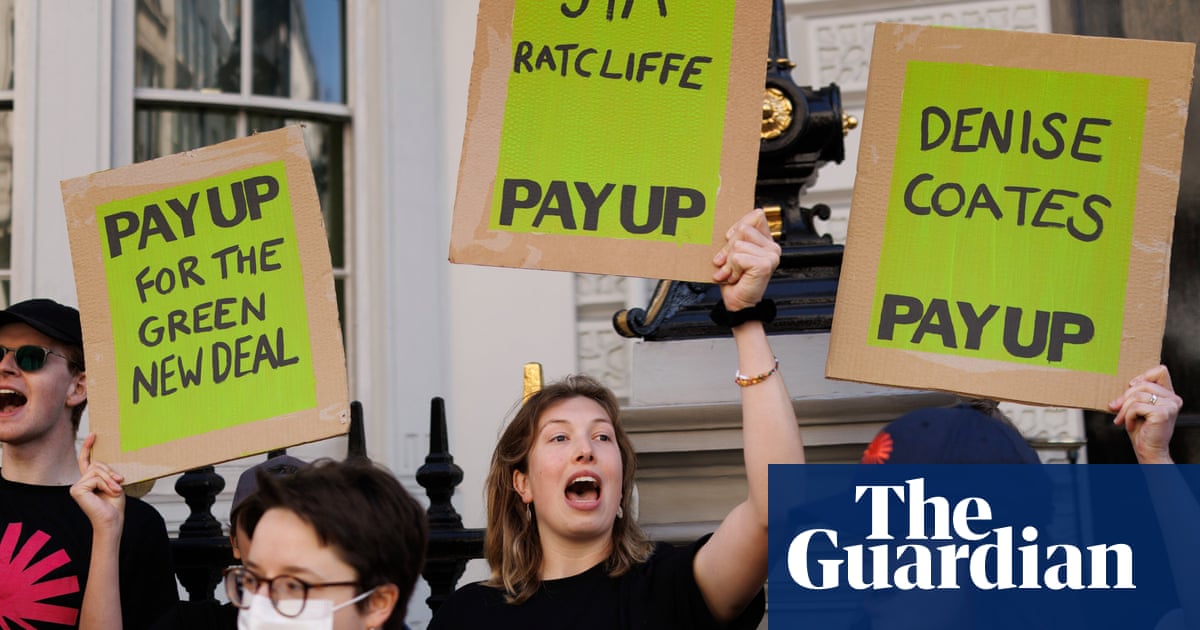
A growing movement in the United Kingdom is advocating for significant changes to the nation’s tax regime, specifically targeting wealth accumulation to fund the transition to a sustainable economy and bolster public services. This initiative, spearheaded by groups like Green New Deal Rising and supported by a coalition of over 20 civil society organizations, emphasizes that climate action and social investment should not burden lower-income segments of the population. The “Pay Up” campaign, for instance, is pushing for a 2% tax on assets exceeding £10 million, alongside reforms to close tax loopholes and align capital gains tax rates with income tax. Proponents argue that these measures would not only rebalance the economy but also unlock substantial capital for critical investments.
The financial implications are considerable. Tax experts estimate that a 2% wealth tax on assets above £10 million could generate approximately £22 billion annually. Additional changes, such as equating capital gains tax with income tax, are projected to raise a further £50 billion in a single year. These figures represent a significant potential revenue stream, earmarked for purposes ranging from restoring public services and addressing the cost of living crisis to funding crucial climate initiatives. For energy investors, this policy direction signals a potential shift in how green projects might be financed in the UK, moving towards public funding mechanisms derived from domestic wealth rather than solely relying on private capital or public debt. This reorientation of capital could accelerate specific segments of the energy transition, particularly those deemed public goods or requiring large-scale foundational investment.
Market Realities: Navigating Price Volatility Amidst Policy Debates
Amidst these domestic policy discussions, the global energy markets continue to present a dynamic picture. As of today, Brent crude trades at $94.81 per barrel, showing a marginal daily dip of 0.13% within a tight range of $94.75-$94.91. WTI crude similarly hovers around $91.08, down 0.23% for the day. This current relative stability, however, is set against a backdrop of recent volatility. The past 14 days have seen Brent crude experience a notable decline of nearly 8.8%, dropping from $102.22 on March 25th to $93.22 by April 14th. This downward pressure, despite ongoing geopolitical tensions, reflects a complex interplay of supply expectations and global demand signals.
The price of gasoline, currently at $3 per gallon and down 0.33% today, further indicates some easing in consumer-level energy costs. For investors, this market environment of fluctuating crude prices and a general softening over the short term adds another layer to the wealth tax debate. A period of lower, more stable oil prices could reduce the perceived urgency for governments to extract windfall taxes from traditional energy producers, thereby increasing the political impetus to explore alternative revenue streams like wealth taxes for climate funding. Conversely, sustained lower prices might also temper the enthusiasm for very expensive green projects if the economic rationale becomes less compelling or if budget constraints tighten. Understanding this interplay between global energy market performance and domestic fiscal policy is crucial for assessing long-term investment risk and opportunity.
Forward Implications: Policy, Capital, and Upcoming Catalysts
The ongoing discourse around wealth taxes and green economy funding is set to unfold within an active calendar of key energy events, which will undoubtedly shape the broader investment landscape. Investors are keenly watching upcoming gatherings for signals on market direction and potential policy impacts. The OPEC+ Joint Ministerial Monitoring Committee (JMMC) meeting on April 18th, followed by the Full Ministerial meeting on April 20th, will be particularly crucial. Any decisions regarding production quotas will directly influence global crude supply, impacting price forecasts for the next quarter and shaping the consensus outlook for 2026 – a primary concern for many of our readers.
While OPEC+ decisions directly affect traditional energy markets, the underlying economic stability and growth they reflect can indirectly influence the demand for green investments and the political viability of wealth taxes. Stronger global economic performance, potentially bolstered by redirected wealth and increased public investment, could accelerate demand for energy in general, including renewables. Conversely, economic headwinds might intensify the pressure on governments to secure new funding sources for green initiatives if traditional revenue streams are under strain. Furthermore, the weekly API and EIA crude inventory reports (scheduled for April 21st, 22nd, 28th, and 29th), along with the Baker Hughes Rig Count (April 17th and 24th), will provide granular insights into North American supply dynamics and overall market health. These fundamental indicators, when viewed through the lens of potential UK fiscal shifts, paint a more comprehensive picture for investors evaluating the future of both conventional and renewable energy sectors.
Investor Sentiment and the Long-Term Outlook
Our proprietary data indicates that investors are highly focused on understanding the base-case Brent price forecast for the next quarter, as well as the broader consensus for 2026. This forward-looking perspective is now intricately linked with policy developments like the UK’s wealth tax push. The success of such campaigns could unlock significant domestic capital, potentially accelerating the energy transition within the UK and setting a precedent for other nations. This rapid reallocation of resources could have a dual impact: a potential long-term reduction in domestic demand for fossil fuels as green alternatives gain traction, coupled with the creation of substantial new investment opportunities in renewable energy infrastructure, smart grids, and associated technologies.
However, the debate is not without its challenges. Opponents of wealth taxes frequently raise concerns about potential capital flight, arguing that such policies could deter high-net-worth individuals and corporations from investing in the UK. Should this materialize, it could destabilize the investment environment, impacting both traditional and green energy projects by reducing the overall pool of available capital. Therefore, for investors tracking the energy sector, it becomes imperative to monitor not only traditional market fundamentals but also the evolving landscape of fiscal policy. The UK’s wealth tax push, while seemingly a domestic issue, signals a broader global trend towards re-evaluating how the energy transition is funded. Integrating these macro-policy shifts into any robust long-term energy investment thesis is no longer an option but a necessity for navigating the complexities of the evolving energy market.


