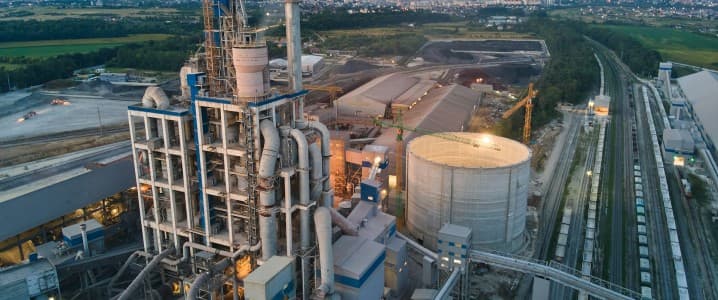
The United Kingdom’s downstream oil sector stands at a critical juncture, facing an existential threat that could profoundly impact its energy security and economic stability. With only four operating refineries remaining—the lowest in modern history—the sector is grappling with a perfect storm of declining domestic demand, intense international competition, aging infrastructure, and escalating carbon costs. The government’s recent call for evidence on the future of this vital industry, aiming for a strategy publication in autumn 2026, has been met with urgent pleas from industry bodies for immediate policy intervention. Investors in the energy space must closely scrutinize these developments, as the future of UK refining hinges on whether policy makers can create a level playing field and safeguard a strategic national asset.
The Imperiled State of UK Refining and Macro Headwinds
The UK’s refining capacity has alarmingly dwindled, evidenced by the closure of two significant processing sites—the Prax Lindsey refinery in Lincolnshire and the Grangemouth refinery in Scotland—over the past year. This leaves the nation with just four operational facilities, a precarious position that heightens exposure to global supply disruptions and price volatility. The challenges are multifaceted: a structural decline in domestic demand for refined products, fierce competition from newer, often more efficient refineries in the Middle East, Asia, and Africa, and the inherent cost burden of maintaining and upgrading aging infrastructure.
These domestic pressures are compounded by a highly volatile global crude market. As of today, Brent Crude trades at $93.91, marking a significant daily gain of 3.85%, while WTI Crude stands at $90.38, up 3.39%. This immediate surge comes after a sharp 19.8% decline in Brent over the past two weeks, dropping from $118.35 on March 31st to $94.86 by April 20th. This extreme volatility, where crude prices swing dramatically in short periods, exacerbates the operational challenges for UK refiners. Such rapid price movements directly impact inventory valuation, make long-term feedstock procurement complex, and squeeze refining margins, all while these facilities attempt to navigate high energy costs and the imperative of decarbonization.
The Carbon Cost Conundrum: An Unlevel Playing Field
A primary driver of the UK refining sector’s struggle is the disproportionate burden of carbon emissions costs. UK refineries collectively pay an estimated £400 million, or $540 million, annually in carbon costs. This substantial financial outlay places them at a severe disadvantage against international competitors, many of whom operate under less stringent, or even non-existent, carbon pricing regimes. This disparity effectively subsidizes imports, giving foreign refined products an “unfair advantage” across the supply chain and undermining the economic viability of domestic production.
The industry’s representative body, Fuels Industry UK, has strongly advocated for urgent policy action to level this playing field. Their key recommendation is the introduction of a Carbon Border Adjustment Mechanism (CBAM) by January 2028. A CBAM would ensure that imported fuels bear equivalent carbon costs to those produced domestically, thereby mitigating the competitive imbalance. Without such a mechanism, the UK risks not only the extinction of its refining industry but also the ironic outcome of exporting jobs and emissions, rather than achieving a credible and sustainable decarbonization pathway through domestic industrial transformation.
Policy Paralysis vs. Proactive Intervention: An Investor’s View
The government’s decision to launch a “call for evidence” with a view to publishing a strategy by autumn 2026, while a necessary step, is perceived by many in the industry as a potentially delayed response to an urgent crisis. For investors, particularly those eyeing long-term plays in the energy transition or seeking stability in the downstream sector, this timeline introduces significant uncertainty. The protracted period for policy formulation risks further erosion of the UK’s refining capacity and expertise.
Indeed, many of our readers, keenly watching the market, are asking fundamental questions like “is WTI going up or down?” and “what do you predict the price of oil per barrel will be by end of 2026?” Such inquiries underscore the profound uncertainty pervading the broader energy sector. For UK refining, this macro price volatility, coupled with domestic policy indecision and the absence of a clear, actionable roadmap, creates an exceptionally challenging investment climate. Without decisive and timely policy to address the competitive disadvantages and provide a framework for future investment, capital will inevitably flow to regions offering greater clarity and more favorable operating conditions.
Navigating Future Volatility: Upcoming Catalysts for the Downstream Sector
The immediate future holds several critical data points that will undoubtedly influence crude price trajectories and, by extension, the economic viability of refining operations globally, including the UK. Investors will be closely watching the OPEC+ Joint Ministerial Monitoring Committee (JMMC) Meeting scheduled for tomorrow, April 21st, which could signal shifts in supply policy. Any decision to adjust production quotas will have direct implications for crude feedstock costs for refiners worldwide.
Further insights into demand and supply dynamics will come from the EIA Weekly Petroleum Status Reports on April 22nd and April 29th, offering fresh data on U.S. crude inventories and product demand. The Baker Hughes Rig Count on April 24th and May 1st will provide a forward look at North American production trends, while the API Weekly Crude Inventory reports on April 28th and May 5th add another layer of inventory intelligence. Perhaps most critically for long-term outlooks, the EIA Short-Term Energy Outlook on May 2nd will offer updated forecasts on global supply, demand, and prices through 2027. These events collectively paint a picture of ongoing market flux, making the UK government’s delayed policy response on refining appear increasingly out of step with the rapid pace of global energy developments. The confluence of these macro factors with specific domestic challenges necessitates a policy framework that is both agile and robust, securing the UK’s industrial base and energy resilience.


