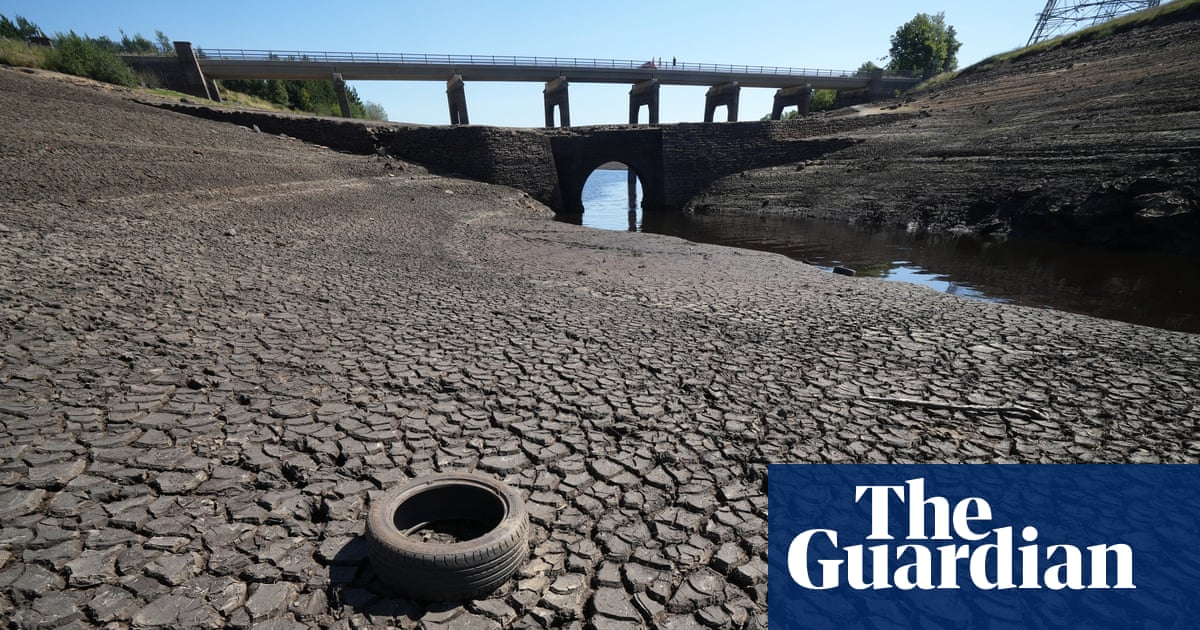
The UK’s summer of 2025 has officially been declared the warmest on record, with a mean temperature of 16.1C across June, July, and August, surpassing the previous high of 15.76C set in 2018. This marks a significant shift in climatic patterns, with all five of the hottest summers occurring since 2000. While the immediate focus might be on environmental implications, for energy investors, this trend carries profound signals for power generation demand, particularly for natural gas. The Met Office’s rapid analysis, attributing such temperatures to human-induced climate change and suggesting that summers like 2025 could now occur approximately one in every five years, reinforces the structural shift in energy demand patterns that warrants close attention from those positioning capital in the oil and gas sector.
UK Heatwave Trends Drive Gas Power Outlook
The consistent warmth experienced throughout summer 2025, characterized by four distinct heatwaves and a mean temperature 1.51C above the long-term meteorological average, directly translates into elevated cooling demand. While the highest temperature recorded for the season, 35.8C in Faversham, Kent, on July 1st, did not break the UK’s all-time high of 40.3C from July 2022, the *duration* and *pervasiveness* of above-average temperatures are key. Prolonged heat stresses electricity grids as air conditioning units work overtime, increasing the load on power generators. Natural gas, with its flexibility and reliability, often serves as a crucial balancing fuel when intermittent renewables like solar (which might perform well in heat) and wind (which can be less reliable in stagnant summer conditions) cannot meet peak demand. This sustained demand for gas in power generation, amplified by climate trends, suggests a robust baseline for European natural gas consumption, regardless of short-term economic fluctuations.
Navigating Crude Volatility Amidst Shifting Demand Signals
Despite the long-term structural demand signals for natural gas highlighted by persistent heatwaves, the broader crude oil market currently reflects significant investor anxiety. As of today, Brent crude trades at $90.38, marking a sharp 9.07% decline within the day’s range of $86.08 to $98.97. Similarly, WTI crude stands at $82.59, down 9.41%, having traded between $78.97 and $90.34. This sharp daily decline follows a significant downward trajectory over the past two weeks, with Brent having shed $20.91, or 18.5%, since March 30th. This notable correction suggests underlying concerns about global economic growth or potential oversupply, prompting many investors to question what the price of oil per barrel will be by the end of 2026. While gasoline prices have also fallen to $2.93, down 5.18% today, the stark contrast between strong regional gas demand drivers and a bearish crude market underscores a complex investment landscape that demands nuanced analysis beyond headline figures.
Upcoming Catalysts and Strategic Positioning
Investors must remain vigilant to immediate market catalysts that could reshape the current price trajectory. The upcoming OPEC+ Joint Ministerial Monitoring Committee (JMMC) meeting today, April 18th, followed by the Full Ministerial meeting on April 19th, will be critical. Many of our readers are keenly asking about OPEC+’s current production quotas and how these might evolve in response to market conditions. Any adjustments to supply policy from these meetings could dramatically impact crude prices. Beyond OPEC+, the market will closely scrutinize the API Weekly Crude Inventory reports on April 21st and 28th, along with the EIA Weekly Petroleum Status Reports on April 22nd and 29th. These inventory data points offer real-time insights into supply-demand balances in the crucial U.S. market. Furthermore, the Baker Hughes Rig Count on May 1st will provide an indication of future production trends. Monitoring these events is essential for investors looking to position themselves strategically, whether for short-term trading opportunities or to refine longer-term portfolio allocations in light of potential policy shifts or demand adjustments.
Investor Focus: Adapting to a Changing Energy Landscape
The confluence of record-breaking heat, its impact on gas power demand, and a volatile crude market forces investors to re-evaluate their portfolios. The Met Office’s projection that such intense summers are becoming significantly more frequent makes the long-term outlook for natural gas as a reliable power source increasingly robust, particularly in regions like the UK facing water shortfalls and hosepipe bans that complicate hydro-electric generation. This environment raises questions about the performance of integrated energy companies. For instance, investors asking “How well do you think Repsol will end in April 2026?” highlight the need to assess companies with diverse portfolios spanning upstream oil and gas, refining, and a growing presence in natural gas and renewables. Firms with significant investments in gas-fired power generation or robust LNG portfolios are likely to see sustained demand in regions experiencing climate-driven power stresses. The strategic allocation towards natural gas assets, often considered a crucial bridge fuel in the energy transition, appears increasingly justified by these recurring climatic events, providing a counter-cyclical hedge against traditional crude market volatility and aligning with evolving global energy needs.


