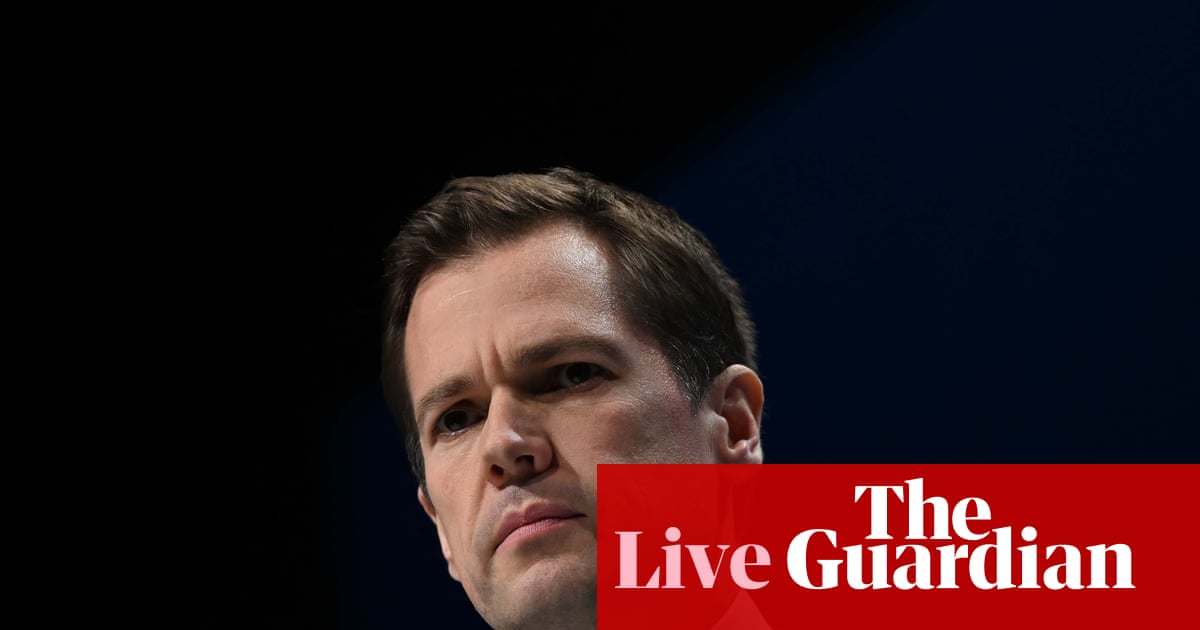
The UK political landscape finds itself in a period of heightened internal debate and policy uncertainty, a situation that astute energy investors must closely monitor. Recent discussions within the Conservative Party, marked by controversial statements and significant ideological friction, signal potential shifts in government priorities that could have tangible implications for the UK’s energy sector and broader European market sentiment. From the contentious remarks made by figures like Robert Jenrick to critical warnings concerning foundational climate legislation, the ongoing political stir creates a complex backdrop for investment decisions. As analysts, our role is to cut through the noise and identify how this domestic political flux translates into risks and opportunities within the global oil and gas investment arena.
Navigating Market Volatility Amidst Political Noise
Global energy markets are inherently sensitive to geopolitical and economic stability, and the current political machinations in a G7 economy like the UK add another layer of complexity. As of today, Brent Crude trades at $90.38 per barrel, reflecting a significant daily decline of 9.07%, with WTI Crude similarly impacted, standing at $82.59, down 9.41%. This sharp downturn is part of a broader trend, with Brent having shed nearly 20% over the last 14 days, falling from $112.78 on March 30th. While global supply-demand dynamics and broader macroeconomic concerns are undoubtedly the primary drivers of such substantial moves, sustained political uncertainty in a major economy contributes to an overarching risk-off sentiment. Investors, already grappling with a volatile market environment, view internal political instability in the UK as an additional variable impacting demand outlooks, particularly for European consumption, and influencing the broader appetite for risk in the region’s energy assets.
The Future of UK Energy Policy: Climate Act in the Crosshairs
Perhaps the most direct energy-related implication emerging from the recent political discourse is the debate surrounding the UK’s commitment to its climate agenda. Senior political figures, notably Michael Heseltine, have issued stark warnings against any move to axe the Climate Change Act, describing such an action as “unforgivable.” This suggests a genuine internal struggle within the ruling party over the pace and direction of decarbonization efforts. For investors, the potential weakening or repeal of this seminal legislation introduces significant regulatory risk and opportunity. A pivot away from stringent climate targets could, on one hand, signal a more favorable environment for domestic oil and gas production, potentially easing regulatory hurdles for North Sea developments. Conversely, it would cast a shadow over the substantial investments made in renewable energy infrastructure, raising questions about long-term policy support and subsidy frameworks. This uncertainty directly impacts long-term capital allocation, with investors asking how well companies like Repsol, with European exposure, will perform in such an unpredictable regulatory environment. Clarity on the UK’s climate policy trajectory will be paramount for guiding investment in both traditional and renewable energy sectors.
Geopolitical Context and Upcoming Catalysts
The UK’s internal political dynamics, while domestic, do not occur in a vacuum. They intersect with critical global energy events that demand investor attention. The upcoming OPEC+ Ministerial Meeting on April 19th stands as a pivotal moment for global crude supply strategy. While OPEC+ primarily focuses on balancing global supply with demand, the economic health and policy stability of major consuming nations, including the UK, inevitably feed into their demand outlooks. Any perceived weakening of economic confidence due to political instability in a G7 nation could subtly influence OPEC+’s assessment of global oil demand for the latter half of 2026, impacting their production quota decisions. Investors are keen to understand “what OPEC+ current production quotas” are, and their future trajectory will be informed by a mosaic of factors, including the stability of major demand centers. Furthermore, the routine API Weekly Crude Inventory reports on April 21st and 28th, followed by the EIA Weekly Petroleum Status Reports on April 22nd and 29th, will provide crucial short-term demand signals. These reports will be scrutinized for any indications of demand shifts that could be compounded by, or at least perceived through the lens of, political and economic uncertainty in key regions like the UK.
Investor Sentiment and the UK Energy Outlook
The broader political turbulence, including the highly publicized disagreements around Robert Jenrick’s comments and the responses from figures like Mel Stride and Kemi Badenoch, underscores deep ideological fissures within the Conservative Party. Such internal strife can lead to unpredictable policy shifts, creating a challenging environment for long-term investment planning. Investors are actively seeking clarity, implicitly asking “what do you predict the price of oil per barrel will be by end of 2026?” This question, while broad, highlights the desire for stability and predictability. For the UK, this translates into concerns over fiscal policy, regulatory consistency, and the overall business environment. Energy companies with significant UK exposure, whether in upstream, refining, or renewables, face increased uncertainty. A government perceived as unstable or prone to sudden policy reversals can deter foreign direct investment and make capital deployment more cautious. While the precise impact of current political debates on the daily crude price is indirect, the cumulative effect of policy ambiguity on investor confidence in a significant European economy can contribute to market apprehension and influence the longer-term outlook for energy asset valuations. Astute investors will continue to monitor the political landscape for signs of resolution or further divergence, adjusting their UK-specific energy exposure accordingly.