

Industry body Offshore Energies UK (OEUK) announced, in a statement sent to Rigzone, that the group’s CEO, David Whitehouse, and “industry leaders” met the UK Chancellor of the Exchequer Rachel Reeves “to lay out the steps to reform of the Energy Profits Levy (EPL) this year”.
“The Chancellor has asked the Financial Secretary and officials to work with industry on delivering long‑term fiscal certainty, including clarity around the ESIM [Energy Security Investment Mechanism], while jointly navigating the current period of geopolitical volatility,” OEUK noted in its statement.
“Those present agreed energy security is national security, and a stable, predictable investment environment is essential to delivering it,” it added.
“They agreed to work together in the coming days to set out a path toward a fiscal regime that supports responsible domestic oil and gas production, unlocks investment, and ensures fair return to the Treasury when prices are high,” it continued.
OEUK said the meeting closed with a commitment to work together to “safeguard UK energy, UK jobs, strengthen supply chains, and secure affordable, homegrown energy for the long term”.
In the OEUK statement, Whitehouse said, “at a time of huge global uncertainty, the UK should be making decisions for the long term in the interests of energy security, prioritizing domestic production of oil and gas and supporting jobs”.
“This fundamental need has been brought into sharp focus by recent events,” he added.
Whitehouse revealed that the meeting with Reeves “followed weeks of in-depth discussions with industry”, which he said took place at the instigation of the Treasury.
“The government has committed to work with us in the coming days to find a solution to replace the Energy Profits Levy so industry can make investments in homegrown energy,” Whitehouse said.
“This will enable greater energy security, tax revenues and growth for the UK economy,” he added.
“On the basis of this proposed change our members identified additional investment in the UK Continental Shelf (UKCS) that could begin next year,” Whitehouse continued.
“And this is just the first step. The industry is ready to invest up to GBP 50 billion [$66.6 billion] in new activity by 2050 with a functioning regulatory regime,” he noted.
Whitehouse went on to state that OEUK welcomed that the Chancellor “recognized the need for the EPL to end and appreciated her time to discuss these issues in person, during which North Sea operators reaffirmed their unwavering commitment to reducing our reliance on imports and bolstering UK energy, economic and national security at a time of geopolitical crisis”.
Rigzone asked the UK Department of Energy Security and Net Zero (DESNZ) and HM Treasury (HMT) for comment on OEUK’s statement. In response, HMT sent Rigzone a briefing on the meeting.
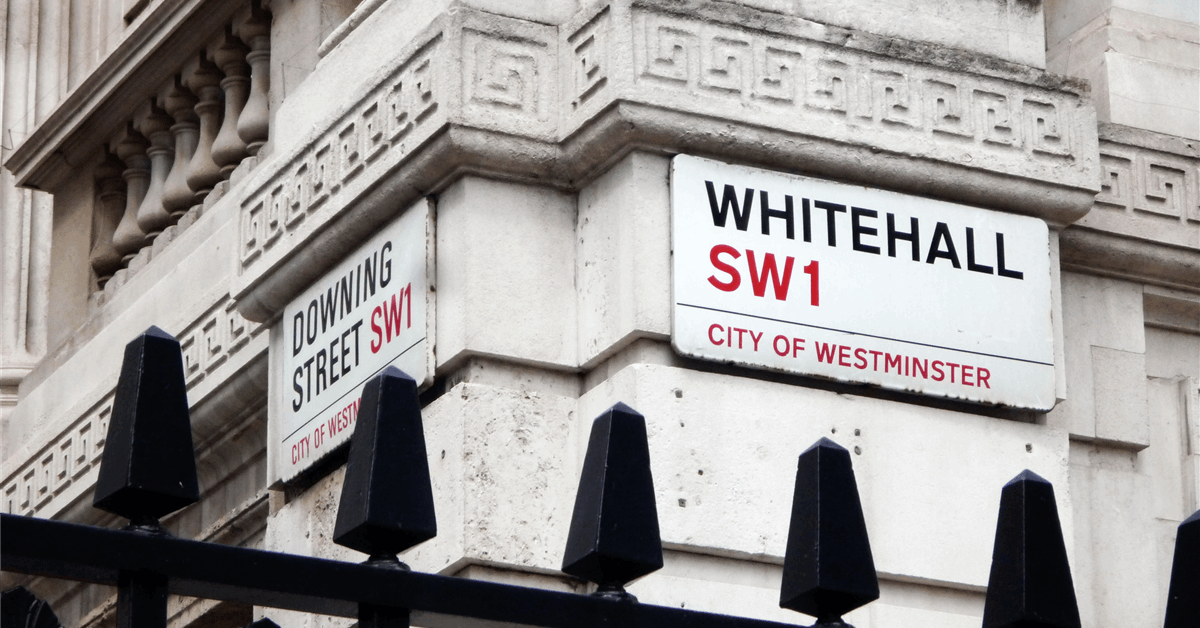
In that briefing, HMT confirmed that Reeves met with representatives from the oil and gas industry at Number 11 Downing Street and said the meeting was “positive, with the Chancellor and industry leaders agreeing on their shared agenda of supporting jobs, investment, and growth”.
The briefing said the Chancellor “opened the meeting stating it was the government’s commitment to act in Britain’s national interest in response to the conflict in the Middle East”.
“She reaffirmed her commitment to backing Britain’s oil and gas industry, recognizing its pivotal role in supporting growth and jobs in communities, especially those in Scotland, in the transition to a future of clean energy,” the briefing added.
The briefing stated that domestic oil and gas will continue to have a role in the energy mix for decades to come.
“[Reeves] told attendees that she had instructed the Financial Secretary and officials … to work with the industry on two immediate priorities,” the briefing noted.
“First, providing long-term financial certainty for the sector. She recognized that the forecast triggering of the ESIM in 2027 will be welcome and emphasized her keenness to provide certainty to the sector on that front, but she highlighted that geopolitical events create a more uncertain context for policy decisions,” it added.
“Second, working collaboratively with the oil and gas industry to navigate this uncertain period over the coming months,” the briefing continued.
In the briefing, a government source stated, “the Chancellor was clear with industry that she wants the Energy Profits Levy to come to an end”.
“She has made that promise and she stands by it. Indeed, it was a commitment she wanted to make this week. But the crisis in the Middle East has had real-time consequences on oil and gas prices and it is right that we respond to this,” the source added.
The briefing revealed that the full list of industry attendees at the meeting comprised OEUK, Adura, Neo Next, Harbour Energy, Ithaca Energy, Serica, BP, Perenco, EnQuest, TotalEnergies, and the North Sea Transition Authority (NSTA).
HMT’s briefing highlighted that, at Budget 2025, the government announced that the new Oil and Gas Price Mechanism (OGPM) will replace the Energy Profits Levy and apply in times of high prices.
“The mechanism will be a revenue-based tax with a rate of 35 percent and thresholds of $90/barrel (oil) and 90p/therm (gas) for Financial Year 2026/27 (updated annually to account for inflation),” the briefing noted.
“The OGPM will come into effect once the EPL ends – either on 1 April 2030 or earlier if the ESIM triggers,” it added.
DESNZ has not responded to Rigzone at the time of writing.
To contact the author, email andreas.exarheas@rigzone.com
element
var scriptTag = document.createElement(‘script’);
scriptTag.src = url;
scriptTag.async = true;
scriptTag.onload = implementationCode;
scriptTag.onreadystatechange = implementationCode;
location.appendChild(scriptTag);
};
var div = document.getElementById(‘rigzonelogo’);
div.innerHTML += ” +
‘ ‘ +
‘ +
”;
var initJobSearch = function () {
////console.log(“call back”);
}
var addMetaPixel = function () {
if (-1 > -1 || -1 > -1) {
/*Meta Pixel Code*/
!function(f,b,e,v,n,t,s)
{if(f.fbq)return;n=f.fbq=function(){n.callMethod?
n.callMethod.apply(n,arguments):n.queue.push(arguments)};
if(!f._fbq)f._fbq=n;n.push=n;n.loaded=!0;n.version=’2.0′;
n.queue=[];t=b.createElement(e);t.async=!0;
t.src=v;s=b.getElementsByTagName(e)[0];
s.parentNode.insertBefore(t,s)}(window, document,’script’,
‘https://connect.facebook.net/en_US/fbevents.js’);
fbq(‘init’, ‘1517407191885185’);
fbq(‘track’, ‘PageView’);
/*End Meta Pixel Code*/
} else if (0 > -1 && 67 > -1)
{
/*Meta Pixel Code*/
!function(f,b,e,v,n,t,s)
{if(f.fbq)return;n=f.fbq=function(){n.callMethod?
n.callMethod.apply(n,arguments):n.queue.push(arguments)};
if(!f._fbq)f._fbq=n;n.push=n;n.loaded=!0;n.version=’2.0′;
n.queue=[];t=b.createElement(e);t.async=!0;
t.src=v;s=b.getElementsByTagName(e)[0];
s.parentNode.insertBefore(t,s)}(window, document,’script’,
‘https://connect.facebook.net/en_US/fbevents.js’);
fbq(‘init’, ‘1517407191885185’);
fbq(‘track’, ‘PageView’);
/*End Meta Pixel Code*/
}
}
// function gtmFunctionForLayout()
// {
//loadJS(“https://www.googletagmanager.com/gtag/js?id=G-K6ZDLWV6VX”, initJobSearch, document.body);
//}
// window.onload = (e => {
// setTimeout(
// function () {
// document.addEventListener(“DOMContentLoaded”, function () {
// // Select all anchor elements with class ‘ui-tabs-anchor’
// const anchors = document.querySelectorAll(‘a .ui-tabs-anchor’);
// // Loop through each anchor and remove the role attribute if it is set to “presentation”
// anchors.forEach(anchor => {
// if (anchor.getAttribute(‘role’) === ‘presentation’) {
// anchor.removeAttribute(‘role’);
// }
// });
// });
// }
// , 200);
//});
