UK North Sea Policy Risk Stifles O&G Capital
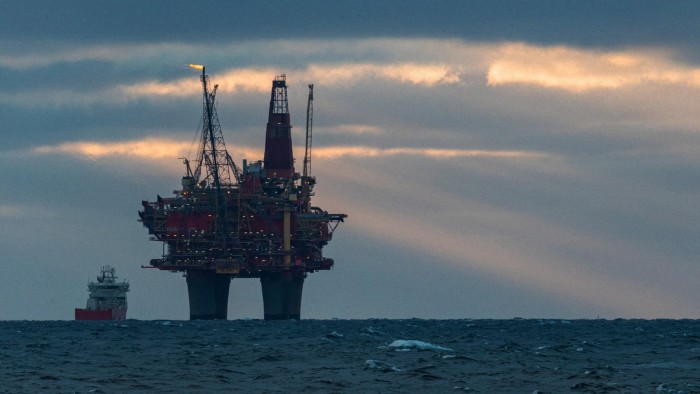
The United Kingdom’s North Sea oil and gas sector currently navigates a treacherous investment landscape, with capital deployment increasingly hampered by profound policy instability. While the energy industry is inherently accustomed to market volatility driven by supply-demand dynamics, it is the self-inflicted, policy-induced paralysis emanating from Westminster that now truly deters corporate leadership and starves vital upstream projects of essential funding. As the government concludes its consultation on the future trajectory of the North Sea’s energy role, the stated ambition of orchestrating a smooth transition, designed to avert the severe industrial shocks reminiscent of the 1980s and 90s coal and steel closures, appears increasingly detached from the harsh economic realities faced by operators on the ground.
Savvy investors must recognize that the timeline for domestic oil and gas production decline could accelerate dramatically, potentially far outpacing initial projections, should the current policy environment persist. Although Brent crude prices have recently demonstrated some resilience, climbing back from an April dip below $60 a barrel, they still reflect a quarter-on-quarter reduction over the past year. Crucially, even at these levels, current prices remain comfortably above the estimated cash flow break-even point for many existing UK offshore fields. However, price alone no longer serves as the primary determinant for investment; a multi-layered and unpredictable policy risk environment actively disincentivizes the crucial capital required to tap the North Sea’s remaining economically viable reserves.
The Crippling Weight of Taxation and Regulatory Uncertainty
Historically, UK oil and gas production reached its zenith around the turn of the millennium, followed by a modest resurgence in the latter half of the 2010s. This period of renewed activity was abruptly curtailed by the onset of the COVID-19 pandemic and the subsequent collapse in global commodity prices. Today, it is the unpredictable fiscal and regulatory framework that poses the most significant existential threat to the sector’s long-term viability and ability to attract fresh capital. The “Energy Profits Levy” (EPL), initially introduced in May 2022, has undergone multiple extensions and rate increases since its inception. This punitive measure now pushes the effective headline tax rate on UK oil and gas producers to a staggering 78% when all applicable levies are combined, representing one of the highest upstream tax burdens globally.
No company willingly embraces higher taxation, particularly when it is subject to arbitrary changes. While some astute operators have creatively restructured their UK portfolios and leveraged historic tax losses to mitigate their immediate liabilities, the fundamental issue for long-term investors remains the sheer unpredictability of the fiscal regime. This constant shifting of financial goalposts renders robust long-term financial forecasting and strategic capital allocation decisions incredibly challenging, if not impossible. Compounding this fiscal uncertainty, the industry also awaits the outcome of another pivotal government consultation that could fundamentally reshape how emissions from new projects are assessed. This regulatory ambiguity further clouds the investment outlook for future developments, delaying final investment decisions (FIDs) and discouraging exploration.
Declining Production Amidst Volatile Markets
For those advocating for an immediate and abrupt cessation of fossil fuel production, the current policy trajectory might appear favorable. However, the path to a genuinely sustainable energy transition demands a strategic, consistent, and predictable policy framework. The absence of such a framework risks undermining the very energy security it purports to protect, forcing the UK to rely more heavily on imported hydrocarbons at potentially higher costs and with greater carbon footprints from overseas production. The current instability discourages new investment in exploration and development, leading to a natural decline in existing field production without adequate replacement. This accelerates the depletion of domestic supplies, which are crucial for maintaining energy independence during the transition period.
The impact of policy paralysis extends beyond simple tax receipts. It affects the entire supply chain, from specialized engineering firms to skilled offshore workers, threatening thousands of high-value jobs and critical infrastructure. Investors are not merely looking at commodity prices; they are assessing geopolitical stability, regulatory consistency, and fiscal predictability when deploying billions in capital. The UK North Sea, once a cornerstone of the nation’s energy prosperity, is now perceived as a high-risk basin due to domestic policy choices, despite its significant remaining resource potential and established infrastructure. This perception directly impacts the cost of capital for projects, making even economically sound ventures appear less attractive compared to opportunities in more stable jurisdictions.
Investment Stifled: The Long-Term Consequences
The reluctance of major energy companies to commit long-term capital to the UK North Sea is a clear signal of the market’s response to policy uncertainty. While the government aims for a managed energy transition, the current approach risks an unmanaged decline of the domestic oil and gas sector. This could lead to a scenario where the UK loses its capability to produce its own hydrocarbons faster than renewable alternatives can scale up to meet demand, creating a dangerous energy gap. For investors, this translates into elevated political risk premiums, compressed valuation multiples, and a general aversion to new upstream expenditure in the region.
The consequences of this policy-driven stagnation are profound. It curtails the ability to leverage existing infrastructure for future carbon capture and storage (CCS) projects, a critical component of the UK’s net-zero ambitions. It also undermines the opportunity to transition the highly skilled workforce from traditional oil and gas roles into new green energy sectors. Without a clear, stable, and attractive investment environment, the UK risks not only missing out on future domestic energy production but also hindering its broader energy transition goals. Clarity, consistency, and a long-term vision for the North Sea’s role are paramount to restore investor confidence and unlock the capital necessary for a truly sustainable energy future.