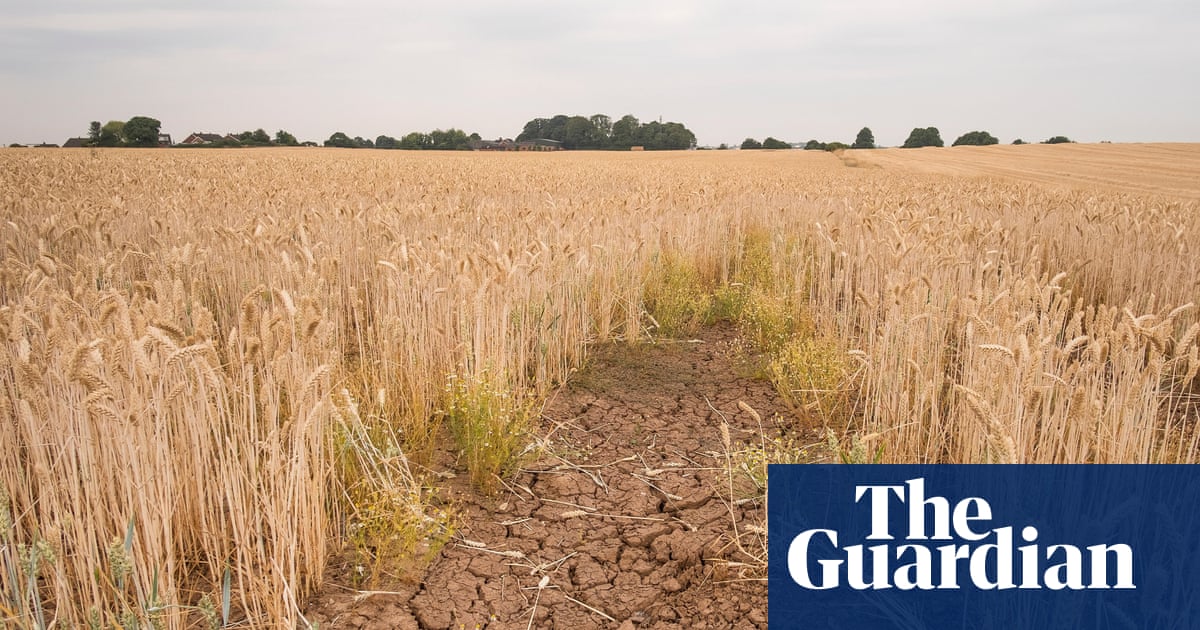
UK Climateflation: Economic Headwinds Ahead
The United Kingdom faces an escalating economic challenge dubbed “climateflation,” a phenomenon where extreme weather events directly translate into higher prices for essential goods, notably food. This isn’t merely a theoretical risk; it represents a tangible threat to household finances and national economic stability, with projections indicating significant increases in food costs by 2050. For investors, understanding the drivers and implications of climateflation is paramount, as it intertwines with broader energy market dynamics, supply chain vulnerabilities, and the imperative for climate resilience. This analysis delves into the specific risks confronting the UK, the interplay with current energy market volatility, and the strategic considerations for navigating these complex economic headwinds.
The UK’s Growing Vulnerability to Climate-Induced Price Shocks
The UK’s economic structure, particularly its reliance on imported food, positions it at elevated risk from climateflation. With almost half of its food supply sourced from overseas, British households are highly susceptible to climate shocks impacting key agricultural regions globally. Researchers warn that increasing heatwaves and droughts, both domestically and internationally, will imperil staple crops, disrupt intricate supply chains, and intensify inflationary pressures. Official figures already reflect this trend, with the UK’s headline inflation rate climbing to 3.6% in June, driven in part by rising food and fuel costs.
The impact is multi-faceted. Domestically, storms and floods slashed UK vegetable production by 12% in 2023, directly affecting local supply. Internationally, extreme temperatures have already driven up chocolate prices due to poor harvests in West Africa, while adverse weather in Brazil and Vietnam has inflated coffee costs. Looking ahead, economic modeling indicates a stark outlook: under a high-emission “worst-case” scenario, food prices could surge by 34% by 2050. Even in a “best-case” scenario, where global warming is limited, cumulative food price inflation is still projected to reach 25% by mid-century. This disproportionately impacts lower-income households, who allocate a larger share of their budgets to essentials, potentially pushing nearly 1 million people into poverty without proactive interventions.
Energy Market Volatility and the Climateflation Nexus
While climateflation focuses on the direct impact of weather on food prices, the broader energy market plays a critical role, influencing everything from agricultural production costs to global transportation and manufacturing. As of today, April 18, 2026, the energy markets are exhibiting significant volatility. Brent Crude trades at $90.38 per barrel, experiencing a notable daily decline of 9.07%, having fluctu fluctuated within a range of $86.08 to $98.97. Similarly, WTI Crude sits at $82.59, down 9.41% for the day. This downward pressure extends to gasoline prices, currently at $2.93, marking a 5.18% drop today.
However, this recent daily softening in prices must be viewed within a broader context. Brent Crude has shed $20.91, or 18.5%, over the past two weeks alone, falling from $112.78 on March 30 to $91.87 yesterday. This illustrates the acute unpredictability inherent in global energy markets. While lower fuel prices can offer a temporary reprieve for transport and production costs, reducing some inflationary pressure, the underlying structural risks from climate change remain. Sustained periods of higher energy costs, whether due to geopolitical tensions or supply constraints, would exacerbate climateflation by increasing the input costs for food production, processing, and distribution, creating a feedback loop that intensifies economic hardship.
Navigating the Near-Term: Investor Questions and Upcoming Catalysts
Our proprietary reader intent data reveals that investors are keenly focused on near-term oil price trajectories and supply dynamics, with many asking “what do you predict the price of oil per barrel will be by end of 2026?” and “What are OPEC+ current production quotas?” This highlights a collective desire for clarity amidst the prevailing market uncertainty. These queries are directly relevant as energy prices are a major component of overall inflationary pressures, including those contributing to climateflation.
The immediate spotlight is on upcoming energy events that will shape these dynamics. The OPEC+ Joint Ministerial Monitoring Committee (JMMC) and Full Ministerial meetings, scheduled for today and tomorrow, April 18-19, are critical. Any decisions regarding production quotas will directly influence global crude supply and impact short-term price stability, addressing a core investor concern. Further clarity on demand and inventory levels will emerge from the API Weekly Crude Inventory reports on April 21 and 28, followed by the more comprehensive EIA Weekly Petroleum Status Reports on April 22 and 29. These releases provide vital data points on inventory builds or draws, offering insights into current market balances. Additionally, the Baker Hughes Rig Count on April 24 and May 1 will offer a forward-looking gauge of drilling activity and potential future supply, essential for assessing longer-term production trends. Integrating these upcoming catalysts into investment strategies is crucial for anticipating shifts that could either alleviate or intensify the broader inflationary environment.
Investment Implications and Strategic Positioning
The rise of climateflation presents both significant risks and new investment opportunities. For oil and gas investors, this phenomenon underscores the evolving landscape where traditional energy market analysis must now integrate climate-related risks beyond simply regulatory pressures. Businesses with highly diversified supply chains, or those investing in climate-resilient agricultural technologies and localized food production, may present compelling long-term value. Conversely, companies with concentrated supply chains vulnerable to extreme weather, particularly those reliant on regions prone to heatwaves, droughts, or floods, face increasing operational and financial risks.
Furthermore, the imperative for “urgent government intervention,” as suggested by researchers, implies potential policy shifts that could create new investment landscapes. This might include incentives for sustainable agriculture, renewable energy infrastructure to reduce energy-driven inflation, or advanced logistics solutions to mitigate supply chain disruptions. Investors should scrutinize companies’ ESG strategies, particularly their exposure to climate-related physical risks and their adaptability to a world increasingly shaped by climateflation. Strategic positioning demands a holistic view, acknowledging that the cost of inaction on climate resilience will be increasingly reflected in commodity prices, consumer spending power, and ultimately, corporate bottom lines.


