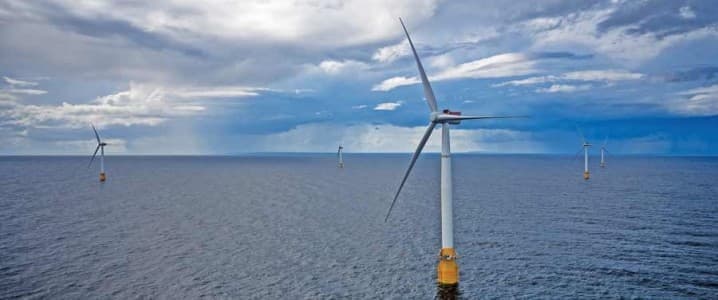
The United Kingdom has significantly recalibrated its commitment to renewable energy, confirming an extension of its Contracts for Difference (CfD) scheme from 15 years to 20 years. This pivotal policy shift, slated to commence with Allocation Round 7 (AR7) opening for bids in August 2025, signals a deepening resolve to de-risk green infrastructure investments. For the oil and gas sector, this move solidifies a long-term structural headwind, pushing investment capital further towards low-carbon alternatives. As senior investment analysts, we must dissect the immediate market implications and project the trajectory of capital flows in a rapidly evolving energy landscape where policy certainty in renewables increasingly overshadows the inherent volatility of hydrocarbon markets.
The UK’s Green Gambit: De-Risking Renewables, Re-Routing Capital
On July 15, the UK government officially lengthened the duration of its flagship renewable energy support mechanism, the Contracts for Difference (CfD) scheme. This extension from 15 to 20 years, applicable to solar, onshore wind, offshore wind, and floating offshore wind technologies, is a direct response to industry calls for greater investment stability. Developers have long grappled with the high upfront costs of renewable projects, exacerbated by volatile power prices, rising interest rates, and growing exposure to negative pricing events. By offering a guaranteed price for generated power over a longer horizon, the government aims to substantially lower the cost of capital for these projects, theoretically passing savings on to consumers and accelerating momentum toward its ambitious Clean Power 2030 goals.
The overhaul of AR7 goes beyond just contract duration. Critically, floating offshore wind projects will receive enhanced budget support, acknowledging their nascent but high-potential status. Solar PV developers will benefit from extended commissioning windows, providing greater flexibility in project delivery. Moreover, offshore wind bidders will no longer require full planning consent to participate, needing only a 12-month planning track record, streamlining the application process. These reforms collectively represent a significant recalibration of risk and return in favor of renewable energy deployment, signaling a clear governmental preference for green infrastructure over traditional fossil fuel investments in the nation’s energy mix.
Market Headwinds: O&G Sector Faces Structural Shifts Amidst Price Volatility
This long-term policy certainty for renewable energy comes at a challenging time for the traditional oil and gas sector, which continues to navigate significant price volatility. As of today, Brent crude trades at $94.85 per barrel, reflecting a marginal daily dip within a range of $94.75 to $94.91. More broadly, the 14-day trend for Brent shows a noticeable decline, dropping from $102.22 on March 25 to $93.22 on April 14, representing an approximately 8.8% reduction. WTI crude similarly saw a modest decline today, trading at $90.98. While these daily and bi-weekly movements might seem modest, they underscore the inherent unpredictability of hydrocarbon markets, a stark contrast to the stable, inflation-linked returns now promised to UK renewable investors for two decades.
While O&G investors meticulously track gasoline prices, currently hovering around $3.00, and monitor short-term supply-demand dynamics, the UK’s CfD extension creates a powerful, long-term pull factor for capital away from fossil fuel exploration and production. This policy effectively de-risks a substantial portion of the renewable energy value chain within the UK, potentially making new oil and gas ventures in the region less attractive by comparison, especially given the rising regulatory and social pressures on hydrocarbon producers. The divergence between policy-backed stability in renewables and market-driven volatility in traditional energy sources is becoming increasingly pronounced, impacting investor sentiment and capital allocation decisions globally.
Investor Focus: Navigating Short-Term Catalysts Against Long-Term Energy Transition
Our proprietary reader intent data reveals that investors are currently grappling with fundamental questions about the future of oil markets. Key queries include building a base-case Brent price forecast for the next quarter and identifying the consensus 2026 Brent forecast. These forward-looking price expectations are directly impacted by significant policy shifts like the UK’s CfD extension, which fundamentally alters the long-term demand curve for fossil fuels in a major economy. While the immediate concerns might revolve around the operational efficiency of Chinese teapot refineries or the drivers behind Asian LNG spot prices this week, the UK’s move underscores a broader, structural demand erosion that cannot be ignored when modeling future crude prices.
The market’s immediate attention will understandably be drawn to upcoming catalysts. The OPEC+ Joint Ministerial Monitoring Committee (JMMC) meeting on April 18, followed by the Full Ministerial meeting on April 20, will be critical for short-term supply outlooks. Similarly, the weekly API and EIA crude inventory reports on April 21/22 and April 28/29, respectively, will offer granular insights into immediate market balances. However, for investors seeking to position their portfolios for the long term, these UK policy changes serve as a potent reminder that the energy transition is not merely a concept but a tangible, policy-driven reality that will increasingly influence commodity prices and asset valuations well beyond the next quarter or even the next year. The stability offered by extended CfD contracts provides a stark alternative to the inherent risks of a commodity market prone to geopolitical shifts and economic cycles.
Forward Outlook: What AR7 and Beyond Means for Energy Investment
The opening of bids for AR7 in August 2025 will be a critical juncture, testing the efficacy of these new contract terms in stimulating investment and competition. While the government anticipates lower costs of capital and potential consumer savings, critics warn that extending contracts to 20 years could amount to a “backdoor subsidy expansion,” potentially locking consumers into overpaying if wholesale electricity prices decline significantly after the original 15-year period. This creates a nuanced risk-reward profile, where policy stability for developers is weighed against potential long-term cost burdens for end-users.
For the broader energy investment community, the UK’s decision is likely to inspire similar long-term policy commitments in other nations, further accelerating the global energy transition. This trend will inevitably exert more pressure on oil and gas companies to articulate robust decarbonization strategies, diversify their asset portfolios, or face increasing scrutiny from investors and lenders. While the upcoming Baker Hughes Rig Counts on April 17 and April 24 will continue to offer insights into immediate drilling activity and short-term production trends, the strategic direction signaled by the UK government suggests a long-term shift away from new fossil fuel dependency. Investors must therefore look beyond immediate price movements and actively integrate these structural policy developments into their long-term investment theses for a resilient and forward-looking energy portfolio.


