

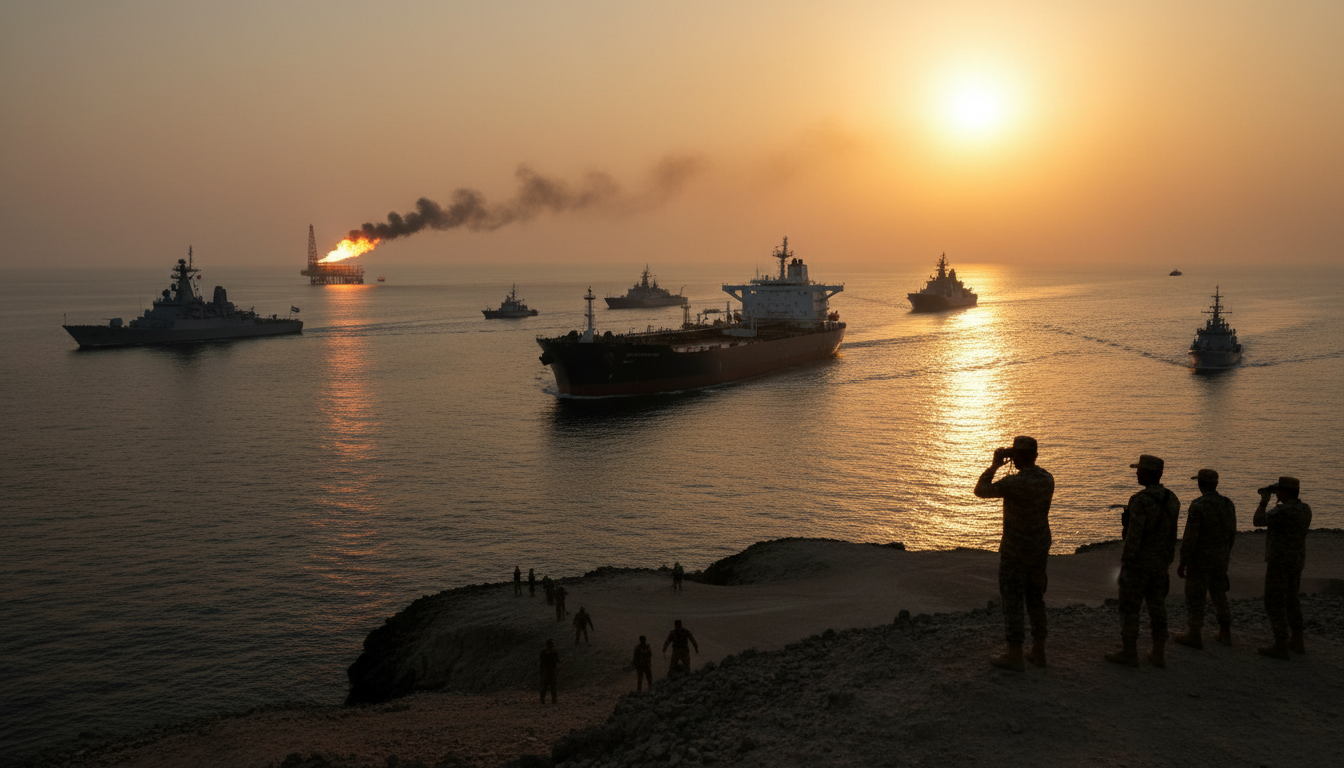
UAE Demands UN Intervention in Hormuz, Pressuring Global Oil Markets
The United Arab Emirates has taken a decisive stance, formally urging the United Nations to sanction a spectrum of responses, potentially involving military intervention, to ensure the unhindered flow of traffic through the Strait of Hormuz. This critical development unfolds as Gulf nations intensify their collective efforts to compel Iran to reinstate secure and unrestricted maritime passage through this indispensable global energy artery, a situation with profound implications for crude oil and liquefied natural gas (LNG) markets worldwide.
In a communication dispatched on Tuesday, His Excellency Mohamed Abushahab, the UAE’s Ambassador to the United Nations, petitioned the UN Secretary-General and the President of the Security Council for ‘immediate action.’ This critical request specifically aims to guarantee the ‘safe and secure navigation and navigational rights and freedoms in and around the Strait of Hormuz,’ underscoring the urgency for global energy market stability. The escalating geopolitical tensions in this vital choke point have already sent ripple effects across commodity exchanges, driving up global oil and gas prices as market participants grapple with heightened supply risk.
Chapter Seven Invoked: A Diplomatic Shield for Potential Force
The UAE’s invocation of Chapter Seven of the UN Charter is particularly noteworthy for investors. This powerful framework empowers the Security Council to confront threats to international peace or acts of aggression by sanctioning a range of robust measures. These could extend from targeted economic blockades and the severance of diplomatic relations to the ultimate authorization of military force, dramatically altering the risk landscape for energy supply chains. While such a resolution would not necessarily establish a new UN operational mission, it would furnish crucial diplomatic endorsement for Gulf nations contemplating involvement in military operations or the formation of a naval task force to liberate the strait from Iranian interference or to subsequently police the waterway.
For energy investors, this UN backing could signify a pathway to greater operational certainty, potentially mitigating the extreme volatility witnessed in recent months. Historically, Chapter Seven authorizations have served as a vital international ‘shield’ for nations deploying military force, as highlighted by Richard Gowan, a UN expert at the International Crisis Group. This precedent offers a legal and diplomatic framework that could facilitate a more concerted, multinational effort to secure the Strait of Hormuz, an outcome keenly watched by every participant in the global energy trade.
International Coalition Mobilizes: Diplomatic Efforts Take Precedence
This Thursday marks a significant step towards de-escalation, as the United Kingdom is set to chair a virtual gathering of foreign ministers from approximately 35 countries. The esteemed list of participants includes the UAE, France, Germany, Italy, Canada, and Japan, all deeply invested in the free flow of global trade. Notably, the United States is not scheduled to participate in these discussions. The UK-convened coalition will address the crisis through a multi-faceted strategy encompassing three distinct tracks: diplomatic, economic, and military. Initial efforts will concentrate heavily on the diplomatic avenue, coordinating initiatives led by nations that maintain active communication channels with Tehran. Sources familiar with the confidential discussions indicate that should diplomatic overtures fail to yield the desired outcome, the coalition stands prepared to consider more stringent economic penalties targeting Iran’s pivotal oil and shipping sectors. Such sanctions could further constrain Iranian crude exports and impact global tanker rates, creating both challenges and potential opportunities for energy traders and maritime shipping investors.
Soaring Prices and Regional Confrontation: The Investor Perspective
The effective constriction of the Strait of Hormuz, driven by persistent Iranian threats and actions, has propelled global oil and gas prices to unprecedented highs. This directly translates into increased pressure on international leaders to stabilize the region and ensure energy security. Regional powers like the UAE and Saudi Arabia have reportedly weighed their options, even considering joining broader international efforts, as Iran continues to launch strikes against major energy installations in the Gulf. The ongoing closure and associated risks have forced a reevaluation of geopolitical risk premiums across energy asset classes, making an understanding of regional dynamics paramount for portfolio managers.
For investors, the volatility underscores the critical nature of the Strait of Hormuz, through which roughly one-fifth of the world’s crude oil and liquefied natural gas exports normally transit. Any disruption here reverberates across the entire energy complex, impacting everything from refinery margins to consumer prices. The ongoing conflict has therefore become a central concern for anyone with exposure to the oil and gas sector, demanding continuous monitoring of diplomatic breakthroughs or escalating military postures.
A Gulf Nation Steps Up: UAE Leads the Charge for Maritime Security
In a notable display of commitment to maritime security, the UAE stands as the sole Gulf Arab nation to publicly declare its willingness to join a naval force or provide commercial vessel escorts to facilitate the reopening of Hormuz. This firm commitment highlights the Emirates’ strategic imperative to protect regional trade and ensure global energy supply continuity. Last month, the UN Security Council unequivocally condemned Iran’s aggressive actions against its Gulf neighbors, issuing a clear call for the Islamic Republic to cease its attacks and uphold freedom of navigation within the strait. Furthermore, Bahrain, currently holding a non-permanent seat on the Security Council, is actively engaged in crafting a new resolution. This proposed mandate aims to empower a dedicated naval task force with the specific objective of reopening and securing the critical waterway, signaling a concerted regional push for a decisive international response. Investors should monitor these diplomatic efforts closely, as the success or failure of these initiatives will directly influence future energy market stability and supply chain reliability.
