

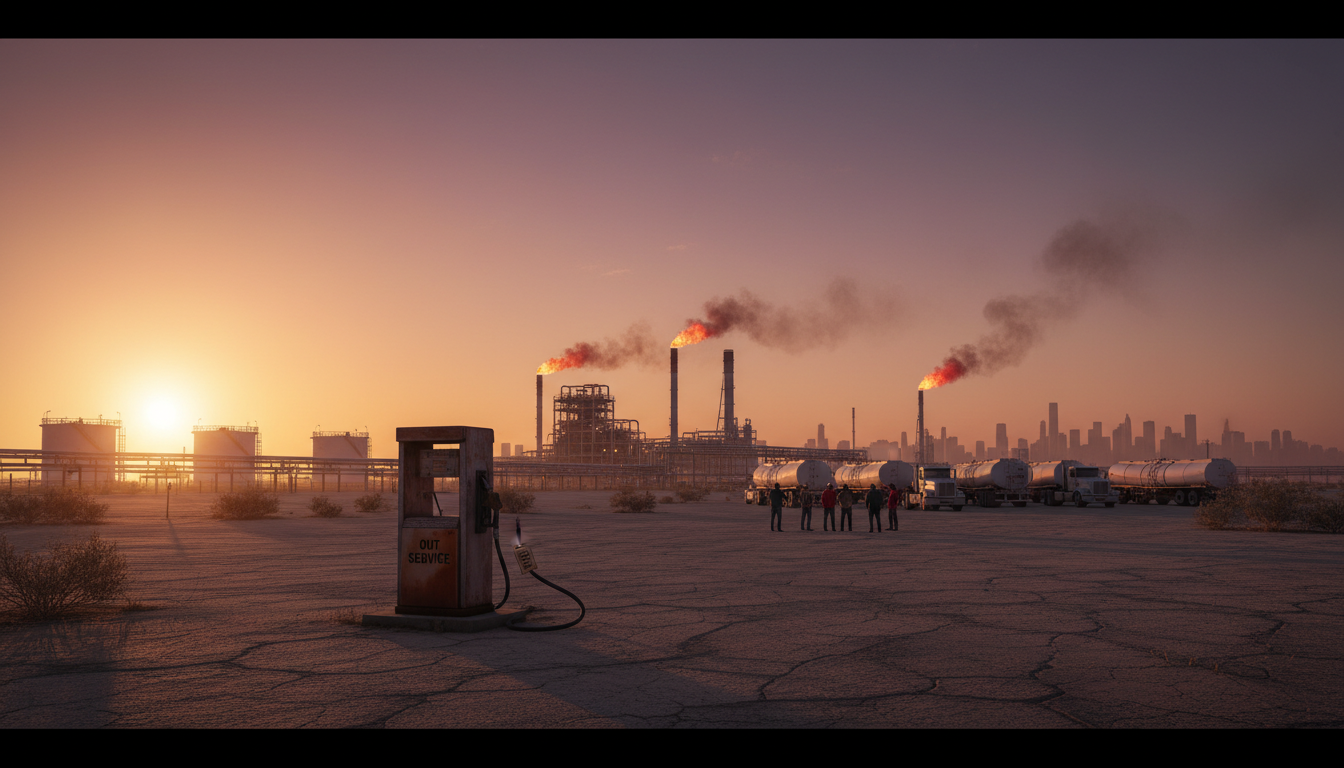
The intricate stability of Middle Eastern energy supplies faces renewed scrutiny following a series of coordinated attacks on critical infrastructure in both the United Arab Emirates and Kuwait. These incidents, occurring recently, underscore the persistent geopolitical risks that profoundly impact global oil and gas markets, demanding vigilant assessment from energy investors.
In the United Arab Emirates, operations at the formidable Habshan gas facilities, recognized as the nation’s largest gas processing hub, experienced a halt. This suspension came early on Friday, triggered by a fire that erupted after an attack. Abu Dhabi authorities confirmed they were responding to falling debris at the site, which air defense systems successfully intercepted. Crucially, no injuries were reported despite the operational disruption and subsequent fire response.
The Habshan complex represents a monumental asset in global natural gas supply, operated by Abu Dhabi National Oil Company (ADNOC). This onshore facility is an integral component of one of the world’s most extensive gas processing plants. Comprising five distinct plants, the vast Habshan Complex boasts 14 processing trains and an impressive total capacity of 6.1 billion standard cubic feet per day (bscfd). The impact of any disruption here, even temporary, resonates through regional and international gas markets, affecting supply availability and potentially influencing pricing benchmarks.
This incident marks the second time operations at Habshan have been interrupted due by attacks since the ongoing regional conflict began, highlighting a concerning pattern of vulnerability. Beyond its paramount role in gas processing, Habshan is also a strategic pivot for oil operations. It serves as the crucial starting point for the Habshan-Fujairah crude pipeline, a vital artery designed to reroute a portion of UAE’s oil exports away from the Strait of Hormuz. Fujairah, strategically located outside this de facto chokepoint, offers an alternative shipping route, underscoring the broader geopolitical calculations at play. It’s noteworthy that Fujairah itself has faced multiple targeting attempts in the recent past, further emphasizing the widespread nature of these threats to maritime and land-based energy transit.
Kuwaiti Refinery Targeted in Separate Attack
Adding to the regional tension, another Gulf producer, Kuwait, reported a separate but concurrent attack. Kuwait Petroleum Corporation (KPC) confirmed that its Mina Al-Ahmadi refinery was targeted in a drone attack early on Friday. This assault resulted in fires across several operational units within the facility. Fortunately, KPC reported no injuries among its personnel, mirroring the situation at Habshan.
The Mina Al-Ahmadi refinery is a significant crude oil processing facility, situated approximately 50 kilometers (31 miles) south of Kuwait City. It possesses a substantial processing capacity of 346,000 barrels per day (bpd), making it a key component of Kuwait’s downstream sector. Any sustained disruption to its operations could impact refined product availability within the region and beyond, potentially exerting upward pressure on product prices.
This attack on Mina Al-Ahmadi is not an isolated event; it represents the second such incident targeting the refinery. The facility previously sustained drone attacks on March 20, which also ignited fires in several units. The repetition of these attacks against such vital energy infrastructure signifies a deliberate and escalating strategy, designed to introduce uncertainty and risk into the region’s energy landscape.
Investor Outlook: Navigating Heightened Geopolitical Risk
For investors focused on the oil and gas sector, these latest developments present a compelling call for re-evaluating risk matrices. The deliberate targeting of highly strategic facilities in two separate, major producing nations within a short timeframe paints a clear picture of heightened geopolitical instability. While the immediate operational suspensions at Habshan and Mina Al-Ahmadi appear to be temporary, and crucially, no injuries were reported, the psychological impact on market sentiment and risk premiums cannot be understated.
These incidents directly affect energy security. The UAE’s Habshan facilities are critical for natural gas liquefaction and export, impacting global LNG markets. Kuwait’s refinery is key for regional fuel supply. Any prolonged disruption or escalation could trigger significant volatility in crude oil and natural gas futures, potentially driving prices higher as markets price in increased supply risk. The resilience of air defense systems, while successful in intercepting debris, highlights the persistent threat of aerial assaults and the continuous need for robust protective measures around critical energy infrastructure.
Investors must consider the long-term implications of such repeated aggressions. These events contribute to a higher risk premium for investments in the region, potentially influencing decisions on future capital allocation, project financing, and insurance costs. The strategic importance of assets like the Habshan-Fujairah pipeline, designed to circumvent geopolitical bottlenecks like the Strait of Hormuz, is reaffirmed, yet even these bypass routes are not immune to attacks. Diversification of supply sources and robust contingency planning become even more paramount in this volatile environment.
As the global economy grapples with existing supply chain pressures and energy transition dynamics, the stability of traditional hydrocarbon hubs in the Middle East remains a critical determinant of market equilibrium. These recent attacks serve as a stark reminder that physical security risks are an ever-present factor for oil and gas investing, requiring continuous monitoring and adaptive strategies from all market participants.
