

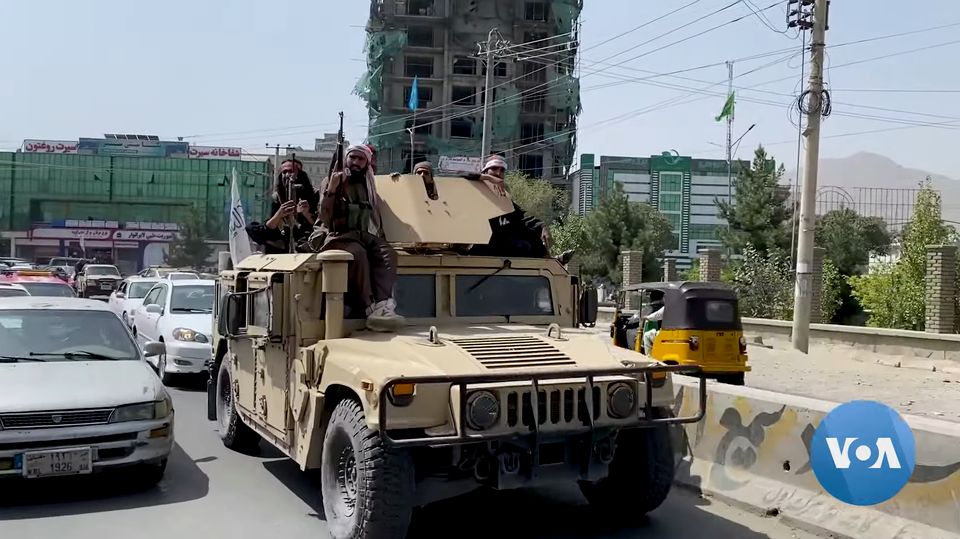
The aftermath of the U.S. withdrawal from Afghanistan in 2021 has triggered a cascade of security challenges, many of which are still being felt across the South Asian region. One of the most alarming consequences of this departure is the widespread distribution of U.S. made weapons that were left behind in the chaos following the Taliban’s takeover. These weapons, once intended for the Afghan military, have found their way into the hands of insurgent groups like Tehreek-e-Taliban Pakistan (TTP), fueling terrorism and instability in Pakistan. The gravity of this issue extends far beyond the mere transfer of weaponry; it underscores the complexities of modern warfare and the long-term ramifications of foreign military involvement in fragile states.
Following the U.S. withdrawal, an estimated $7 billion worth of military equipment was left behind in Afghanistan. This was not a mere misstep in logistics but a strategic vacuum that allowed various armed factions, particularly the Taliban, to seize vast quantities of advanced weaponry. The U.S.-made M16 and M4 rifles, night-vision goggles, and other sophisticated military gear that were left behind have now become key assets for terrorist groups operating in Pakistan, significantly elevating their combat capabilities.
The Taliban’s control over Afghanistan has provided local commanders with the ability to retain these weapons, further bolstering their influence and resources. As a result, these weapons have entered Afghanistan’s black market, where they have been sold and trafficked with little oversight. For groups like the TTP, which has long been an insurgent force in Pakistan, these weapons are more than just tools of war they represent a strategic advantage, enabling them to conduct more precise and deadly attacks against Pakistani security forces and innocent civilians. In particular, Khyber Pakhtunkhwa (KP), a province that borders Afghanistan, has been the site of numerous attacks, where these advanced U.S. weapons have been used to undermine the security situation.
The implications of this situation are profound. U.S. officials, including former President Donald Trump, initially promised that efforts would be made to retrieve the abandoned military equipment. However, as the months and years have passed, it has become increasingly clear that these promises were largely unfulfilled. As a result, the weapons intended for the Afghan National Defense and Security Forces (ANDSF)—have instead been exploited by terrorist groups, further destabilizing the region. The Taliban, despite their official denials, have been widely accused of facilitating the transfer of these weapons to militant factions, who have used them to extend their insurgency into Pakistan, leading to an escalation of violence.
The United Nations has reported on the significant impact these U.S.-made weapons have had on insurgent groups operating in both Afghanistan and Pakistan. The TTP, for instance, has been able to carry out more sophisticated attacks with M16 rifles and night-vision equipment, which were previously difficult to obtain for such groups. These advanced military tools have increased the effectiveness and lethality of insurgent attacks, enabling them to strike Pakistani security forces with greater accuracy, even under the cover of darkness. The U.S. weapons left behind have transformed the TTP from a predominantly local insurgent force into a more formidable transnational threat.
The proliferation of these weapons is not confined to militant groups alone. According to various reports, a thriving black market has emerged in Afghanistan, where civilians facing increasing insecurity have also sought to arm themselves. Night-vision goggles, which originally sold for as much as $2,000, have now been available for as little as $300. This surge in the availability of sophisticated military gear has raised alarms not only about the empowerment of terrorist groups but also the long-term stability of Pakistan’s security environment. When civilians, often with little training or accountability, acquire such advanced weaponry, the potential for indiscriminate violence increases, further eroding trust in government institutions and heightening the risk of social unrest.
While the Taliban has publicly denied any involvement in the distribution of U.S.-made weapons to terrorist groups, experts are unanimous in their assessment that these weapons are being widely trafficked and exploited by insurgents. The continuing violence in Pakistan provides stark evidence of this phenomenon. Reports have consistently pointed to the growing prevalence of U.S. rifles and night-vision equipment in attacks against Pakistani military positions and civilian targets. In May 2022, Pakistani authorities seized a cache of U.S. weapons, including 63 rifles that were originally provided to the Afghan government. These weapons have since been used in attacks within Pakistan, further complicating the region’s security situation.
Raz Muhammad, a Pakistani arms trader, has spoken about the dramatic decrease in the prices of advanced military equipment in Afghanistan. Night-vision devices, which once commanded hefty prices due to their military-grade capabilities, have now flooded the market. For just a fraction of their original price, insurgents and civilians alike can acquire these cutting-edge tools, which previously would have been reserved for well-funded military forces. This influx of weapons has not only enhanced the firepower of terrorist groups but has also exposed the vulnerability of the region’s governance structures, particularly in areas like the Federally Administered Tribal Areas (FATA) and KP.
The black market for U.S. weapons is a multifaceted issue that highlights the consequences of hasty military withdrawals and the lack of post-conflict planning. The Taliban’s takeover of Afghanistan has created an environment in which weapons are no longer controlled by legitimate state actors but instead by a combination of insurgent factions, criminal networks, and opportunistic civilians. This has led to an unstable security situation, where military-grade weapons are readily available, fueling both terrorism and general violence.
The international community, particularly the U.S., has a critical role to play in addressing the ramifications of the weapons left behind in Afghanistan. While it is impossible to undo the damage already done, efforts must be made to stem the flow of these weapons into the black market and to mitigate the impact they have on regional security. This will require not only improved intelligence-sharing between Pakistan, Afghanistan, and other international actors but also greater investment in local security forces capable of managing the threat posed by these weapons. Additionally, there must be concerted efforts to counter the growing trend of weapon proliferation in Afghanistan by curbing the trade in military gear and strengthening border control mechanisms.
Pakistan’s ongoing struggle with terrorism and insurgency is now complicated by the sophisticated weaponry flooding into the region. As the TTP and other terrorist groups continue to exploit the weapons abandoned in Afghanistan, the need for a coordinated international response becomes ever more pressing. The consequences of inaction are clear: unchecked weapon proliferation will only exacerbate the already volatile situation in Pakistan and the broader region. The U.S. weapons left behind in Afghanistan are not just relics of a failed military campaign; they are active agents of destruction, further fueling terrorism and instability in Pakistan, and it is imperative that the international community address this challenge with urgency.
[Photo by Voice of America News, Public domain, via Wikimedia Commons]
The views and opinions expressed in this article are those of the author.

Professor Mathew James is a leading scholar in insurgency studies, terrorism analysis, and contemporary conflict dynamics. He currently serves as a senior faculty member in the Department of Security and Strategic Studies at North Ridge Western University, where his research explores militant group behavior, radicalization pathways, counterterrorism strategy, and the social impacts of political violence.
