

The Trump Administration has already used up most emergency options to rein in the soaring international crude oil prices, which have pushed up U.S. gasoline prices by $0.80 per gallon from a month ago.
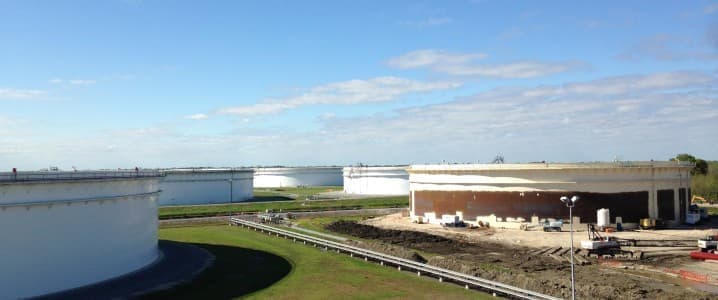
The U.S. last week tapped the Strategic Petroleum Reserve (SPR) as part of a record-high reserves release announced by the International Energy Agency. The Trump Administration also issued a one-month waiver allowing buyers to purchase sanctioned Russian oil on tankers without repercussions. It also promised, two weeks ago, risk insurance and escort for tankers to help oil pass through the de facto closed Strait of Hormuz.
The political risk insurance and guarantees for crossing the Strait of Hormuz, “at a very reasonable price” as U.S. President Donald Trump put it three days into the war, hasn’t materialized yet as shipowners and customers continue to steer clear of the world’s most critical oil route, if they aren’t already trapped there.

Since President Trump’s claim that the U.S. would escort tankers through the Strait of Hormuz, if necessary, the Administration has retracted the statement, and the President ended up begging and bullying – often in the same Truth Social post – allies to help reopen the Strait.
Despite the efforts of Saudi Arabia to redirect more crude flows to Red Sea exports and away from the Arab Gulf, the stark reality of global oil supply is that it needs the Strait of Hormuz open so it wouldn’t lose an estimated 17 million barrels per day (bpd) of crude and petroleum products this month and next.
Related: Little-Known US Company Lands Important Pentagon Contract in Rare Earth Race
These volumes cannot be offset by any SPR release or other similar band-aid solution as the strain on the oil and product markets is already too high with just over two weeks of war.
Analysts warn that if the Strait of Hormuz remains blocked for a month or two, oil prices could jump to as high as $150 and even $200 per barrel, forcing an economic shock and a massive political shock to incumbent leaders, most of all President Trump ahead of the mid-term elections in November.
Band-Aid
The President has few options left to contain the fallout, according to Reuters columnist Ron Bousso.
These could include considering waiving the Jones Act to allow non-U.S. vessels to move goods, including energy, from one American port to another, and a Congressional move to reduce federal taxes on gasoline and diesel.
Yet, these, too, would be a band-aid trying to stop economic and political bleeding from a closed Strait of Hormuz.
“I don’t see this as much more than a band-aid with weak adhesive,” Steve Allen, an economist at North Carolina State University, told ABC News, in comments on the U.S. tapping the SPR for a release of 172 million barrels of crude as part of the IEA’s record-high 400-million stocks release.
To put into perspective this massive coordinated global release of oil stocks, the biggest in the history of the oil market, it’s worth noting that before the war cut off the Strait of Hormuz from the global oil supply chain, about 600 million barrels of oil were passing through the chokepoint per month.
Strait of Hormuz Shock
The loss of oil supply cannot be overstated, and the loss of flows through Hormuz cannot be compensated by any bypassing or workarounds from Saudi Arabia to the Yanbu terminal on the Red Sea, or the UAE pipeline to Fujairah outside the Strait of Hormuz.
“All of those routes together can only restore flows to roughly half of the pre-war oil exports from the Gulf,” analysts at Wood Mackenzie say.
Andrew Harbourne, Wood Mackenzie’s senior analyst for oil markets, notes the 400-million-barrel release will cover only about four weeks of disruption in the Gulf.
“Strategic stocks remain an effective emergency buffer, but they are a one-off intervention that must eventually be rebuilt and cannot cover a sustained supply gap,” Harbourne added.
Related: No Magnets, No Drones: How China Controls the Future of Warfare
Supply shocks in the past suggest that if the war and the disruption in the Strait of Hormuz persist, Brent crude could get to $150 to $200 per barrel. For some, such as diesel and jet fuel, the effective prices could be $200 to $250 a barrel or more, according to WoodMac.
Spiking prices would present a macroeconomic and political risk in many geographies and countries, according to J.P. Morgan.
“This event generates greater macroeconomic risk than recent military conflicts,” Joseph Lupton, co-head of Economic Research at J.P. Morgan, said on Friday.
“Through its potential to disrupt global energy markets and supply chains, it looks likely to have material, lasting political and economic consequences at the regional level.”
How fast the U.S. could rally a coalition to try to unblock the Strait of Hormuz – and how successful such would be – would be critical for the political and economic shocks going forward.
“Until we see a meaningful resumption of oil flows through the Strait of Hormuz, upward pressure on fuel prices is likely to persist,” Patrick De Haan, head of petroleum analysis at GasBuddy, said on Monday, as U.S. gasoline and diesel prices continued to soar, with diesel topping $5 per gallon.
By Tsvetana Paraskova for Oilprice.com
More Top Reads From Oilprice.com
