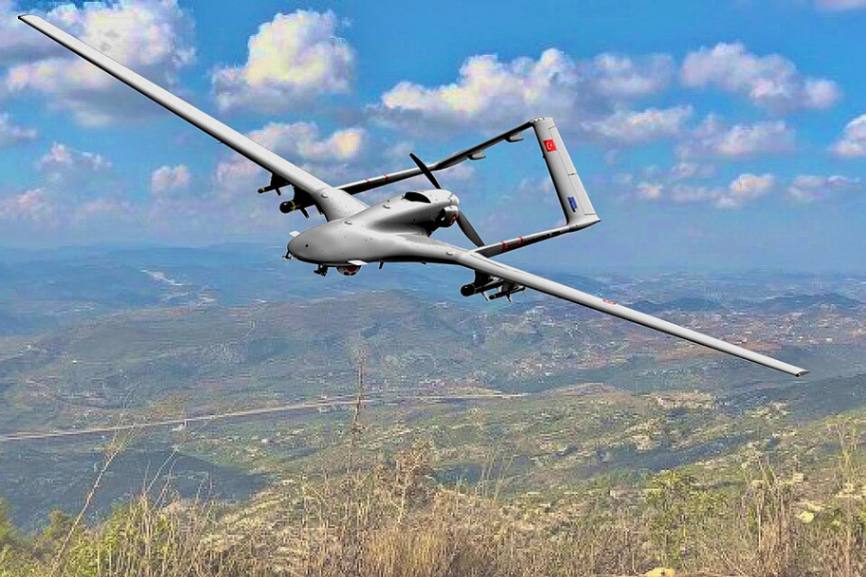
The delicate balance of power in South Asia faces renewed volatility following recent military exchanges between India and Pakistan. This latest flare-up, triggered by an April terrorist attack in Kashmir attributed to The Resistance Front, marks the most significant direct confrontation since the 1999 Kargil War. While the specter of nuclear escalation remains a persistent concern, a new and critical dimension has emerged in this decades-long rivalry: advanced drone technology. Specifically, the overwhelming presence of Turkish-made unmanned aerial vehicles (UAVs) within Pakistan’s arsenal introduces fresh geopolitical complexities and significant, yet often underestimated, risks for global oil markets.
Turkish UAVs Reshape Regional Conflict Dynamics
Pakistan’s increasing reliance on Turkish drone technology signals a profound shift in its military strategy and hints at a deepening strategic partnership between Ankara and Islamabad. Among these, the Bayraktar TB2 drone stands out, having garnered international notoriety since its first recorded kill in April 2016. Its effectiveness was starkly demonstrated during the Second Nagorno-Karabakh War in 2020. In that conflict, Azerbaijan, with crucial backing from Turkey, launched an offensive against the ethnic Armenian enclave of Artsakh. The TB2 proved instrumental, effectively neutralizing Armenian tanks, artillery batteries, and even sophisticated missile defense systems, allowing Azerbaijani forces to gain a decisive advantage.
The strategic blueprint forged in Nagorno-Karabakh, where TB2s systematically overwhelmed conventional defenses and inflicted heavy casualties on entrenched forces, has since been replicated. Following Russia’s full-scale invasion of Ukraine, Kyiv’s military also adopted these Turkish drones, further cementing Ankara’s diplomatic clout and its role in supporting military operations against regional adversaries. This proven track record of battlefield efficacy makes Pakistan’s acquisition and deployment of these systems particularly pertinent for investors monitoring geopolitical flashpoints and their potential impact on energy security.
Pakistan’s Drone Offensive: A New Escalation Model
The Bayraktar TB2 is not the sole Turkish drone model integrated into Pakistan’s growing arsenal. A significant overnight drone offensive launched by Pakistan against India between May 8th and 9th reportedly involved nearly 400 Turkish-manufactured SONGAR drones. Like the Bayraktar series, the SONGAR is designed for armed operations, extending beyond mere reconnaissance or intelligence gathering. This deployment underscores a calculated strategic shift by Islamabad, opting for a low-risk, low-casualty approach to exert pressure on New Delhi without immediately triggering responses that might cross the perceived threshold for nuclear escalation.
This tactic, evidently inspired by Azerbaijan’s successful drone-led campaigns, allows Pakistan to pursue a sustained campaign of harassment and limited engagement. For energy investors, this represents a new form of “grey zone” conflict – one that may not immediately lead to all-out war but can perpetuate instability, disrupt supply chains, and introduce significant uncertainty into regional investment climates. The ongoing tension, even at lower levels of conventional warfare, can influence shipping lanes, impact infrastructure projects, and create a risk premium on regional energy assets.
Emerging Geopolitical Axes and Global Energy Implications
The burgeoning military cooperation between Turkey and Pakistan, particularly around UAV technology, signals the emergence of a new geopolitical axis. This partnership extends beyond South Asia, threatening to destabilize other sensitive regions from the Caucasus to broader Middle Eastern flashpoints. For global energy markets, such alliances and the proliferation of advanced military hardware present a complex web of risks.
Increased instability in South Asia, a region critical for global trade and home to a rapidly growing energy demand, invariably affects investor confidence. While direct impacts on oil production may seem distant, the potential for disruptions to key maritime choke points, like the Strait of Hormuz or shipping lanes through the Indian Ocean, cannot be ignored. A prolonged state of heightened alert or localized conflicts could easily translate into higher insurance premiums for tankers, extended transit times, and ultimately, upward pressure on crude oil prices.
Furthermore, the strategic implications of Turkey’s expanding influence and its role as a key military technology provider to various nations cannot be overlooked. This shift empowers actors in various regional disputes, potentially escalating conflicts that were previously contained by conventional military limitations. For oil and gas companies with assets or operations in or near these contested zones, understanding this evolving military landscape is paramount for risk assessment and strategic planning.
Investor Outlook: Navigating the Volatile Geopolitical Landscape
The integration of advanced Turkish drone technology into Pakistan’s military strategy fundamentally alters the risk profile of the India-Pakistan dynamic. This new dimension suggests that future confrontations, even if limited in scope, could be more frequent, more precise, and more difficult to de-escalate. For investors in the oil and gas sector, these developments demand careful consideration.
The potential for sustained regional instability, even without full-scale conflict, can still significantly impact energy markets. Factors such as increased defense spending, potential sanctions, disruption to trade routes, and a general erosion of regional stability can all contribute to an unpredictable pricing environment for crude oil and natural gas. Companies with exposure to South Asian energy projects, or those reliant on shipping through Indian Ocean routes, must meticulously evaluate their geopolitical risk matrices.
In conclusion, the proliferation of sophisticated drone technology, particularly from Turkey to Pakistan, introduces a critical new variable into the volatile geopolitical equation of South Asia. This evolution in military strategy not only raises the stakes for regional powers but also casts a long shadow over global energy security, demanding an agile and informed response from astute oil and gas investors.