

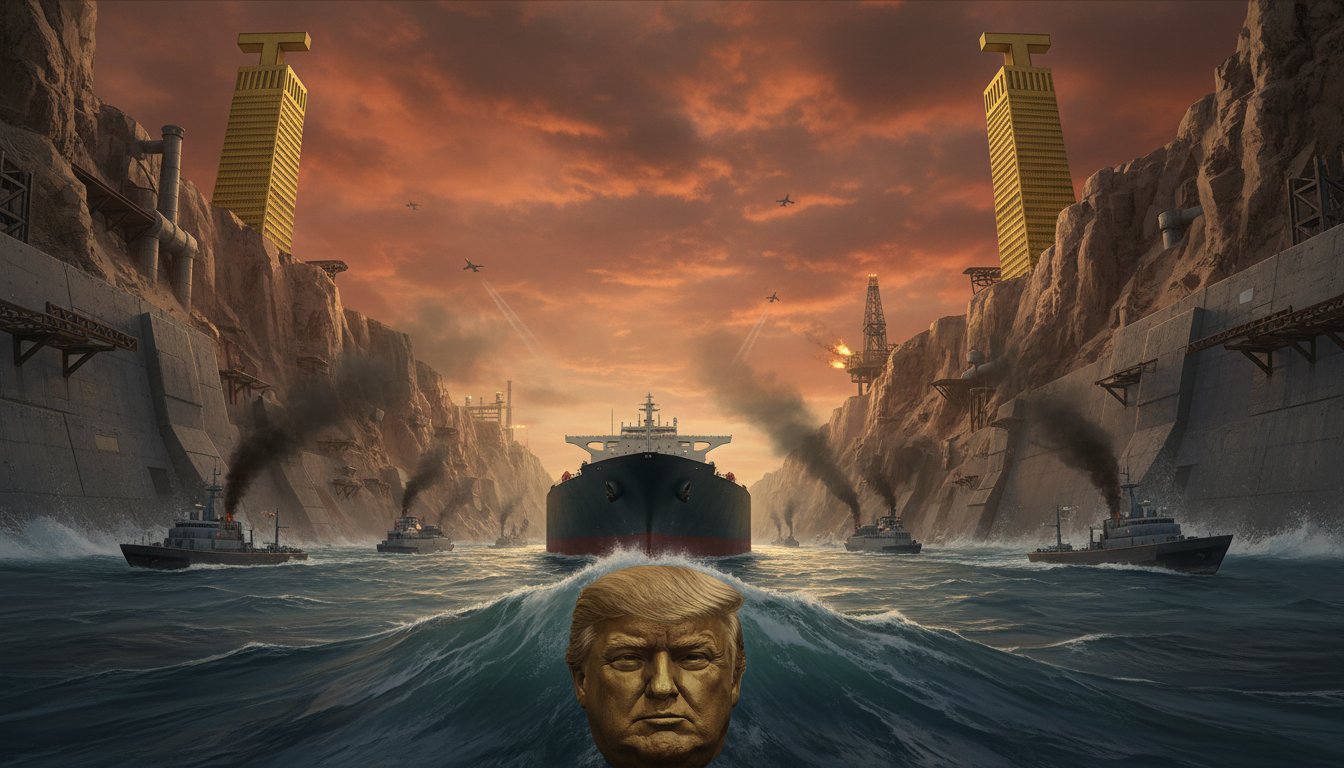
Geopolitical Tensions Mount as Trump Jests on Critical Oil Choke Point
In a recent address at the Future Investment Initiative in Miami, President Donald Trump made a striking and somewhat jocular reference to the Strait of Hormuz, labeling it the “Strait of Trump.” This comment, delivered amidst a volatile geopolitical landscape and ongoing conflict with Iran, immediately captured attention from energy markets and strategic analysts alike. While seemingly a moment of levity for the crowd, the president’s remarks underscore the immense strategic importance of this maritime artery, a critical conduit for global oil supply, and the escalating tensions that continue to define the Middle East’s energy outlook.
The president’s “accidental” renaming, which he quickly clarified as intentional, comes at a time when the Strait of Hormuz stands as a primary flashpoint in the conflict now entering its second month. Despite claims from the United States that Iran’s military capabilities have been “obliterated,” Tehran’s persistent capacity to threaten or effectively impede transit through the strait remains a significant concern for global energy security. Such disruptions have already contributed to an unprecedented upheaval in worldwide energy supply and a corresponding surge in crude oil prices, reflecting the deep anxieties prevalent across commodity markets.
The Strait of Hormuz: A Lifeline Under Threat for Global Oil Supply
The Strait of Hormuz is not merely a shipping lane; it is arguably the world’s most vital maritime choke point for oil transit, funneling approximately 20 million barrels of oil per day under normal conditions. This staggering volume represents a substantial portion of the planet’s daily crude consumption, making its uninterrupted flow absolutely essential for maintaining stable global energy markets. Any significant obstruction or closure of this strait directly translates into severe supply shocks, driving up operational costs for businesses, impacting economic stability, and creating considerable uncertainty for oil and gas investors.
Iran’s strategic geographical position, particularly its control over the northern flank of the strait, grants it considerable leverage in regional geopolitics. The ongoing military engagements, coupled with Iran’s demonstrated capabilities to disrupt shipping, inject a substantial risk premium into international crude benchmarks. Energy companies operating in or dependent on Persian Gulf oil flows face heightened insurance costs, rerouting challenges, and the constant threat of supply chain interruptions. Investors must therefore closely monitor any developments, however rhetorical, that pertain to this critical shipping channel and the wider regional security environment.
Rhetoric and Reality: Trump’s Diplomatic Posturing Amidst Conflict
President Trump’s engagement with the concept of the Strait of Hormuz extends beyond the recent quip. Earlier discussions saw him floating the audacious proposal of joint control over the strait, potentially alongside Iran’s supreme leader, the Ayatollah. This suggestion, while perhaps aimed at signaling openness to unconventional resolutions, highlights the complexities and high stakes of diplomatic efforts in the region. Furthermore, Trump has asserted that Iran is actively negotiating with the United States, expressing a desire for a deal and even “begging” for one. Tehran, however, has consistently refuted these claims, denying any direct talks and thereby fueling further uncertainty regarding the true state of diplomatic engagement.
Such conflicting narratives inherently complicate the investment landscape for global energy. Market participants thrive on clarity and predictability, neither of which is abundantly available in the current geopolitical climate. The discrepancy between US assertions and Iranian denials can lead to rapid shifts in market sentiment, affecting everything from crude futures to the valuation of energy sector equities. Prudent oil and gas investors are advised to discern actionable policy signals from political rhetoric, understanding that even seemingly informal presidential remarks can significantly influence market psychology and geopolitical risk assessments.
The Brand-Centric Presidency: Implications for Geopolitics and Markets
The “Strait of Trump” comment resonates with a distinctive pattern observed throughout President Trump’s career: the pervasive integration of his own name into high-profile ventures and national landmarks. Reports, citing sources, have suggested that the president has indeed considered formalizing a renaming of the Strait of Hormuz to either the “Strait of Trump” or the “Strait of America,” echoing a past endeavor to relabel the Gulf of Mexico. This unique approach to personal branding, which blurs the lines between individual identity and national or international assets, extends to other significant institutions.
An earlier social media post from October, for instance, playfully referenced the John F. Kennedy Center for the Performing Arts as the “Trump Kennedy Center,” accompanied by images of renovations. This humor ultimately materialized into a more official development in December, when the White House announced that the Kennedy Center’s board had voted to formally adopt the name “Trump-Kennedy Center.” While these actions might be interpreted as primarily domestic political maneuvers, their international equivalents, such as suggestions regarding the Strait of Hormuz, carry profound geopolitical weight. For energy investors, such an approach signals an unconventional and potentially unpredictable foreign policy style, demanding careful consideration of how such a brand-centric approach might impact international relations and, consequently, global oil and gas markets.
Navigating Volatility: An Investor’s Outlook on Energy Security
The confluence of sustained geopolitical conflict, the critical importance of the Strait of Hormuz, and the distinctive communication style from the White House creates a uniquely challenging environment for energy sector investors. The potential for disruption at such a crucial choke point means that crude oil prices will likely remain sensitive to regional developments and political pronouncements. Investors should anticipate continued volatility, with upward pressure on prices during periods of heightened tension and potential pullbacks if diplomatic resolutions gain traction.
Monitoring the true state of US-Iran relations, discerning between negotiation postures and concrete policy shifts, will be paramount. Beyond immediate price fluctuations, the broader implications for global trade routes, maritime insurance markets, and long-term energy supply security must be factored into investment strategies. Companies with diversified supply chains or those focused on domestic energy production may offer a degree of insulation from these international flashpoints. Ultimately, successful navigation of the current market requires a nuanced understanding of geopolitical risk, a close watch on Middle Eastern developments, and an agile approach to capital allocation within the dynamic global energy landscape.
