Political Self-Interest: A Growing Headwind for Oil & Gas Investment
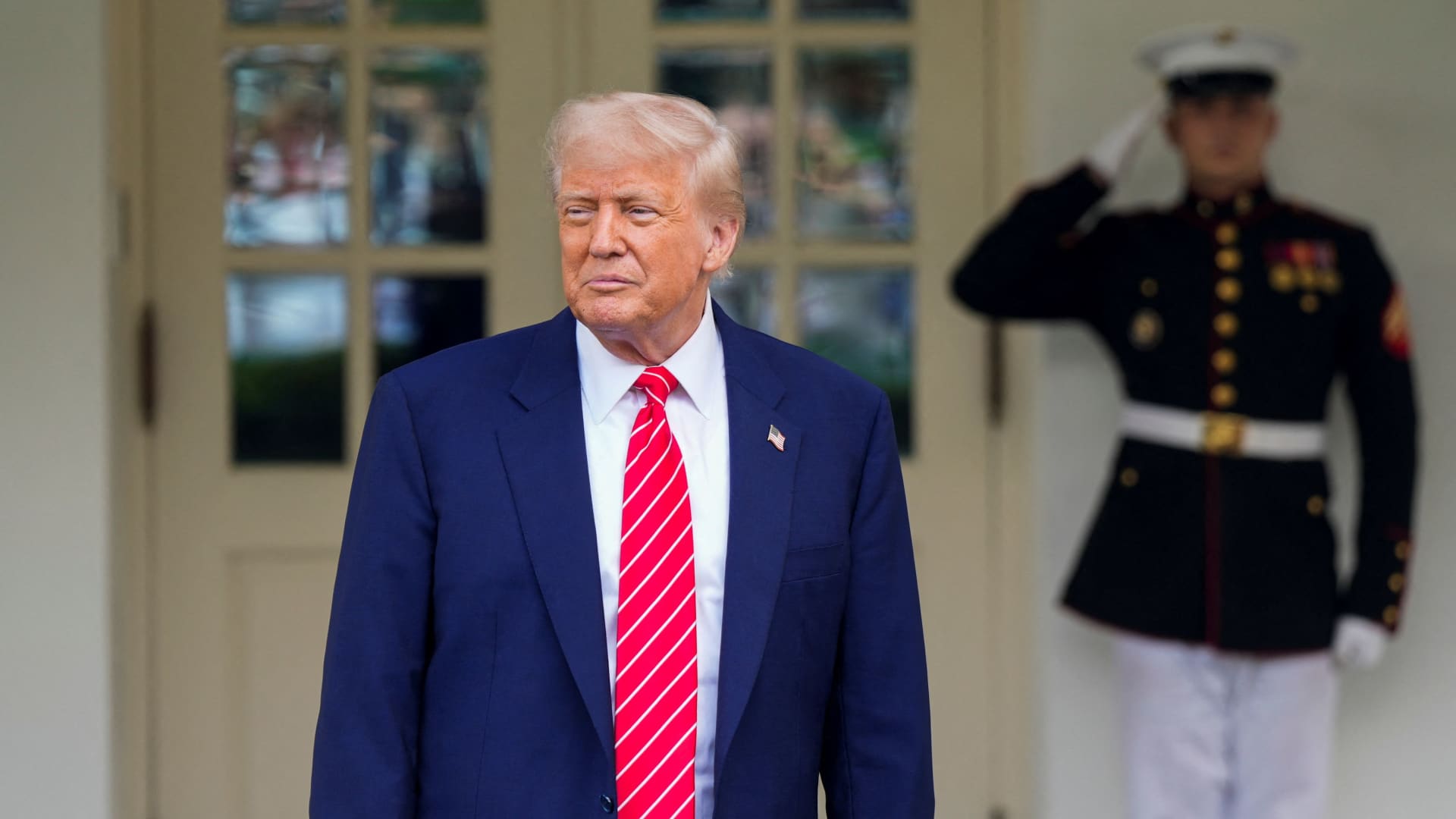
The recent legislative stalemate in Washington, ostensibly over cryptocurrency regulation, sends a chilling signal far beyond the digital asset markets. When a president’s personal financial ventures are perceived to directly obstruct bipartisan policy efforts, it introduces an unprecedented level of political uncertainty. For the capital-intensive, long-cycle oil and gas sector, where regulatory stability and predictable policy are paramount, such dynamics represent a significant and growing headwind. While the immediate focus of congressional debate might be on stablecoins, the underlying issue of self-interest potentially derailing national policy has profound implications for every industry reliant on a stable legislative and regulatory environment, none more so than energy.
Policy Paralysis and its Energy Repercussions
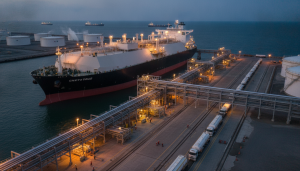
The failure of the GENIUS Act, a bill aimed at establishing federal rules for stablecoins, reportedly due to concerns over President Trump’s personal crypto holdings and promotions, highlights a dangerous precedent. Lawmakers’ objections, articulated by figures like Senator Jeff Merkley, who called it a “profoundly corrupt scheme,” underscore how personal financial entanglements can erode public trust and, crucially for investors, lead to legislative gridlock. For the oil and gas industry, this kind of policy paralysis translates directly into uncertainty regarding future regulatory frameworks. Major investment decisions, from approving new drilling permits and pipeline infrastructure to developing LNG export terminals, hinge on long-term policy clarity. If a president’s self-interest can derail seemingly non-controversial legislation, what does this imply for highly contested energy policies, such as environmental regulations, carbon pricing, or even trade agreements impacting energy exports and imports? The risk of sudden policy shifts or, conversely, indefinite inaction, becomes a non-quantifiable but very real factor in investment models, potentially increasing the cost of capital for new projects and deterring long-term commitments.
Market Volatility Amidst Political Headwinds
In an environment already grappling with geopolitical tensions and supply-demand imbalances, domestic political uncertainty acts as an additional accelerant for market volatility. As of today, Brent Crude trades at $95.27, experiencing a modest intraday gain of 0.51% and fluctuating within a day range of $91-$95.79. WTI Crude, meanwhile, is slightly down by 0.1% at $91.19, with its day range between $86.96 and $92.38. This current intraday movement comes after a more significant downward trend in recent weeks; our proprietary data shows Brent shedding nearly 8.8% over the past 14 days, falling from $102.22 on March 25th to $93.22 by April 14th. While numerous factors contribute to these price swings, including global economic outlooks and inventory data, a backdrop of domestic policy uncertainty can amplify market reactions. When investors perceive a government less focused on coherent national policy and more susceptible to personal financial conflicts, it introduces a ‘risk premium’ into pricing. Gasoline prices, currently at $2.98 and up 0.34% today, are also sensitive to policy signals, particularly concerning strategic petroleum reserve releases or fuel mandates. An unpredictable policy landscape can complicate efforts to manage consumer energy costs, creating further instability.
Upcoming Catalysts and the Shadow of Uncertainty
The energy market calendar is packed with events that typically provide clear signals for investors, yet the shadow of domestic policy uncertainty could muddle their interpretation. This week and next, we anticipate critical data points: the Baker Hughes Rig Count on April 17th and 24th, offering insights into drilling activity; the OPEC+ Joint Ministerial Monitoring Committee (JMMC) meeting on April 18th, followed by the full OPEC+ Ministerial Meeting on April 20th, which will be scrutinized for production policy decisions; and the weekly API and EIA Crude Inventory reports on April 21st/22nd and April 28th/29th, detailing U.S. supply dynamics. Normally, these events provide tangible inputs for supply-demand models. However, in an atmosphere where political decisions appear influenced by personal gain, investor confidence in long-term government stability diminishes. For instance, a robust Baker Hughes Rig Count might typically signal increased domestic production, but if the regulatory environment for infrastructure or exports remains ambiguous due to political infighting, the long-term investment implications are less clear. Similarly, OPEC+’s decisions, while globally significant, are interpreted against the backdrop of consuming nations’ domestic energy policies. When those policies are unpredictable, the overall market risk profile shifts, demanding more cautious positioning from investors.
Investor Concerns: Navigating the Policy Fog
Our proprietary reader intent data reveals a clear and pressing concern among investors: the need for reliable forward-looking analysis. Many are focused on building a robust base-case Brent price forecast for the next quarter and understanding the consensus 2026 Brent forecast. This desire for clarity directly collides with the current political landscape. Forecasting becomes inherently more challenging when a key variable—government policy—is subject to unpredictable shifts driven by non-policy considerations. Furthermore, questions surrounding the operational status of Chinese teapot refineries and the drivers behind Asian LNG spot prices highlight the global interconnectedness of energy markets. While these are international factors, U.S. energy policy, particularly regarding LNG export capacity or trade relations, has a direct impact on these global dynamics. A U.S. administration perceived as prioritizing self-interest risks alienating allies, disrupting trade flows, and undermining its role as a stable energy producer and exporter. Investors are not just asking for charts; they’re asking how to price political risk when that risk originates from within the highest office, demanding a more nuanced and cautious approach to portfolio construction and risk management in the oil and gas sector.