

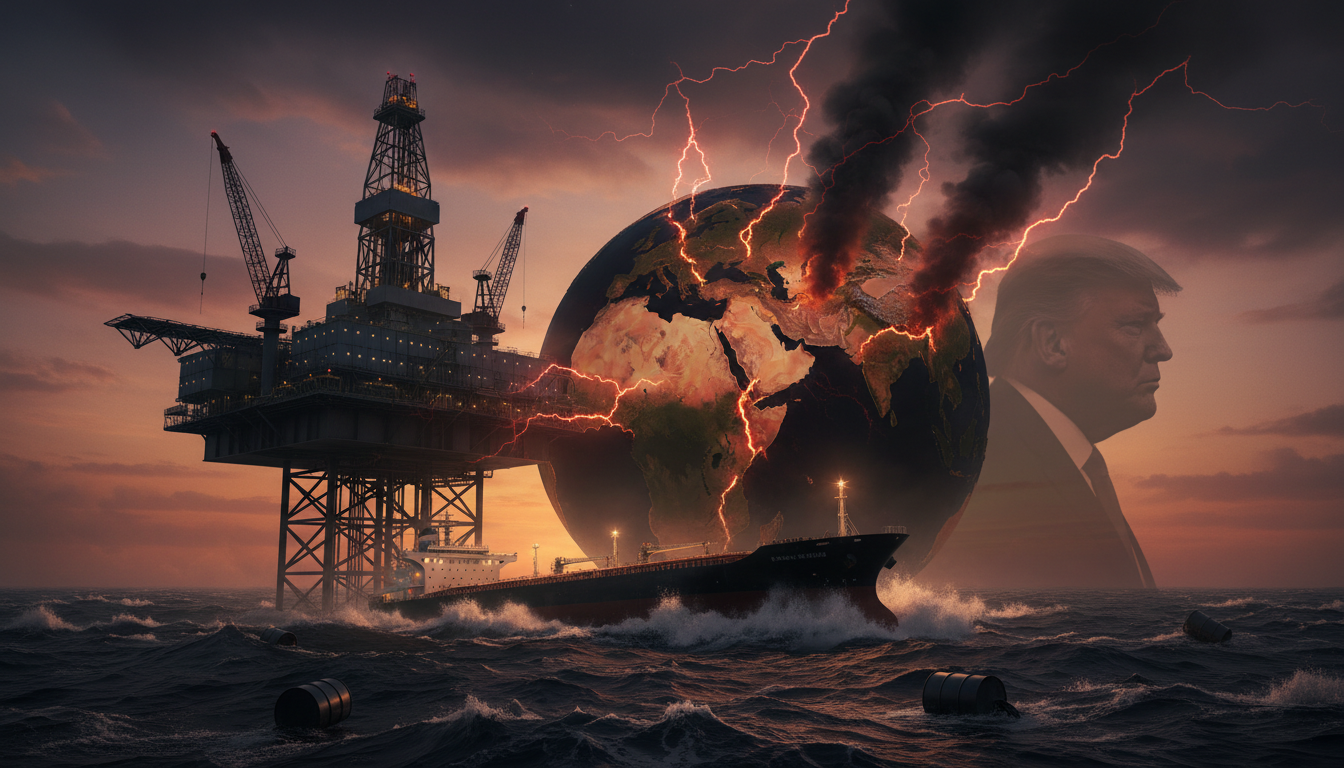
The global energy landscape is currently navigating a period of unprecedented volatility, with recent geopolitical developments underscoring the inherent risks tied to a fossil fuel-dependent economic model. Escalating tensions in the Middle East, particularly involving the US and Iran, have sent ripples through oil markets, highlighting the delicate balance between supply security and international stability.
Recent military actions in the region, including bombardments in Iran and southern Lebanon, carry significant humanitarian and environmental consequences. Beyond the immediate toll, the specter of further escalation threatens to exacerbate these issues, potentially causing widespread environmental damage and jeopardizing vital resources like drinking water supplies. For energy investors, such conflicts translate directly into increased market uncertainty and heightened risk premiums.
A pivotal flashpoint has been Iran’s implied blockade of the Strait of Hormuz, a critical maritime chokepoint through which approximately one-fifth of the world’s daily oil supply typically transits. This threat alone has injected considerable instability into global economies, triggering a sharp increase in energy costs worldwide. Since the conflict’s inception last month, consumers across the globe have collectively paid over $100 billion extra to fossil fuel producers. Domestically, US motorists have seen the national average price for gasoline climb close to $4 per gallon, exerting inflationary pressure on household budgets and signaling potential economic headwinds.
Policy Decisions Amplify Market Vulnerability
Experts are increasingly pointing to a significant divergence in US energy policy that, they argue, amplifies national vulnerability during times of geopolitical crisis. An energy and environment specialist at a prominent foreign relations council recently observed that the current administration’s strong commitment to fossil fuels appears ill-timed given the present market turbulence. This perspective suggests that countries prioritizing investments in clean energy technologies, such as solar and wind power, are better positioned to weather such storms, benefiting from enhanced energy security and reduced exposure to volatile global oil markets. Critics contend that rejecting this diversified approach inherently increases exposure to external shocks.
The scientific community has consistently urged a rapid global transition away from fossil fuels to mitigate the catastrophic impacts of climate change. While the pace of carbon emission reduction remains insufficient, the declining costs of renewable energy sources have driven record-level investments in wind and solar power internationally. However, the current US administration has pursued a strategy aimed at prolonging the fossil fuel era, often employing confrontational rhetoric. The president has publicly dismissed environmental concerns, labeling advocates as “environmental terrorists” and consistently challenging the scientific consensus on climate change, often calling it a “hoax” or “scam.”
The Geopolitics of Oil: Threats and Consequences
The oil-centric nature of the current Middle East crisis is undeniable, underscored by the administration’s explicit threats to Iran’s critical energy infrastructure. Beyond demands for increased domestic oil and gas production, the president has openly expressed intentions to seize oil supplies from other resource-rich nations, including Venezuela and now Iran. In a recent interview, the president articulated a desire to “take the oil in Iran,” dismissing domestic opposition to such actions as “stupid people.”
Further escalating the situation, the administration has threatened direct military action against Kharg Island, a strategically vital, five-mile-long island that processes roughly 90% of Iran’s crude oil exports. The president declared that absent a deal to reopen the Strait of Hormuz shipping lane, the US would consider destroying “all of their Electric Generating Plants, Oil Wells and Kharg Island (and possibly all desalinization plants!).” Such actions, if carried out, would not only represent a severe breach of international law, potentially constituting war crimes by targeting civilian infrastructure, but would also inevitably trigger a monumental surge in global energy prices, impacting the US market significantly. This approach directly conflicts with earlier pledges to lower costs for American consumers, a commitment that has largely gone unfulfilled.
The reliance on twentieth-century energy systems, particularly during a period of soaring oil prices and without a clear strategy for de-escalation, appears to limit strategic options. An expert noted that embracing wind and solar power could effectively “loosen the chokehold on the Strait of Hormuz,” underscoring the strategic benefits of energy diversification.
Environmental and Operational Risks Come to the Fore
The dangers inherent in sustained fossil fuel dependence are becoming acutely evident, both internationally and domestically. In Iran, missile strikes on oil depots have engulfed communities in toxic black smoke, portending environmental damage that could persist for decades. Meanwhile, in the US, recent scientific analysis indicated that a record-breaking heatwave in western states this month would have been “virtually impossible” without human-induced climate change. Concurrently, a substantial oil spill spanning over 600 kilometers (373 miles) spread across the Gulf of Mexico, illustrating the continuous operational hazards of hydrocarbon extraction.
Domestically, a major oil and gas industry conference in Houston saw the US Energy Secretary advocating for increased domestic drilling. Yet, concurrently, a Texas oil refinery, located just an hour’s drive from the conference venue, experienced a major explosion, releasing a massive plume of black smoke and necessitating shelter-in-place orders for nearby residents. These incidents collectively underscore the environmental and safety challenges inherent in the fossil fuel supply chain.
A Regulatory Landscape Shifting Away from Clean Energy
Despite these mounting risks, the administration has actively sought to impede clean energy initiatives. This includes banning projects on federal lands and waters and eliminating subsidies for renewables. In a remarkable recent move, the administration disbursed $1 billion in taxpayer funds to the French energy giant TotalEnergies, specifically to halt its plans for a new offshore wind farm. This decision, aimed at stymieing renewable energy development, stands in stark contrast to global trends and investment strategies.
Furthermore, efforts to facilitate increased oil and gas drilling in the Gulf of Mexico have led to targeting endangered species laws. A rarely convened “God squad” provision of the Endangered Species Act (ESA) is set to be invoked, allowing a committee of high-level officials to potentially override protections for rare marine species. The Department of Defense has cited national security grounds for this exemption, which could remove protections for species like the critically endangered Rice’s whale, of which only approximately 50 individuals remain, found exclusively in the Gulf. Other vulnerable species, including whooping cranes and sea turtles, also face the loss of ESA protections.
Critics argue such actions are not only legally dubious but also economically irrational, asserting they would not meaningfully increase oil output while risking irreversible environmental damage. Legal challenges are already underway, with environmental groups suing the government over the “God squad” meeting. These groups contend that lifting even “bare bones” restrictions on boat speeds and whale monitoring could drive the Rice’s whale to extinction within five years, an outcome they label as avoidable and senseless. From an investor’s standpoint, such regulatory maneuvers expose companies to heightened legal, reputational, and ESG (Environmental, Social, and Governance) risks, potentially impacting long-term valuations.
In conclusion, the confluence of geopolitical instability, explicit policy choices favoring fossil fuels, and the associated environmental and operational risks presents a complex and volatile landscape for energy investors. The current trajectory highlights the increasing costs—both economic and societal—of an entrenched reliance on hydrocarbons, emphasizing the urgent need for a strategic pivot towards diversified, sustainable energy sources to ensure both national security and global economic stability.
