

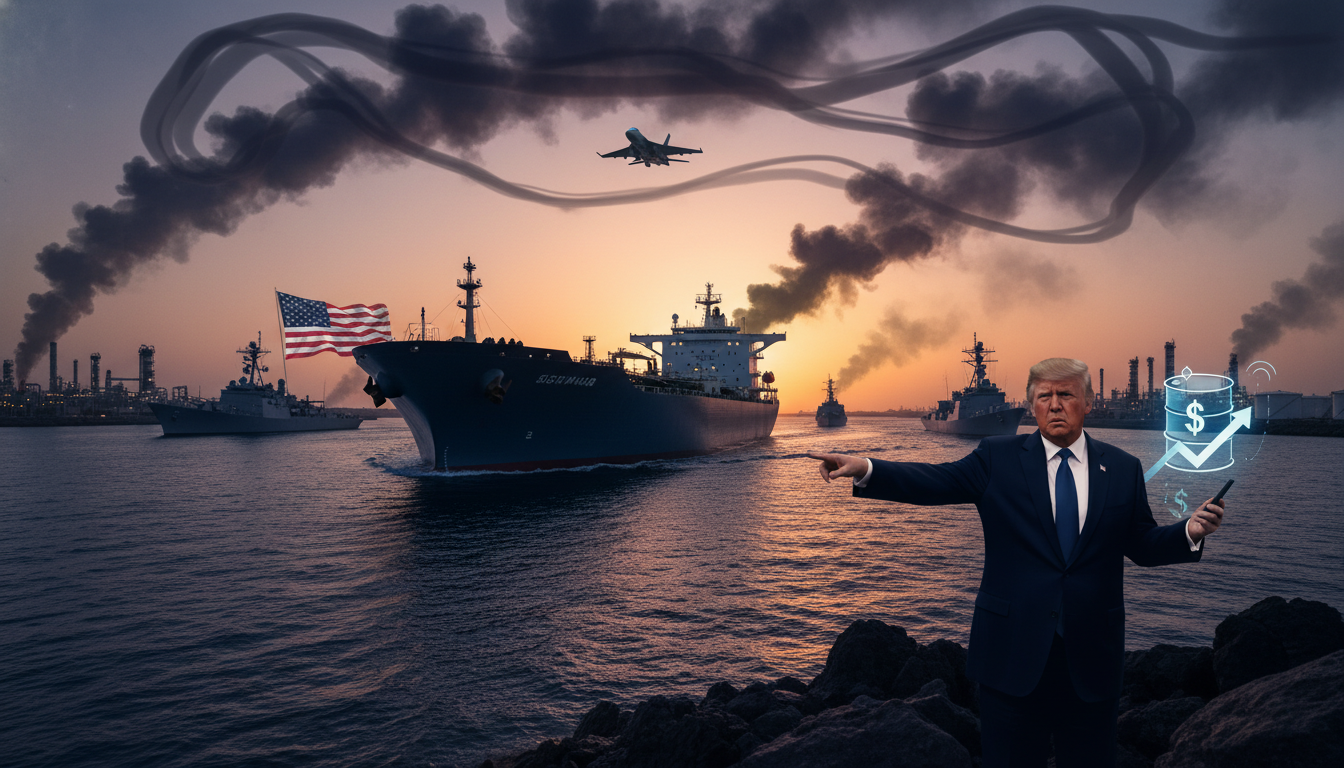
The global oil markets are once again gripped by escalating geopolitical tensions centered on the vital Strait of Hormuz, following forceful pronouncements from US President Donald Trump. On Monday, March 31, 2026, President Trump conveyed a stark ultimatum to Tehran, demanding the immediate reopening of the crucial maritime passageway. His statements, delivered via social media, explicitly threatened severe military action against Iran’s critical energy and infrastructure assets should the strait remain closed for business.
For energy investors, the implications are profound. The Strait of Hormuz, a narrow waterway connecting the Persian Gulf with the Arabian Sea, stands as the world’s most critical oil transit choke point. Approximately one-fifth of global oil consumption, translating to upwards of 21 million barrels per day of crude oil and refined petroleum products, transits through this strategic conduit. Any disruption here reverberates instantly across international crude benchmarks like Brent and WTI, potentially triggering significant price spikes and supply chain turmoil.
High Stakes: US Threats and Iran’s Response
President Trump’s recent declarations underscored a perilous escalation. He warned that if a resolution is not swiftly reached in ongoing discussions, and if the Strait of Hormuz is not immediately made accessible for international shipping, the United States would retaliate by targeting and completely neutralizing Iran’s electric generating plants, key oil wells, and the vital Kharg Island oil terminal. Kharg Island is Iran’s primary crude oil export facility, handling the vast majority of the nation’s crude shipments. A strike on this facility would effectively cripple Iran’s ability to export oil to global markets, creating an immediate and substantial supply void.
Beyond the direct energy infrastructure, President Trump also extended his threats to include Iran’s desalination plants, which are crucial for the nation’s fresh water supply. Such an attack would not only be an act of war but would also trigger a humanitarian crisis, further complicating any potential de-escalation efforts. This broadening of potential targets highlights the severe and comprehensive nature of the US administration’s warnings.
These threats come despite President Trump’s assertion last week that the US would pause any potential attacks on Iran’s energy facilities for a 10-day period, a reprieve set to expire on April 6, US time. This looming deadline adds an immediate layer of urgency and uncertainty for global crude oil prices and investor sentiment.
Conflicting Signals: Diplomacy vs. Confrontation
The geopolitical landscape is further complicated by contradictory signals. On one hand, President Trump claimed that the United States is engaged in discussions with what he termed a “more reasonable regime” in Iran, suggesting “great progress has been made.” This narrative implies a diplomatic track is active, potentially leading to a peaceful resolution.
However, this optimistic diplomatic framing stands in stark contrast to simultaneous actions and Iranian responses. The US has continued to bolster its military presence in the region, a move that Iran’s parliament speaker interpreted as a deceptive tactic. Tehran alleges that Washington is extending invitations for negotiations while simultaneously preparing for a ground invasion, thereby intensifying Iranian defiance. Iranian leaders have unequivocally denied engaging in any direct talks with the United States, casting significant doubt on the feasibility of a swift, diplomatic breakthrough that President Trump alluded to.
Market Volatility and Investor Preparedness
For oil and gas investors, this volatile situation necessitates extreme vigilance. The prospects of a major disruption in the Strait of Hormuz could send crude oil prices soaring to unprecedented levels, triggering substantial gains for upstream exploration and production companies, but posing significant cost challenges for refiners and consumers globally. Conversely, any verifiable de-escalation could see prices retreat, impacting companies betting on higher oil prices.
The immediate risk premium embedded in current crude oil futures prices reflects this geopolitical uncertainty. Traders are closely monitoring every development, with the April 6 deadline serving as a critical short-term catalyst. Investors should consider the potential for increased volatility across the energy sector, from oil tanker rates to the valuations of major international oil companies with extensive operations or supply chains passing through the Middle East. Portfolio diversification and hedging strategies become paramount in such an unpredictable environment.
The ongoing rhetoric and military posturing underscore the fragility of global energy security. The confluence of diplomatic claims, aggressive threats, and military deployments creates a highly speculative atmosphere. As March concludes and the April 6 deadline approaches, the oil markets brace for potential seismic shifts driven by these high-stakes geopolitical maneuvers.
