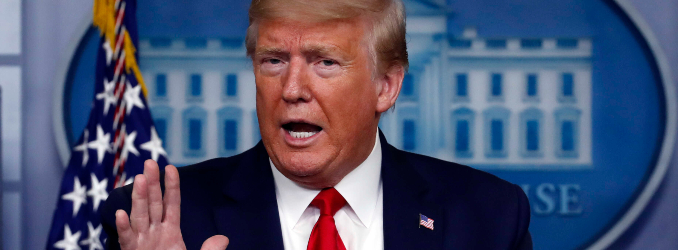
Former U.S. President Donald Trump recently delivered a pointed critique of the UK’s energy strategy at the United Nations General Assembly, branding Prime Minister Keir Starmer’s accelerated transition away from North Sea oil and gas as “suicidal” for the nation’s economic stability and energy independence. This strong rebuke, following Trump’s recent state visit to the UK, highlights a growing divergence in global energy policy philosophies and presents significant implications for investors in the upstream sector. As analysts, we must dissect the rhetoric, examine the underlying market realities, and consider how such high-profile political commentary shapes investment decisions in crucial legacy basins like the North Sea, especially amidst evolving global energy dynamics and volatile crude markets.
The North Sea: A Basin Under Political Duress
Trump’s core argument centers on the claim that excessive taxation and stringent regulatory hurdles have effectively shut down new development in the North Sea. He asserted that “tremendous oil that hasn’t been found” remains untapped due to policies that render exploration and production economically unviable for developers and oil companies. For investors, this translates into a higher perceived political risk premium for UK-focused upstream assets. While the UK government champions its net-zero ambitions, the practical effect on investment capital is clear: projects struggle to attract funding when the fiscal and regulatory landscape is punitive or unpredictable. Companies seeking stable, long-term returns in the E&P space are increasingly scrutinizing sovereign risk, and a policy environment perceived as actively discouraging fossil fuel development, despite significant reserves, pushes capital towards more favorable jurisdictions. This situation creates a challenging dilemma for incumbent operators and potential new entrants, forcing a re-evaluation of asset valuations and future growth prospects in the region.
Market Volatility Exacerbates Policy Impact on Investment
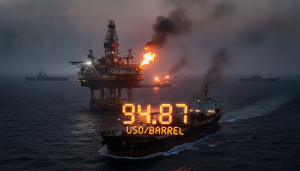
The timing of Trump’s comments coincides with a period of notable volatility in the crude markets, underscoring the delicate balance between supply, demand, and geopolitical sentiment. As of today, Brent Crude trades at $90.38 per barrel, experiencing a sharp 9.07% decline within the day, with its range fluctuating between $86.08 and $98.97. Similarly, WTI Crude has fallen to $82.59, down 9.41%, after seeing a daily range from $78.97 to $90.34. Gasoline prices have also dipped to $2.93, a 5.18% drop. This daily turbulence follows a significant downtrend for Brent, which has fallen by $20.91, or 18.5%, from $112.78 on March 30th to $91.87 yesterday. Such pronounced market swings amplify the impact of perceived policy missteps. When crude prices are under pressure, the economic viability of new projects, particularly those facing high taxes and regulatory burdens, becomes even more tenuous. Investors are naturally more risk-averse in a falling market, demanding greater certainty and more attractive fiscal terms before committing capital. A “suicidal” energy policy, as Trump described it, appears even more detrimental when the global macroeconomic environment for oil and gas is already challenging, making the UK a less competitive destination for upstream investment compared to regions actively courting fossil fuel development.
Investor Questions Highlight Long-Term Uncertainty
Our proprietary reader intent data reveals a consistent focus among investors on long-term price stability and the performance of specific energy companies amidst global shifts. Questions like “what do you predict the price of oil per barrel will be by end of 2026?” and “How well do you think Repsol will end in April 2026?” underscore the fundamental concerns about market direction and corporate resilience. Trump’s critique directly feeds into this uncertainty. His assertion that oil and gas remain essential for economic prosperity in the West, contrasting with Europe’s green energy prioritization, speaks to the broader debate influencing future demand and price forecasts. For companies with significant North Sea exposure, such as Repsol, the UK’s policy stance directly impacts their operational outlook and investor confidence. A policy environment that discourages new drilling and production growth in a mature basin can depress the long-term value of existing assets and limit future expansion opportunities, directly affecting investor sentiment and ultimately, share performance. The tension between political rhetoric and the practical need for reliable energy supply remains a critical factor for investors attempting to model future returns.
Upcoming Events and Geopolitical Crossroads
The geopolitical ramifications of Trump’s statements, particularly concerning Europe’s energy transition, will likely resonate across upcoming market events. This weekend, the OPEC+ Joint Ministerial Monitoring Committee (JMMC) meets on April 18th, followed by the full Ministerial Meeting on April 19th. Investors are keenly watching these gatherings, as evidenced by frequent inquiries about “OPEC+ current production quotas.” Decisions made by OPEC+ will directly influence global supply, which could be particularly sensitive given the UK’s policy direction away from maximizing its own domestic production. If major non-OPEC producers like the UK reduce their output potential due to policy, it places greater onus on OPEC+ to manage market stability. Furthermore, the weekly API and EIA crude inventory reports, scheduled for April 21st, 22nd, 28th, and 29th, alongside the Baker Hughes Rig Count on April 24th and May 1st, will provide crucial insights into immediate supply-demand balances and drilling activity. Trump’s comments imply a disconnect between Europe’s stated energy transition goals and the immediate need for energy security, a narrative that could influence how global energy players, including OPEC+, perceive demand signals and adjust their strategies. This ongoing debate about the long-term role of fossil fuels, juxtaposed with short-term market data, ensures sustained volatility and complex investment considerations.