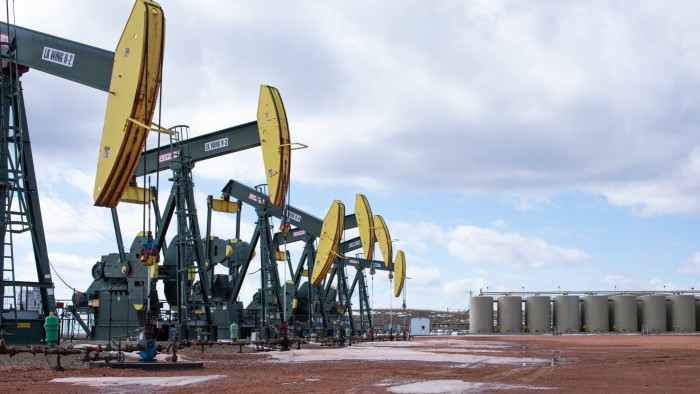
The intricate dance between geopolitical strategy and energy market dynamics is currently sending significant tremors through the American oil and gas investment landscape. Recent trade policy developments emanating from Washington are reshaping outlooks, particularly for regions that have historically been enthusiastic proponents of the current administration’s energy agenda. North Dakota, a linchpin of the nation’s shale revolution and a critical contributor to domestic crude supply, now finds itself navigating a period of heightened economic uncertainty. Across the vast expanse of the U.S. shale plays, investor apprehension is palpable as tariff-related commentary has coincided with a notable downturn in oil prices, pushing key American crude benchmarks below the psychologically significant $60 per barrel mark. West Texas Intermediate (WTI) crude, for instance, concluded Monday’s trading session at $63.08 per barrel, intensifying concerns among market participants about a potential slowdown in domestic energy production growth.
North Dakota’s Economic Exposure to Price Volatility
For states like North Dakota, the ramifications of these market shifts are especially acute. Local officials in Dunn County, a prolific oil-producing area nestled within the Bakken basin, are expressing profound worries. This single county alone generated nearly $40 million in oil and gas tax revenue last year, representing more than half of its total operational income. A prolonged dip in crude prices directly threatens the stability of local employment and the financial viability of businesses that support the energy sector. Furthermore, such an environment could necessitate a reduction in crucial infrastructure investments, impacting roads, schools, and other public services. Dunn County’s unwavering support for the current president in the last three election cycles highlights a compelling paradox: national policy decisions are now directly impacting the economic vitality of the very communities that championed them.
North Dakota, holding its position as the third-largest oil-producing state in the U.S., possesses a heightened susceptibility to the dual pressures of declining crude prices and decelerating production rates. This contrasts sharply with more economically diversified energy powerhouses such as Texas and Louisiana, which can absorb price shocks with greater resilience. The Bakken region already contends with a dwindling inventory of premium drilling locations and a refining industry that has become increasingly consolidated and financially disciplined. This trend has naturally moderated the pace of drilling activity. Inherent commodity price volatility inherently deters new capital expenditure and operational expansion, making it challenging for exploration and production (E&P) companies to fully capitalize on any transient market tailwinds.
Wider Industry Headwinds and Stagnation Risk
The prevailing market conditions are compounding an already intricate outlook for crude oil producers. The sector has previously navigated new tariffs enacted in February on vital imported materials such as steel and aluminum, both indispensable components for drilling rigs, well casings, and pipeline construction. Industry analysts widely characterize these protectionist trade policies as a significant “headwind” for the broader energy sector. Should these challenging conditions persist, potentially culminating in a more widespread economic slowdown, market observers are cautioning about a conceivable scenario where U.S. oil production experiences “no growth” throughout the current calendar year. This forecast represents a stark divergence from the robust expansion trends that have characterized American shale output in recent years.
White House Stance and Investor Implications
Adding another layer of complexity and uncertainty for energy investors is the White House’s openly stated preference for even lower crude prices. A prominent trade advisor recently articulated that a price point of $50 per barrel for oil could effectively serve as a strategic tool to pressure global rivals and stimulate domestic economic activity. This explicit desire for lower prices creates a challenging environment for U.S. producers, whose profitability and reinvestment capabilities are directly tied to higher commodity values. Investors must now weigh the administration’s pro-energy rhetoric against its expressed intent to drive down the very prices that underpin the sector’s financial health. This conflicting signal necessitates a cautious approach to capital allocation and risk assessment within the oil and gas space.
The pursuit of lower energy costs via trade policy introduces a significant element of political risk into investment models. While consumers might benefit from reduced pump prices, a sustained period of low crude values fundamentally erodes the economic incentives for new drilling and infrastructure projects. This dynamic could lead to a contraction in E&P spending, impacting everything from drilling service companies to midstream pipeline operators. For an industry that thrives on long-term capital commitments and predictable regulatory environments, the current policy landscape presents a formidable challenge to strategic planning and shareholder value creation.
Navigating Uncertainty in the Shale Patch
Investors in the U.S. oil and gas sector are therefore tasked with navigating a complex interplay of market fundamentals, geopolitical machinations, and domestic policy objectives. The resilience of the American shale revolution, once seemingly boundless, is now being tested by external pressures that threaten to curtail its momentum. Companies are increasingly focusing on capital discipline, enhancing operational efficiencies, and prioritizing free cash flow over aggressive production growth. This shift, while prudent in a volatile environment, contributes to the “no growth” outlook projected by some analysts.
The long-term implications of current trade rhetoric and policy on U.S. energy independence and global supply dynamics remain to be fully seen. However, in the immediate term, the message for investors is clear: expect continued volatility, increased scrutiny on company balance sheets, and a heightened sensitivity to political pronouncements from Washington. Monitoring WTI price movements, assessing regional economic health in key shale basins, and evaluating corporate strategies for navigating lower price environments will be paramount for making informed investment decisions in this evolving market.
The coming months will be critical in determining whether the current headwinds represent a temporary blip or a more fundamental shift in the operating paradigm for American oil and gas. For those with capital deployed in the sector, a keen understanding of these macroeconomic and political forces will be indispensable for protecting and growing their investments.