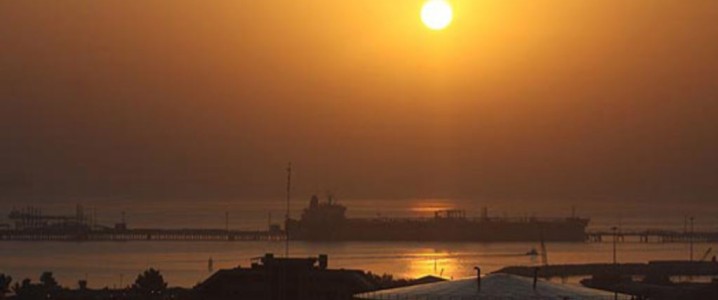
The geopolitical landscape in the Middle East has once again sent ripples through global energy markets, with a recent U.S. bombing raid on Iran’s strategic Kharg Island drawing sharp attention from oil and gas investors. While American forces explicitly avoided targeting the island’s critical oil infrastructure, the deliberate warning from President Trump that this could change if Iran disrupts shipping in the Strait of Hormuz has introduced a new layer of uncertainty. For investors navigating the volatile crude markets, understanding the implications of this escalating threat, the current market response, and upcoming catalysts is paramount to positioning portfolios effectively.
Kharg Island: Iran’s Economic Lifeline Under Threat
Kharg Island serves as the undisputed backbone of Iran’s crude oil export system, handling approximately 90% of the nation’s shipments. Located just 25 kilometers off Iran’s southwestern coast, this single point of export concentration means that any significant disruption to its operations could cripple the Iranian economy. The recent U.S. strike, described by President Trump as “one of the most powerful bombing raids in the history of the Middle East” targeting military facilities, underscores the heightened tensions. Crucially, the U.S. administration stated it “chosen NOT to wipe out the oil infrastructure on the island,” a decision framed as a measure of decency but explicitly coupled with a warning that interference with Strait of Hormuz shipping could lead to a change in strategy. This direct threat to such a vital economic artery elevates the risk profile for Iranian supply in a way that previous, more localized strikes on military or nuclear facilities have not. Analysts widely agree that destroying the Kharg terminal could devastate Iran’s economy for months or even years, simultaneously sending global oil prices skyward due to the potential loss of millions of barrels per day from the market.
Market Reaction and Current Price Dynamics
Despite the gravity of the Kharg Island situation, the immediate market reaction has been surprisingly muted, perhaps reflecting the explicit U.S. decision to spare oil infrastructure for now. As of today, Brent Crude trades at $92.96 per barrel, showing a modest 0.3% decline within a day range of $92.57 to $94.21. Similarly, WTI Crude stands at $89.36 per barrel, down 0.35% from its previous close, fluctuating between $88.76 and $90.71. Gasoline prices also reflect this slight bearish sentiment, trading at $3.11, down 0.64%. This current snapshot comes against a backdrop of a more significant downward trend over the past two weeks; Brent crude has fallen from $101.16 on April 1st to $94.09 on April 21st, representing a 7% decline. This broader market softening, likely driven by demand concerns or robust supply outside of the Middle East, appears to have tempered the immediate upward pressure one might expect from such a significant geopolitical escalation. The market seems to be pricing in the ‘restraint’ aspect of the strike more heavily than the underlying threat, but this delicate balance is inherently fragile and subject to rapid shifts based on any perceived escalation in the Persian Gulf.
Forward Outlook: Navigating Upcoming Catalysts and Geopolitical Tensions
Looking ahead, the explicit warning regarding the Strait of Hormuz means that any future Iranian actions in the chokepoint could trigger a far more aggressive response, directly impacting oil infrastructure. Investors must closely monitor both geopolitical developments and scheduled market data releases to gauge the true trajectory of crude prices. The immediate future holds several key data points that will influence market sentiment. This week, the EIA Weekly Petroleum Status Report on April 22nd will provide crucial insights into U.S. crude inventories, refinery activity, and demand indicators. Following that, the Baker Hughes Rig Count on April 24th will offer a snapshot of drilling activity, indicating future supply trends. As we move into early May, the API Weekly Crude Inventory on April 28th and May 5th, along with subsequent EIA reports on April 29th and May 6th, will continue to inform our understanding of supply-demand balances. Perhaps most critically, the EIA Short-Term Energy Outlook on May 2nd will provide a comprehensive forecast for global oil markets, potentially incorporating the heightened geopolitical risk into its projections. A persistent build in inventories could temporarily cushion the impact of geopolitical risk, while drawdowns would exacerbate any supply concerns stemming from the Persian Gulf. Any reports of increased tanker escorts through the Strait of Hormuz, as suggested by President Trump, would further signal an elevated risk environment, demanding close attention from investors.
Addressing Investor Concerns: WTI, Brent, and 2026 Price Projections
Our proprietary reader intent data reveals that investors are keenly focused on fundamental questions, such as “is WTI going up or down” and “what do you predict the price of oil per barrel will be by end of 2026?” The Kharg Island situation adds a significant layer of complexity to these predictions. While the immediate market shows WTI and Brent slightly down, the underlying risk premium associated with Middle East supply disruption has undoubtedly increased. The potential for the U.S. to target Kharg’s oil facilities, or for Iran to retaliate by disrupting the Strait of Hormuz, represents a ‘black swan’ event that could swiftly send prices much higher. Conversely, if the current restraint holds and global demand concerns persist, the downward trend observed over the past two weeks could continue. Predicting oil prices for the end of 2026 requires balancing these high-stakes geopolitical flashpoints with broader macroeconomic trends, global inventory levels, and the pace of energy transition. For instance, strong inventory builds in the upcoming EIA and API reports could signal a bearish short-term outlook, while any tightening of supply from OPEC+ or unexpected demand surges could push prices higher. Investors should recognize that while current prices reflect a degree of complacency regarding the Kharg threat, the situation remains highly fluid. Maintaining a diversified portfolio and closely monitoring both geopolitical developments and the aforementioned key market data releases will be essential for navigating the inherent volatility in the coming months and positioning for 2026.
The bombing raid on Kharg Island, while avoiding direct hits on oil infrastructure, serves as a stark reminder of the escalating risks in the world’s most critical oil-producing region. For oil and gas investors, this event signifies a heightened state of alert, where the delicate balance between geopolitical tensions and market fundamentals dictates price action. The explicit threat to Iran’s primary oil export terminal, coupled with the potential for disruptions in the Strait of Hormuz, means that future price movements will be exceptionally sensitive to any perceived escalation. Prudent investors will keep a vigilant eye on both diplomatic signals from Washington and Tehran, alongside the crucial data points from the EIA and Baker Hughes, understanding that the path forward for crude prices is now more uncertain and potentially explosive than ever.


