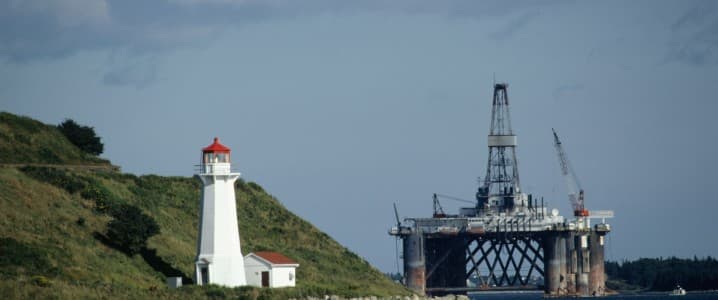
The UK North Sea oil and gas industry finds itself once again at the heart of an international debate, this time sparked by former U.S. President Donald Trump’s pointed critique of its tax burden. Following discussions with UK political figures, Trump publicly characterized the North Sea as a “treasure chest” burdened by excessively high taxes, arguing that current policies effectively deter drillers and jeopardize a vast fortune for the UK. This sentiment, echoing concerns from within the industry, underscores a critical juncture for energy investment in Britain, particularly as global oil markets exhibit significant volatility and investors seek clarity on long-term project viability.
The Crushing Weight of the UK’s Energy Profits Levy
The core of the controversy lies in the UK’s Energy Profits Levy (EPL), often referred to as a windfall tax. Introduced in 2022 and further tightened by the ruling Labour Party, the EPL has significantly altered the fiscal landscape for North Sea operators. Effective November 1, 2024, the windfall tax component was raised to 38% from 35%, extending its duration to March 31, 2030. Critically, the government also removed the 29% investment allowance, a move that fundamentally changes the economics of new capital expenditure. With these adjustments, the effective total tax rate on oil and gas operators in the UK North Sea now stands at a staggering 78%. This positions the UK among the highest-taxing jurisdictions globally for hydrocarbon extraction. Operators have consistently called for greater certainty in the regulatory and tax framework, arguing that the shifting goalposts and rising fiscal burden are driving away essential investment, ultimately threatening the UK’s energy security and increasing its reliance on imports.
Market Volatility Exacerbates North Sea Investment Challenges
The elevated tax rate in the UK North Sea is not an isolated challenge; it intersects directly with the broader dynamics of global crude markets. As of today, Brent Crude trades at $90.38 per barrel, experiencing a substantial daily decline of 9.07%, with WTI Crude following suit at $82.59, down 9.41%. This sharp correction follows a period of significant price fluctuation; Brent, for instance, has fallen from $112.78 just two weeks ago on March 30, to $91.87 yesterday, representing an 18.5% drop. Such pronounced market volatility compounds the difficulties faced by North Sea operators. When oil prices are high, governments might justify windfall taxes as a means to capture exceptional profits. However, when prices swing wildly or decline sharply, a fixed, extraordinarily high tax rate like 78% becomes an immense disincentive for long-term capital deployment. Project economics, already challenging in a mature basin, become untenable under such a dual threat of fiscal instability and price uncertainty, making other, more fiscally attractive basins globally far more appealing for investment dollars.
Upcoming Events and Future Policy Direction
Looking ahead, several key events on the energy calendar will shape the global oil price environment, indirectly influencing the pressure on UK energy policy. This weekend, the OPEC+ Joint Ministerial Monitoring Committee (JMMC) and the Full Ministerial Meeting are scheduled for April 18th and 19th, respectively. Decisions from these gatherings on production quotas will be pivotal in determining supply-side dynamics and, consequently, crude oil prices. A decision to maintain or increase production could further pressure prices, intensifying the financial strain on North Sea projects. In the subsequent weeks, weekly crude inventory reports from API (April 21st, 28th) and EIA (April 22nd, 29th), alongside the Baker Hughes Rig Count (April 24th, May 1st), will offer continuous insights into market rebalancing. While these are global indicators, they collectively inform the investment case for every barrel, including those from the UK North Sea. Crucially for the UK, the government has launched a consultation on the post-2030 tax regime. This presents a critical, forward-looking opportunity for policymakers to address industry concerns and craft a framework that balances revenue generation with the imperative of attracting and retaining investment to unlock the North Sea’s full potential.
Investor Concerns Drive Search for Clarity and Stability
Our proprietary reader intent data reveals a clear appetite among investors for clarity on future oil price trajectories and the stability of the global supply landscape. Questions such as “What do you predict the price of oil per barrel will be by end of 2026?” and “What are OPEC+ current production quotas?” highlight the fundamental uncertainty investors are navigating. This desire for predictability extends directly to regional investment climates like the UK North Sea. The current 78% effective tax rate, coupled with the removal of investment allowances and an extended levy period until 2030, introduces significant financial risk for companies considering multi-year development projects. While specific companies like Repsol, which operate in the North Sea, are not explicitly asking about the EPL, their broader performance and investment strategies are undeniably impacted by such fiscal policies. The high tax burden directly erodes net present value (NPV) and internal rates of return (IRR) for projects, making it challenging to justify capital expenditure when more attractive opportunities exist in other regions with stable and competitive fiscal terms. Investors are essentially asking for a predictable framework that allows them to assess risk and reward accurately, something the current UK North Sea regime struggles to provide.
In conclusion, the debate surrounding the UK North Sea’s tax burden is more than just political rhetoric; it’s a stark reflection of the challenges facing energy investment in a volatile global market. While the North Sea undoubtedly holds significant hydrocarbon reserves, the current 78% effective tax rate and an extended windfall levy are actively discouraging the very investment needed to unlock this “treasure chest.” As global oil prices fluctuate and upcoming OPEC+ meetings hint at future supply dynamics, the UK government’s ongoing consultation on its post-2030 tax regime offers a critical window to recalibrate its energy policy. Without a more stable, attractive, and predictable fiscal environment, the UK risks seeing its domestic production decline further, increasing import dependency and missing out on the economic benefits and energy security that a thriving North Sea industry could provide.


