

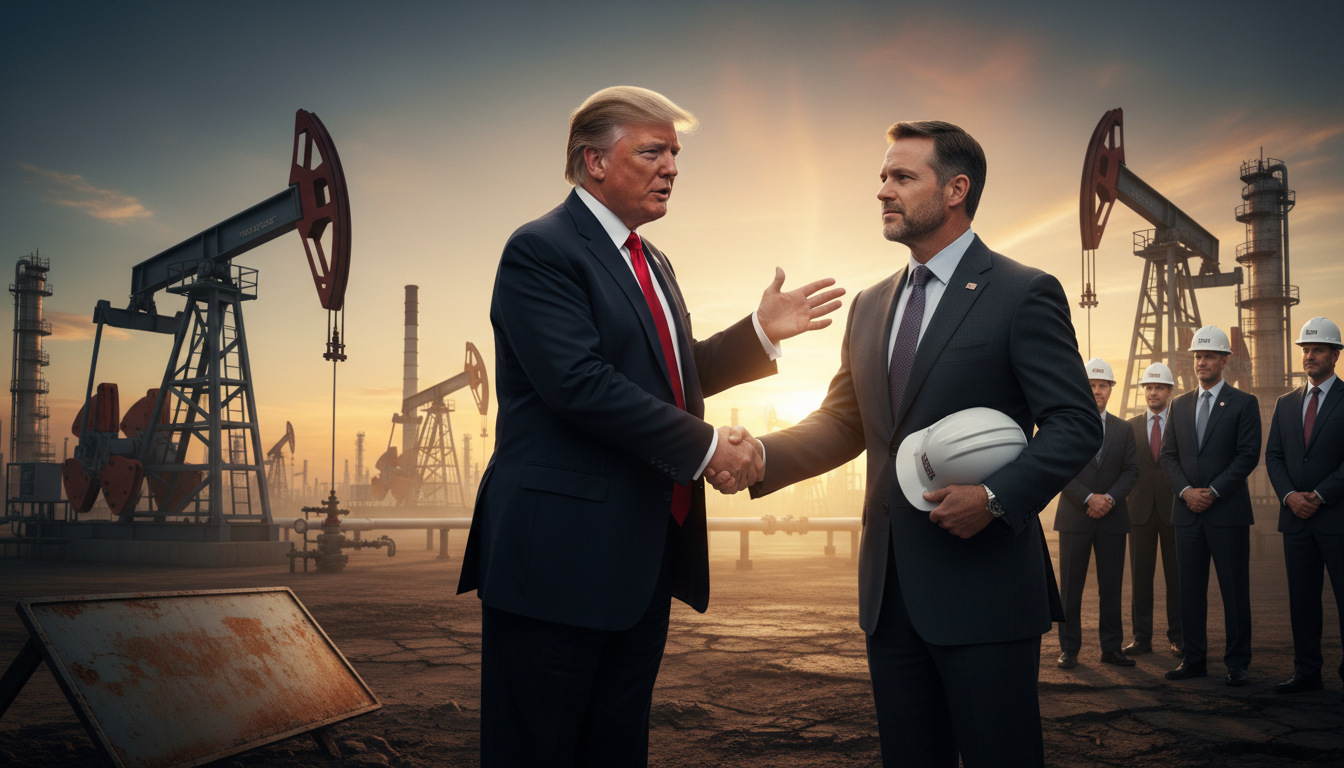
Geopolitical Crosscurrents Dominate CERAWeek: Investors Scrutinize Burgum’s Stance on Iran and Energy Prices
HOUSTON – The global energy elite converges at S&P Global’s prestigious CERAWeek conference in Houston, Texas, this week, with a palpable undercurrent of geopolitical tension dictating much of the agenda. A key focal point for oil and gas investors centers on Interior Secretary Doug Burgum’s highly anticipated address, scheduled for 9:40 a.m. ET. His remarks arrive at a critical juncture, as the specter of U.S.-Iran conflict casts a long shadow over crude markets, prompting significant price volatility and demanding clear signals from Washington.
Burgum, a pivotal figure in the Trump administration’s energy strategy and chair of the President’s Energy Dominance Council, is expected to shed light on the White House’s approach to the escalating situation in the Middle East. Energy sector stakeholders will be intently listening for any indicators regarding the administration’s strategy to mitigate potential supply disruptions and manage domestic energy prices, which remain highly susceptible to international instability.
U.S.-Iran Dynamics Trigger Market Jitters
The past week has seen considerable turbulence in global oil markets, directly correlating with shifting narratives surrounding the U.S.-Iran standoff. Following President Trump’s recent suggestion of a potential negotiated resolution to the conflict, U.S. crude oil benchmarks experienced a sharp downturn, plummeting more than 10%. This significant decline underscores the market’s inherent sensitivity to any perceived de-escalation in a region critical for global crude supply.
Reports emerged, citing unnamed officials, indicating that the U.S. administration had presented Tehran with a comprehensive 15-point plan designed to bring an end to the hostilities. Such news initially fueled optimism among traders that a diplomatic breakthrough might avert a broader military confrontation, which would inevitably impact the flow of oil from the Persian Gulf.
However, this flicker of optimism was quickly doused by contradictory signals emanating from the region. Iranian state media promptly reported that the Islamic Republic definitively would not accept any ceasefire offer, signaling a firm rejection of the proposed diplomatic overture. This immediate rebuttal served to inject renewed uncertainty into the market, highlighting the deep chasm that still separates the two nations’ positions.
Further complicating the volatile geopolitical landscape, fresh reports citing unnamed sources suggested that President Trump is poised to authorize the deployment of thousands of additional U.S. troops to the Middle East. This potential troop surge raises the unsettling prospect of a conventional ground war, a scenario that would have catastrophic implications for regional stability and, by extension, global energy security. For investors, this creates a deeply conflicted outlook: an initial hope for de-escalation swiftly replaced by the heightened risk of military engagement.
Investor Focus: Energy Prices and Supply Security
The juxtaposition of diplomatic overtures and military reinforcements creates an exceptionally challenging environment for oil and gas investors. The more than 10% fall in U.S. oil prices this week reflects a knee-jerk market reaction to potential de-escalation, but the underlying fundamentals remain fraught with risk. A full-scale conflict in the Middle East, particularly one involving Iran, could threaten vital shipping lanes such as the Strait of Hormuz, through which a significant portion of the world’s seaborne oil supply transits daily. Such a disruption would inevitably send crude prices spiraling upwards, potentially triggering a global energy crisis.
Against this backdrop, investors will be keenly attuned to Burgum’s remarks for insights into how the U.S. plans to navigate these treacherous waters. As head of the Interior Department, Burgum oversees vast federal lands and waters crucial for domestic oil and gas production. Any statements regarding strategies to bolster U.S. output, optimize strategic petroleum reserves, or enhance energy infrastructure will be scrutinized for their potential to insulate American consumers and the global economy from external shocks.
The administration’s “energy dominance” agenda, championed by Burgum, seeks to position the U.S. as a leading energy producer and exporter, thereby strengthening national security and providing a buffer against geopolitical supply disruptions. Investors will look for specific details on how this overarching policy will be applied in the context of current Middle East tensions, particularly concerning its role in stabilizing or reducing energy prices. Concrete policy outlines on permitting, regulatory frameworks, or even the timeline for new resource development could offer crucial signals to market participants.
CERAWeek: A Barometer for Global Energy Trends
CERAWeek itself serves as an unparalleled barometer for the trajectory of the global energy industry, drawing an eclectic mix of CEOs, government ministers, and thought leaders from across the planet. While the immediate focus is on U.S.-Iran dynamics, the conference provides a platform for broader discussions on long-term energy transition strategies, technological innovation in exploration and production, and evolving global supply-demand balances. Burgum’s speech, therefore, is not merely about crisis management but also about reinforcing America’s long-term strategic energy posture within a complex global matrix.
Ultimately, the oil and gas sector remains intrinsically linked to geopolitical stability. The contradictory signals from the Middle East present a significant challenge for market participants attempting to forecast future price movements and assess investment risks. Secretary Burgum’s address at CERAWeek offers a critical opportunity for the administration to provide clarity and direction, directly influencing investor sentiment and shaping the outlook for global energy markets in the face of ongoing regional volatility.
