The global oil market is currently a crucible of conflicting forces, challenging even the most seasoned investors to discern clear direction. Geopolitical tensions, particularly those emanating from Washington’s evolving stance on Iran, continue to inject significant volatility into crude prices. This dynamic environment, where the specter of supply disruptions clashes with ambiguous diplomatic overtures, demands a nuanced understanding of both immediate market reactions and underlying long-term drivers. For investors navigating these choppy waters, understanding the interplay of policy shifts, institutional sentiment, and upcoming data releases is paramount.
Washington’s Whipsaw Rhetoric Stirs Market Waves
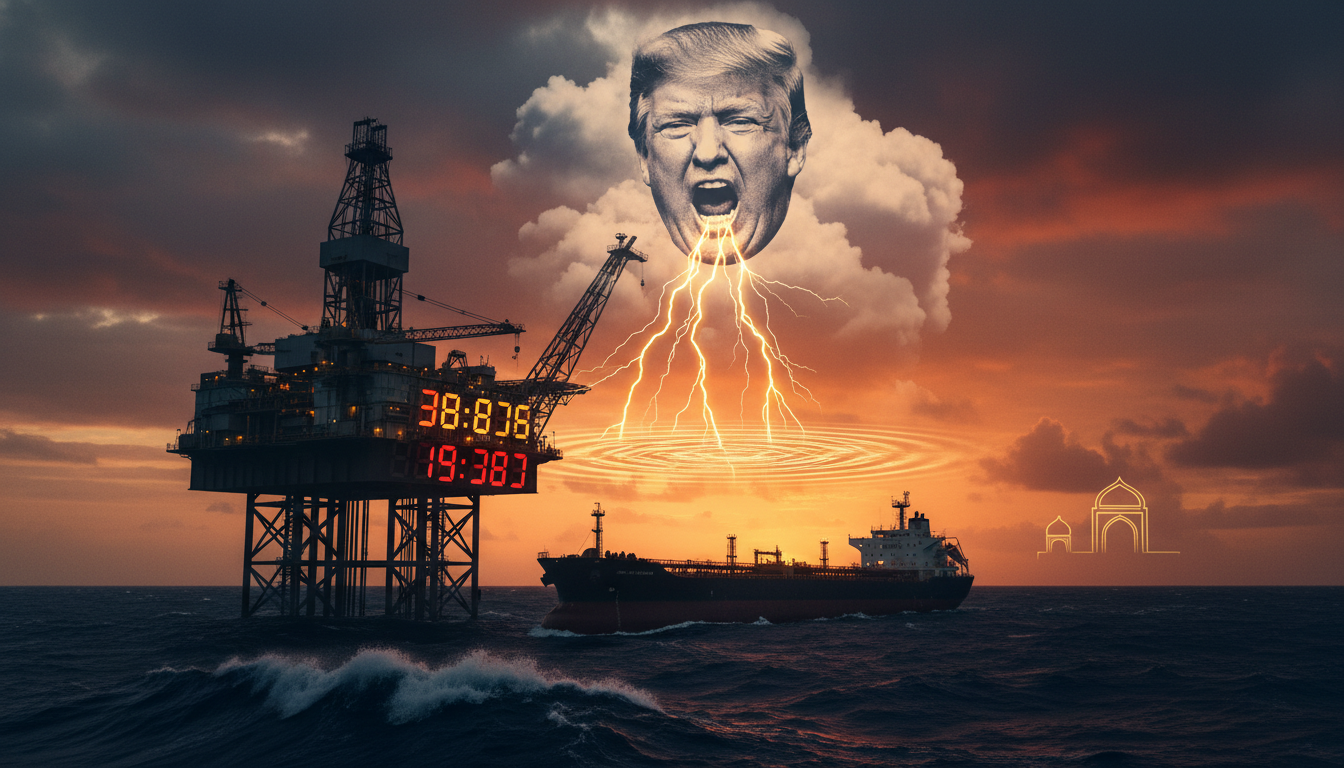
Recent communications from the White House have proven to be a primary catalyst for market turbulence, demonstrating the outsized influence of geopolitical events on energy pricing. President Trump’s surprising announcement of a five-day postponement for planned US attacks on Iran’s power and energy infrastructure, citing “very good and productive conversations,” initially sent shockwaves through the oil complex. This tactical shift, reminiscent of past diplomatic maneuvers, triggered a swift market reaction, with prices dropping over $10 per barrel as traders scrambled to interpret the true state of US-Iran relations, despite Iran’s vehement denial of direct engagement. Such rapid policy reversals underscore the inherent unpredictability facing energy investors. Compounding the market’s unease, serious questions have emerged regarding unusual trading activity that preceded these high-impact announcements. Reports detailed a staggering surge in oil futures, with contracts representing at least 6 million barrels of Brent and WTI being sold within a two-minute window just before the President’s social media post. This volume, nearly tenfold the typical activity, has raised flags about potential insider trading, a concern that can erode market confidence and add another layer of risk for participants.
Current Market Snapshot and Underlying Bullish Conviction
Despite the recent geopolitical noise and the potential for short-term price corrections, the broader market sentiment among institutional investors remains notably bullish. As of today, Brent Crude trades at $92.37 per barrel, reflecting a -0.93% dip within a day range of $91.39 to $94.21. Similarly, WTI Crude stands at $88.75, down -1.03%, oscillating between $87.64 and $90.71. These figures mark a notable shift from early April, when Brent was trading at $101.16, indicating a $-7.07 or 7% decline over the past 14 days. This recent cooling, however, belies a powerful underlying conviction among major players. Hedge funds, for instance, have aggressively accumulated long positions, pushing the total net length held in ICE Brent futures and options to 428,704 contracts by March 17. This represents a six-year high, underscoring a deep-seated belief that persistent geopolitical tensions, coupled with the ongoing specter of supply disruptions, will continue to underpin elevated crude prices in the medium to long term. Investors are clearly weighing the immediate diplomatic hopes against the enduring realities of global supply-demand dynamics and regional instability.
Strategic Energy Plays and Future Supply Horizons
Beyond the immediate geopolitical headlines, significant developments in corporate energy strategies are shaping future supply landscapes. Brazilian state-controlled energy giant Petrobras (NYSE:PBR), in collaboration with Colombia’s Ecopetrol (NYSE:EC), has confirmed a substantial natural gas discovery offshore Colombia. The Copoazu-1 wildcat encountered significant reserves, strategically located near the previously identified 6 trillion cubic feet (TCf) Sirius gas field. This discovery promises to enhance future production potential in the region, offering a vital new source of gas supply and potentially re-shaping regional energy dynamics. Concurrently, French energy major TotalEnergies (NYSE:TTE) has made a strategic move in the United States. Following its release from approximately $1 billion in offshore wind lease obligations by the Trump administration, the company received dollar-for-dollar compensation, contingent on redirecting these funds directly into oil and gas investments within the US. This maneuver highlights a strategic pivot, potentially driven by a more favorable regulatory environment or perceived higher returns in domestic oil and gas, signaling robust investment appetite within the sector despite broader energy transition narratives.
Navigating Upcoming Catalysts and Investor Outlook
The coming weeks will offer crucial data points for investors trying to gauge the market’s trajectory, especially given the current volatility. Our proprietary data indicates several key events on the horizon: the EIA Weekly Petroleum Status Report on April 22nd and 29th, the Baker Hughes Rig Count on April 24th and May 1st, and the API Weekly Crude Inventory reports on April 28th and May 5th. These reports will provide critical insights into US crude inventories, production levels, and drilling activity, directly influencing short-term price movements. Furthermore, the EIA Short-Term Energy Outlook on May 2nd will offer a macro perspective on supply, demand, and price forecasts, which can significantly sway market sentiment. Many of our readers are actively asking about the future direction of WTI and the price of oil per barrel by the end of 2026. While short-term predictions are notoriously difficult amidst such geopolitical flux, these upcoming reports will be instrumental in refining our outlook. The sustained bullishness from hedge funds suggests that while daily price fluctuations, like WTI’s current -1.03% dip, are to be expected, the underlying market structure supports higher prices, especially if supply growth continues to lag or geopolitical risks escalate. Investors should meticulously track these data releases, as they will provide tangible evidence of market fundamentals against a backdrop of ongoing political uncertainty and strategic corporate investments.