

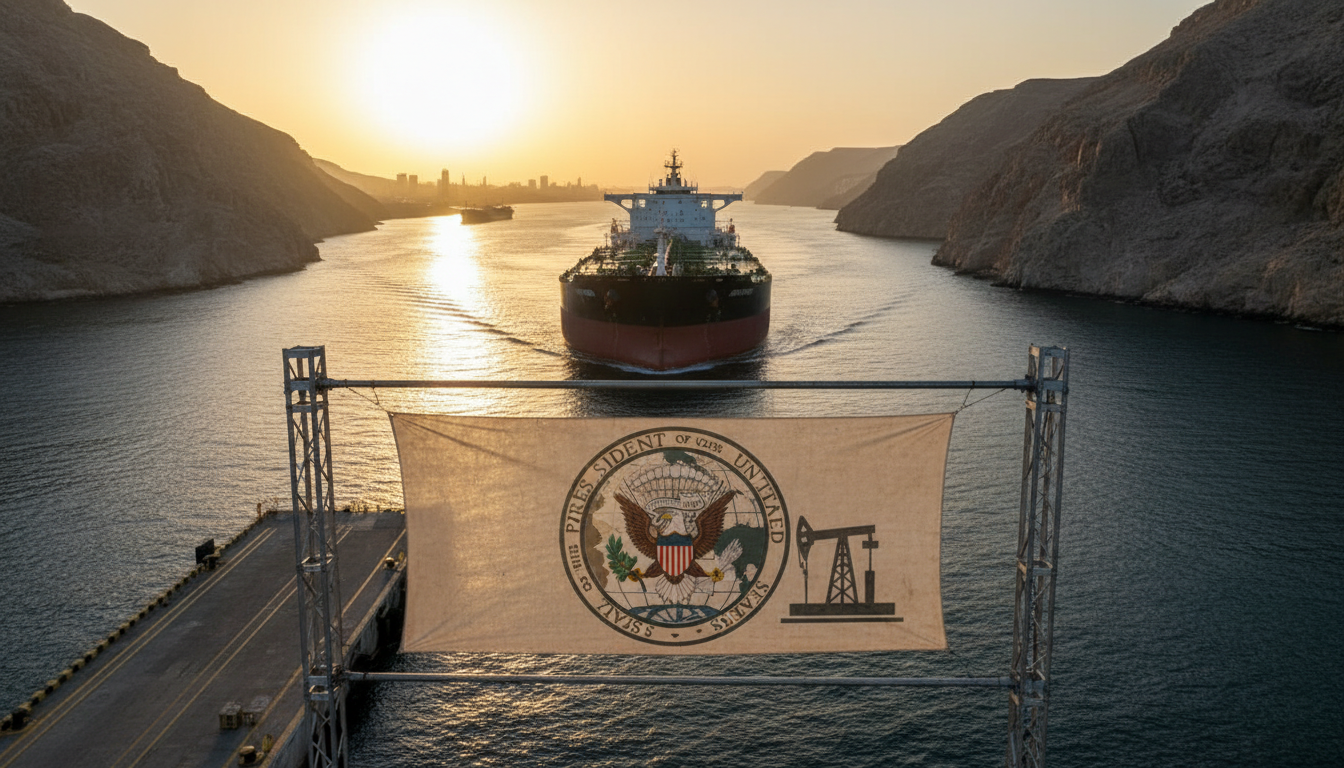
In a period marked by profound geopolitical instability, US President Donald Trump has linked any potential halt to military actions against Iran directly to the full and unconditional reopening of the Strait of Hormuz. This declaration introduces further layers of uncertainty regarding the duration of the protracted conflict, keeping global energy markets on edge and investors scrutinizing every diplomatic and military development.
President Trump, referencing a reported ceasefire overture from Iran’s “New Regime President” — potentially a nod to comments by Masoud Pezeshkian about the Islamic Republic’s “necessary will” to end hostilities with guarantees — stated emphatically on Wednesday, “We will consider when Hormuz Strait is open, free, and clear. Until then, we are blasting Iran into oblivion.” This resolute stance sharply contrasts with earlier indications from the President, who just days prior suggested a readiness to disengage from the month-long war, independent of any ceasefire or agreement on the crucial shipping lane. “We’ll leave because there’s no reason for us to do this,” he had told reporters, reflecting a consistent vacillation between de-escalation rhetoric and threats of overwhelming force that has defined his approach to the conflict.
Shifting White House Rhetoric Amidst Escalation
The White House’s messaging has proven a dynamic factor in market sentiment. Throughout the conflict, President Trump has frequently oscillated between predicting an imminent end to hostilities and threatening severe military escalation, often with little tangible change on the ground. Reuters also quoted the President on Wednesday, reiterating a swift US exit from Iran, stating the US would be out “pretty quickly.” This pattern of conflicting statements forces energy investors to navigate a landscape where policy direction appears to shift rapidly, impacting crude oil futures and global supply forecasts.
Despite the fluctuating presidential commentary, the fifth consecutive week has seen relentless bombardment of the Islamic Republic by US and Israeli forces. Simultaneously, Iran has launched missiles across the wider Middle East and into Israel, showcasing its continued capability and resolve. The sustained military engagements underscore the severe and ongoing risks to regional stability, directly influencing the calculus for investments in oil production, refining, and transportation infrastructure across the Gulf.
Hormuz: The Enduring Energy Chokepoint Crisis
The Strait of Hormuz remains at the epicenter of the global energy security crisis. Its effective closure for over a month has created a severe bottleneck, choking off critical commodities beyond just oil and natural gas. The waterway, through which approximately one-fifth of the world’s crude oil and liquefied natural gas (LNG) exports typically flow, is also vital for the transport of other key goods, including fertilizers. This disruption translates into higher operational costs and significant supply chain vulnerabilities for numerous industries globally.
Overnight, the regional impact of the conflict was starkly highlighted with reports of attacks in Israel, Bahrain, Kuwait, and the United Arab Emirates. Adding to the gravity, QatarEnergy confirmed a fuel oil tanker sustained a strike in Qatari waters, a chilling reminder of the direct threat to commercial shipping navigating the region’s precarious maritime routes. For oil and gas investors, the sustained closure of Hormuz represents not just a short-term supply crunch but a long-term risk to global energy transit, potentially necessitating costly rerouting strategies and driving up shipping insurance premiums across the board.
Diplomatic Impasse and Regional Tensions Flare
While Iranian Foreign Minister Abbas Araghchi confirmed direct contacts between his country and US Special Envoy Steve Witkoff, he adamantly clarified to Al Jazeera that these exchanges “does not mean that we are in negotiations.” This declaration reinforces the diplomatic deadlock, suggesting that despite channels of communication, a substantive resolution remains elusive. Iran’s leadership, having expressed zero trust in Washington, holds low expectations for any talks yielding productive outcomes, signaling a prolonged state of confrontation.
Meanwhile, the US continues to bolster its military presence in the region, amassing ground troops and deploying a third US aircraft carrier strike group from Virginia to the Middle East, as confirmed by a US official. This significant military buildup suggests preparations for a potentially extended engagement, contradicting earlier rhetoric of a swift exit. Furthermore, the conflict has spilled into a parallel war in Lebanon, where Israel is actively engaged with Iran-allied Hezbollah. Israeli Defense Minister Israel Katz recently announced intentions to occupy parts of southern Lebanon, stipulating that approximately 600,000 displaced residents would not be permitted to return until the safety of Israel’s northern communities is absolutely assured. This multi-front escalation deepens regional instability, exacerbating risks for energy infrastructure and investment.
Market Volatility and Investor Considerations
Initial reactions to President Trump’s comments saw a temporary surge in global stocks and bonds, as investors briefly interpreted the remarks as a potential signal for the crisis to abate. Oil prices, mirroring this sentiment, momentarily dipped below $100 a barrel, marking the first time in over a week they had fallen to this threshold. However, this respite was short-lived, with prices quickly paring declines and ultimately stabilizing around 40% higher than their levels prior to the war’s commencement. This resilience underscores the market’s underlying concern regarding supply security, particularly with the Hormuz Strait remaining closed.
Jamie Dimon, head of JPMorgan Chase & Co., offered a sobering perspective for investors, emphasizing the critical importance of a definitive resolution to the Iranian threat. “It’s much more important that this be successfully completed, than what the market does,” Dimon stated on Fox & Friends, arguing that anything less than a permanent removal of the threat would leave the world economy perpetually vulnerable to disruptive shocks. For energy sector stakeholders, this highlights the necessity of long-term strategic planning that accounts for persistent geopolitical risk, rather than reacting solely to daily market fluctuations. The ongoing crisis has also pushed average US pump prices above $4 a gallon, a metric that could inflict significant political pain on President Trump’s Republican party in an already challenging midterm election year.
Global Responses to the Hormuz Impasse
President Trump has consistently urged other nations, particularly those heavily reliant on energy supplies transiting the Strait of Hormuz, to assume greater responsibility in securing the waterway. His frustration with allies for their perceived reluctance to join the military efforts has been vocalized repeatedly. In a promising development, an official from the United Arab Emirates affirmed the country’s readiness to support international efforts aimed at safeguarding maritime security within the region, indicating a potential pathway for collaborative action.
On the diplomatic front, UK Prime Minister Keir Starmer announced that his country would coordinate a diplomatic initiative involving a coalition of 35 nations. This group is committed to formulating a concrete plan for reopening Hormuz, with Starmer explicitly stating a desire to avoid being “dragged” into the military conflict. These international efforts highlight the broad recognition of Hormuz’s critical role in global energy flows and the shared urgency to restore stability to this vital shipping lane, offering a glimmer of hope for a non-military resolution to the current impasse. Despite Trump’s assertion that US-Israeli bombardment has “obliterated” Iran’s military threat, Tehran’s continued missile launches at Gulf Arab states demonstrate a resilient and ongoing capacity for retaliation.
The human cost of the conflict remains stark, with approximately 4,950 lives lost so far, nearly three-quarters of whom are in Iran, according to government organizations and the US-based Human Rights Activists News Agency. Over 1,200 additional casualties have been reported in Lebanon. President Trump is slated to address the nation on Wednesday night to provide “an important update on Iran,” according to White House Press Secretary Karoline Leavitt. Details remain scarce, but the pressing need for a viable strategy is evident. A source familiar with the President’s thinking, who requested anonymity, indicated his recognition that the current situation is simply untenable. For investors in the oil and gas sector, the unresolved status of Hormuz and the unpredictable nature of regional hostilities mean continued vigilance is paramount in a market defined by elevated risk and volatile pricing.
