The Chilling Effect of Policy Uncertainty on Offshore Energy Investment
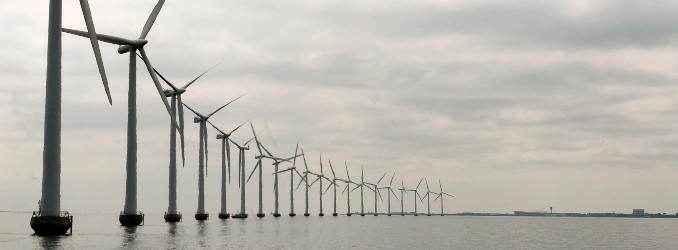
The recent halt of the Revolution Wind project by the U.S. Department of the Interior has sent a clear signal of heightened regulatory risk across the entire American offshore energy sector. This particular project, nearing completion after years of meticulous planning and billions in private investment, represents a significant commitment to diversifying the nation’s energy supply. The National Ocean Industries Association (NOIA) has rightly highlighted that any pause at such an advanced stage threatens to create significant ripples, impacting not only existing contracts and jobs but also future investment sentiment. For investors, this incident underscores a critical vulnerability: even well-advanced, capital-intensive projects are susceptible to policy shifts, demanding a re-evaluation of regulatory stability as a key investment criterion.
Offshore energy ventures, spanning oil and gas, wind, carbon capture and storage (CCS), and even deep-sea mining, inherently involve long lead times and substantial upfront capital. The promise of stable, consistent policy is paramount to attracting and sustaining the necessary private investment. When projects like Revolution Wind, which already contribute to American manufacturing, shipbuilding, and port modernization, face unexpected delays, it erodes confidence. Investors evaluating long-term opportunities, such as those contemplating the future trajectory of oil prices into 2026, must now factor in an elevated level of regulatory uncertainty. This adds another layer of complexity to projecting long-term supply and demand fundamentals, directly influencing the viability and attractiveness of such projects.
Market Volatility Amidst Diversification Efforts
The unfolding regulatory situation for offshore wind projects occurs against a backdrop of notable volatility in traditional energy markets. As of today, Brent crude trades at $90.38 per barrel, marking a substantial 9.07% decline within the day, with its range fluctuating between $86.08 and $98.97. Similarly, WTI crude is priced at $82.59, down 9.41%, trading between $78.97 and $90.34. Gasoline prices have also seen a dip, currently at $2.93, a 5.18% decrease. This daily snapshot reflects a broader trend, with Brent crude having fallen by over 18% from $112.78 on March 30th to $91.87 yesterday, April 17th.
This market turbulence for conventional fuels underscores the strategic importance of a diversified energy portfolio. Yet, the very projects designed to bolster this diversification, such as offshore wind, are now encountering significant regulatory headwinds. While the immediate drivers of crude price fluctuations may be global supply and demand dynamics, the long-term stability of the U.S. energy mix relies on the predictable development of all energy sources. Delays in offshore wind not only hinder the transition but also place additional pressure on existing energy systems, potentially exacerbating price volatility in the future if a balanced energy supply cannot be reliably brought online. Investors must now weigh the short-term market movements against the increasing long-term regulatory risks impacting future supply diversification.
Upcoming Catalysts and Investor Focus on Supply Dynamics
The broader energy market remains highly sensitive to immediate supply and demand signals, even as the longer-term regulatory landscape shifts. Investors are keenly focused on upcoming calendar events that could provide fresh insights into global energy supply. We anticipate significant market attention on the OPEC+ Joint Ministerial Monitoring Committee (JMMC) meeting scheduled for April 18th, followed by the full OPEC+ Ministerial Meeting on April 19th. A key question on many investors’ minds this week, echoed in our proprietary reader data, revolves around “What are OPEC+ current production quotas?” The outcomes of these meetings will be critical in shaping near-term crude supply expectations and, consequently, price movements.
Beyond OPEC+, other regular data releases will offer crucial glimpses into the U.S. domestic supply picture. The API Weekly Crude Inventory report on April 21st and the EIA Weekly Petroleum Status Report on April 22nd will provide updated figures on crude oil and refined product stocks. These will be followed by another round of API and EIA reports on April 28th and 29th, respectively. Furthermore, the Baker Hughes Rig Count on April 24th and May 1st will indicate drilling activity and potential future production. While these events focus on the immediate to medium-term supply environment, the regulatory uncertainty exemplified by the Revolution Wind halt introduces a parallel long-term supply risk for the entire offshore sector. This dichotomy requires investors to simultaneously navigate short-term supply management decisions by major producers and the evolving policy environment for capital-intensive, long-duration projects essential for future energy security.
Investment Implications: Navigating Enhanced Regulatory Risk
The incident with the Revolution Wind project serves as a stark reminder that regulatory risk is not a static component of energy investment. For investors, particularly those with a long-term horizon in the offshore sector, this necessitates a more rigorous due diligence process. The NOIA’s emphasis on the need for “stable, consistent policy” is not merely an industry plea but a fundamental requirement for de-risking billions in private capital. Companies with exposure to U.S. offshore projects – whether in traditional oil and gas, nascent wind, or emerging CCS and deep-sea mining – must now be assessed not only on their technical capabilities and balance sheets but also on their ability to navigate and mitigate evolving regulatory hurdles. This includes scrutinizing permitting processes, understanding the political landscape, and evaluating the potential for unexpected delays or outright project cancellations.
The broader implications extend beyond individual projects. The ability to attract significant foreign and domestic investment into American energy infrastructure, crucial for meeting rising energy needs and supporting technological advancements like data centers and AI, hinges on policy predictability. Investors are increasingly seeking clarity, not just on market fundamentals, but on the regulatory stability that underpins long-term capital deployment. This heightened regulatory risk, therefore, compels a strategic shift: a greater emphasis on political risk analysis, a preference for projects with robust regulatory certainty, and a potential re-evaluation of country-specific investment strategies within the global energy portfolio. For those seeking long-term value in the energy transition, understanding and pricing this regulatory uncertainty will be paramount.